
Asterodiaspis
Asterodiaspis
Description
How to identify
Asterodiaspis belongs to the family Asterolecaniidae, within the order Hemiptera. These insects are commonly known as oak pit scales due to their unique feeding habits.
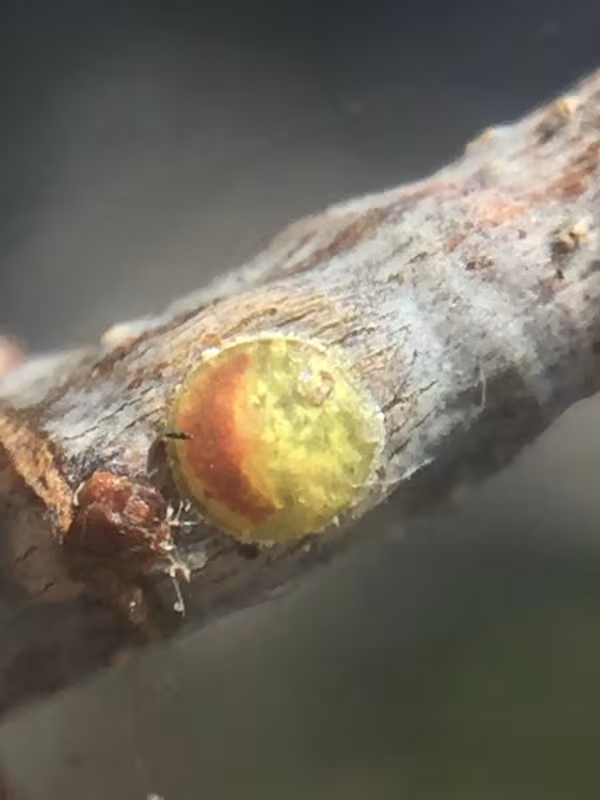
The adult female is protected by a dense, circular waxy test (scale) that is typically yellowish or greenish-gold. Due to their small size, they are often overlooked on the bark.
A key diagnostic feature is the creation of distinct, circular depressions or "pits" in the bark of young twigs where the insect attaches and feeds.
The nymphs, known as crawlers, are mobile, pale-yellow, and active during the early stages of their life cycle as they search for a suitable site to settle.
The life cycle is univoltine, meaning there is only one generation per year. Fertilized females overwinter under their protective waxy covers until spring.
What it damages
Asterodiaspis primarily infests various species of oak (Quercus). It is particularly damaging to young trees in forests, ornamental gardens, and nurseries.
The insects suck sap from the vascular tissues of young shoots, which depletes the tree's energy reserves and significantly stunts its growth.
Feeding sites cause the bark to crack and become deformed, making the tree more susceptible to secondary infections by fungi and other opportunistic pathogens.
Severe infestations lead to the dieback of small twigs and branches. In young saplings, the cumulative stress can eventually lead to the decline of the entire tree.
The honeydew excreted by the scales often promotes the growth of sooty mold, which coats leaves and stems, reducing the tree's ability to perform photosynthesis.
When it appears
The active season begins in spring, as warming temperatures trigger the emergence of nymphs (crawlers) from beneath the maternal scale.
The peak period for monitoring and treatment is late spring to early summer, when the crawlers are most active and vulnerable to contact insecticides.
Throughout the summer, the nymphs settle, develop their waxy tests, and undergo maturation, remaining stationary for the duration of their life.
Mating occurs in late summer or autumn, after which the females prepare for the winter period while remaining fixed to the host plant.
During the winter, the insects remain in a dormant state, protected from the cold by their hard, waxy shells until the cycle repeats in the following spring.
Signs of infestation
The most reliable sign of an Asterodiaspis infestation is the presence of small, circular pits on the bark of young twigs and small branches.
Clustered, golden-yellow waxy spots on the bark surface indicate the presence of adult female scales settled along the stems.
Yellowing, thinning, or premature wilting of foliage on specific branches often points to a high population density of scales feeding on those limbs.
The presence of a dark, powdery sooty mold coating on twigs or leaves is a strong indicator of honeydew-producing scale insects in the canopy.
Dieback of terminals and twisted, stunted growth of new shoots are common symptoms that suggest the tree has been under pressure from the scale for some time.
Control measures
Management of Asterodiaspis requires a combination of cultural practices, such as the pruning and disposal of heavily infested branches to reduce local populations.
Chemical control is most effective when timed with the crawler emergence period, using systemic insecticides that are transported within the tree's sap stream.
Dormant oil sprays applied in late winter or early spring can help suppress populations by coating the overwintering females and suffocating them.
Promoting tree vigor through proper irrigation and mulching is crucial, as healthy trees have better natural defenses against scale colonization.
Regular inspections, especially of young nursery stock or new plantings, are essential to detect infestations early and prevent the pest from becoming established.
Taxonomy
- Latin name
- Asterodiaspis
- Order
- Hemiptera (bugs, aphids, leafhoppers)
- Family
- Asterolecaniidae
- EPPO code
- ASTDSP
Discussion
No discussions yet — be the first.