
Pollinia
Pollinia
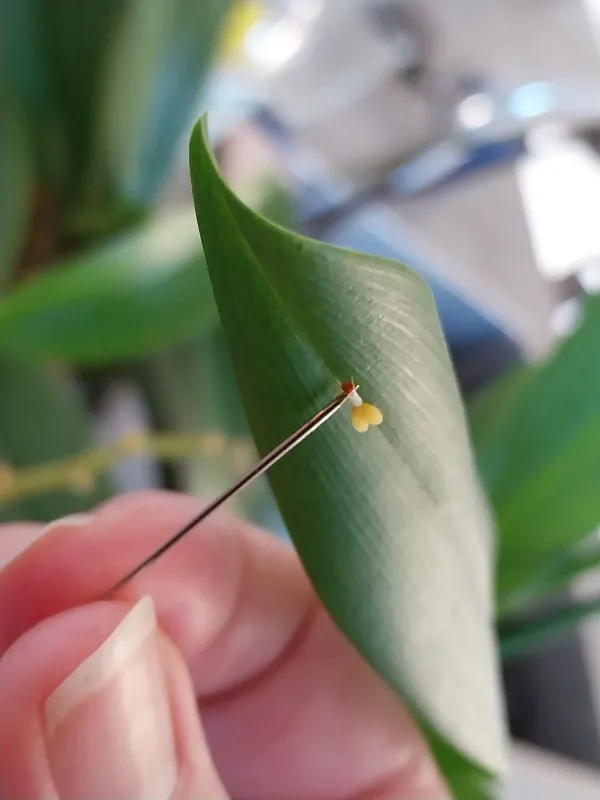
Description
How to identify
Pollinia (Pollinia pollini) belongs to the family Coccidae within the order Hemiptera. These insects are small pests that are frequently overlooked due to their cryptic nature and resemblance to plant tissues, often remaining unnoticed until the population density increases significantly.
Adult females are typically protected by a waxy shield, which serves as a defensive barrier against environmental stress and chemical treatments. The shape and color of these shields can vary depending on the developmental stage and the specific host plant surface.
The life cycle involves a mobile nymph stage, often referred to as "crawlers." During this phase, the insects actively disperse throughout the plant or are transported by wind to neighboring plants, facilitating the spread of the infestation within the field.
Identifying the pest requires careful inspection of stems and leaf sheaths. Because they often look like small, innocuous bumps or growths on the host, a microscopic examination or a high-magnification field lens is recommended for accurate identification.
Understanding the seasonal phenology of the pest is crucial. The timing of crawler emergence is the most critical period for field monitoring, as it dictates the window of opportunity for effective application of management strategies.
What it damages
Pollinia predominantly targets cereal crops, causing direct damage by feeding on plant sap. Both nymphs and adults extract vital nutrients from the host, which leads to metabolic stress and a reduction in the plant's overall vigor.
Feeding usually occurs in protected areas such as leaf sheaths and internodes, where the plant tissue is succulent and nutrient-rich. This internal feeding can disrupt the flow of photosynthates necessary for grain development and overall growth.
Symptoms of heavy infestation include stunted growth, chlorosis, and delayed heading. In severe cases, the infected stems may deform or lodge, leading to substantial yield losses and increased challenges during the harvesting process.
The feeding activity often results in the excretion of honeydew, which serves as a substrate for the growth of sooty mold. This layer of black fungus blocks sunlight and hinders photosynthesis, further weakening the already stressed plants.
Chronic infestation can lead to grain shriveling and reduced test weight. If left unmanaged, the pest can significantly impact the quality of the harvested grain and the overall profitability of the cereal production system.
Control measures
Integrated Pest Management (IPM) is essential for controlling Pollinia. Crop rotation is one of the most effective cultural practices, as it helps break the pest's reproductive cycle and limits the build-up of populations in a specific field.
Chemical control focuses on the crawler stage, as they are the most vulnerable to contact insecticides. Systemic insecticides are generally more effective, as they can penetrate the plant tissues and reach the pests regardless of their waxy shields.
Sanitation practices, including the destruction of grassy weeds that act as alternative hosts, are vital for reducing early-season pest pressure. Managing field margins and preventing the spread from perennial grasses helps keep the cereal crops safe.
Biological control agents, such as predatory beetles and parasitoid wasps, play a significant role in keeping populations at low levels. Encouraging beneficial insects through habitat management can reduce the need for synthetic chemical inputs.
- Regular scouting of cereal fields during the tillering and jointing stages.
- Use of registered systemic insecticides when economic thresholds are reached.
- Deep plowing and soil cultivation to disrupt overwintering habitats.
Taxonomy
- Latin name
- Pollinia
- Order
- Hemiptera (bugs, aphids, leafhoppers)
- Family
- Asterolecaniidae
- EPPO code
- POLNSP
Discussion
No discussions yet — be the first.