
Cluster fly
Pollenia
Description
How to identify
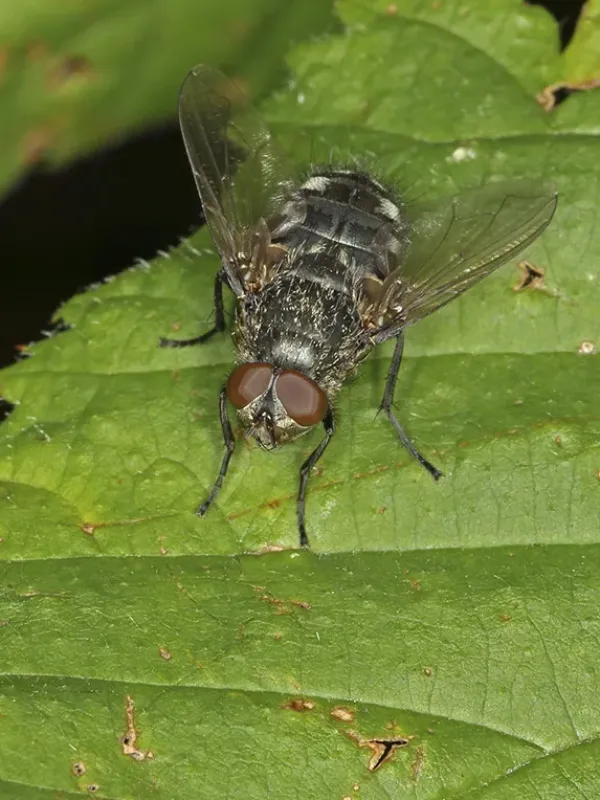
The genus Pollenia, commonly known as cluster flies, belongs to the family Calliphoridae. Adults are 6–10 mm long and are easily recognized by the dense golden hairs on their thorax.
These flies are known for their habit of forming large clusters in sheltered spaces during the colder months, hence the name 'cluster fly'. Their flight is typically slow and accompanied by a distinct buzzing sound.
Biologically, Pollenia are obligate parasitoids of earthworms. The females lay eggs in the soil near earthworm burrows, where the larvae locate and parasitize the host.
While often confused with the common house fly, the golden thoracic hair and the behavior of congregating in masses are primary identification traits for agronomists.
They are known vectors of various bacteria due to their tendency to visit both decomposing organic matter and crops, creating potential phytosanitary risks.
What it damages
Direct damage to healthy plants is minimal, but cluster flies cause indirect damage by contaminating fruit and foliage with their waste products, which can lead to fungal infections.
In greenhouses, massive gatherings of these flies interfere with horticultural operations and can contaminate fresh produce, making it unsuitable for market sale.
The larvae impact the soil ecosystem by parasitizing earthworms, which are essential for soil aeration and nutrient cycling, thus indirectly affecting soil quality.
Secondary damage occurs when the flies aggregate on damaged fruits, accelerating the decay process through the introduction of microbes and moisture.
High populations of Pollenia can create significant nuisance issues for farm personnel, complicating harvesting and routine maintenance tasks in enclosed growing structures.
When it appears
Adult cluster flies become active in early spring, as soon as temperatures exceed 10-12°C. This marks the beginning of their breeding cycle.
There are multiple generations per year, with activity peaking during warmer months when earthworms are also active near the soil surface.
In late autumn, the flies start seeking wintering sites, often aggregating in structures, wood crevices, or leaf litter to survive the winter temperatures.
They overwinter as adults, allowing them to emerge quickly at the first sign of spring warmth, which ensures their rapid colonization of the environment.
The timing of emergence and peak density is highly dependent on local moisture levels and the availability of earthworm populations for the larvae.
Signs of infestation
Persistent buzzing sounds near greenhouses or storage facilities during warm days often indicate a localized population of cluster flies.
Visible dark spotting from fly excrement on leaves and surfaces within the growing environment serves as a clear sign of infestation.
A decline in the number of earthworms in the soil, combined with the presence of golden-haired flies, is a strong indicator of parasitoid activity.
A characteristic, slightly sweet or musty odor is often detected in areas where large clusters of these flies are overwintering.
The presence of flies on maturing crops, particularly fruits with minor surface injuries, is a reliable sign of active insect pressure in the area.
Control measures
The most effective strategy involves sealing entry points to greenhouses and storage buildings to prevent the flies from accessing wintering sites.
Physical barriers such as fine-mesh screening on ventilation points significantly reduce the risk of fly influx during the active season.
Glue traps and light traps are useful tools for monitoring and reducing adult fly populations in enclosed agricultural environments.
Maintaining high sanitary standards and removing decomposing vegetation around structures helps eliminate attractants that bring flies to the area.
Chemical control is generally reserved for severe infestations and should be performed using selective insecticides to minimize impact on beneficial insects.
Taxonomy
- Latin name
- Pollenia
- Order
- Diptera (flies)
- Family
- Calliphoridae
- EPPO code
- POLLSP
Discussion
No discussions yet — be the first.