
Pogonus chalceus
Pogonus chalceus
Description
How to identify
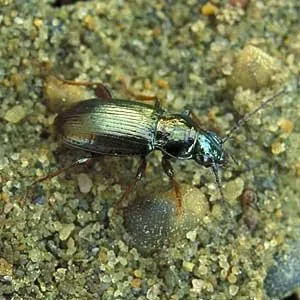
Pogonus chalceus is a species of ground beetle belonging to the Carabidae family of the order Coleoptera, known for its distinctive appearance and metallic luster.
The adults are relatively small, typically measuring between 5 and 7 millimeters in length, with an elongated body shape adapted for life on the soil surface.
The larvae are active and predatory in nature, featuring well-developed legs that allow them to move quickly through the upper layers of the soil and surface debris.
These beetles possess functional wings, enabling them to migrate over considerable distances in search of optimal environmental conditions or food sources.
They are particularly sensitive to soil moisture levels, which dictates their distribution within fields and their behavior throughout the various stages of their life cycle.
What it damages
While many ground beetles are beneficial predators, Pogonus chalceus can occasionally act as a pest by feeding on young seedlings of cereal crops and vegetables.
The damage is primarily caused by adults that consume tender tissues of sprouts and stems, often leading to stunted growth or the complete destruction of the seedling.
Such damage is most pronounced in fields with high humidity or poor drainage, where these beetles find favorable conditions for their activity and congregation.
When populations reach high densities, they can cause significant thinning of crops, which may necessitate reseeding or result in yield losses due to reduced plant stands.
Furthermore, the physical wounds inflicted on the plants can serve as entry points for soil-borne pathogens, potentially leading to secondary infections.
When it appears
The active season for Pogonus chalceus typically begins in early spring, as soon as the soil temperatures rise enough to allow emergence from overwintering.
The life cycle involves seasonal shifts in activity, with peak emergence frequently coinciding with the emergence of agricultural crop seedlings in the field.
During the peak of summer, if conditions become too dry or hot, the beetles may reduce their activity and seek refuge in deeper soil crevices or under dense vegetation.
Activity levels often rise again in the autumn as the beetles prepare for the winter period, which they spend primarily as adults in sheltered underground locations.
Environmental variables such as rainfall patterns and soil temperature are critical factors influencing the annual population dynamics of this species.
Signs of infestation
The most common sign of infestation includes irregular gnaw marks on the edges of leaves and stems of young plants, visible during routine field inspections.
Due to their nocturnal or crepuscular nature, finding the beetles often requires searching under soil clods or crop residue during the early morning hours.
Localized patches of dying or damaged seedlings within a field often indicate areas of high beetle density, where the pest has concentrated its feeding activity.
Examination of the soil around the base of the damaged plants may reveal larvae or adult beetles, confirming the cause of the observed plant stress.
Monitoring the soil surface near damp areas of the field is a reliable method for early detection before significant damage to the crop occurs.
Control measures
Effective management of Pogonus chalceus relies on cultural practices that disrupt the beetle's habitat and limit its ability to thrive within the agricultural ecosystem.
Deep soil tillage is an essential control method, as it disrupts overwintering sites and exposes larvae and adults to adverse environmental conditions or predators.
Implementing a diverse crop rotation system can break the continuity of the beetle's life cycle and reduce the likelihood of high population buildup over time.
The use of insecticidal seed treatments provides a crucial layer of protection, shielding the young plants from feeding damage during their most vulnerable stage.
- Management of field edges and weed removal to reduce refugia for the beetle.
- Improvement of drainage systems to mitigate excessively moist soil conditions.
- Application of authorized insecticides if population thresholds are exceeded.
Taxonomy
- Latin name
- Pogonus chalceus
- Order
- Coleoptera (beetles)
- Family
- Carabidae
- EPPO code
- POGSCH
Discussion
No discussions yet — be the first.