
Yellow-rumped tinkerbird
Pogoniulus bilineatus
Description
How to identify
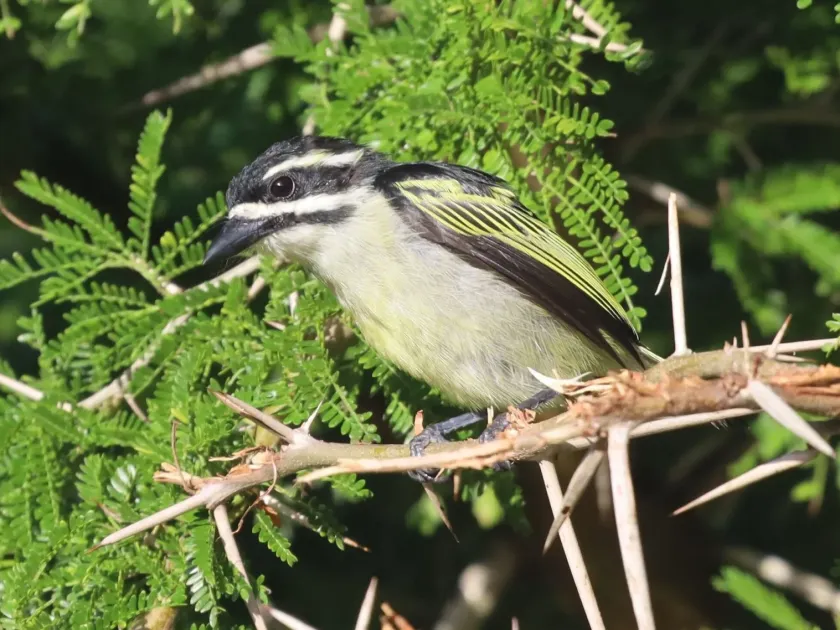
The yellow-rumped tinkerbird (Pogoniulus bilineatus) is a small avian species belonging to the African tinkerbird family (Lybiidae) within the order Piciformes. Adult birds measure approximately 10–11 centimeters in length and are distinguished by their dark plumage with bright yellow markings on the rump.
These birds possess short, robust beaks specifically adapted for feeding on both insects and soft plant tissues, including fruits. Their cryptic coloration often makes them difficult to spot within the dense canopy of trees, complicating monitoring efforts in orchards and plantations.
Taxonomically, they are identified as inhabitants of tropical forests that have successfully adapted to human-modified landscapes and agricultural plots. They are known for being territorial birds that often return to specific feeding sites repeatedly.
Breeding usually occurs in tree cavities that they either find abandoned or excavate themselves; in some instances, this behavior causes damage to the trunks of young saplings. During the chick-rearing period, their diet shifts to include more protein-rich sources, increasing their reliance on the immediate surrounding flora.
A primary method of identifying their presence is the repetitive, metallic "tink-tink-tink" song of the male, which can be heard over long distances, particularly during the early morning and late afternoon hours.
What it damages
The primary economic damage caused by this species involves the consumption of ripening fruits and berries. In agricultural settings, they are known to target various cultivated fruits, leading to significant yield losses if left unchecked.
Beyond direct fruit consumption, tinkerbirds damage young shoots and buds by pecking at the bark. These minor mechanical wounds often serve as entry points for fungal infections and pathogens, which can severely compromise the plant's long-term health and productivity.
Their activity peaks during the ripening season, when the high sugar content of the crop becomes a major attractant. In dense populations, these birds can significantly deplete regional harvests, causing a noticeable reduction in marketable produce.
Their presence also creates ecological competition with beneficial fauna, such as insectivorous birds that help manage populations of other agricultural pests, thereby disrupting the integrated pest management balance on the farm.
Furthermore, the contamination of fruits by bird droppings can lower the sanitary standards of the harvest, making it unfit for commercial sale or requiring extensive cleaning processes that increase labor costs.
Signs of infestation
A primary indicator of tinkerbird presence is the discovery of fallen fruit fragments under trees, showing precise, deep peck marks. These markings are characteristically uniform and indicate a highly localized feeding behavior.
Farmers may observe frequent movement within the canopy accompanied by the species' distinct repetitive vocalizations. After a flock has roosted or fed, signs of damage to new growth, such as buds and terminal shoots, become apparent.
Accumulation of bird droppings on leaves and branches is a reliable indicator of frequently visited feeding stations. This allows for the mapping of the birds' feeding routes to identify the most vulnerable sections of the orchard.
Localized wilting or discoloration of branches can sometimes be linked to excessive pecking or habitat modification, where the birds have disturbed the bark or structural integrity of the plant for nesting or resting purposes.
- Fragmented fruits with characteristic beak marks on the ground.
- Damaged buds and terminal shoots on young branches.
- Repetitive, metallic bird calls in the morning.
- Presence of bird droppings on foliage.
- Significant drop in harvest volume compared to historical averages.
Control measures
The most effective physical defense involves the installation of fine-mesh netting over tree canopies or individual fruit clusters, which creates an impassable barrier for the birds while allowing sunlight and air circulation.
Acoustic deterrents that play recordings of predatory bird calls or generate high-frequency pulses can be used to discourage the birds from settling in specific areas. It is recommended to vary these signals periodically to prevent habituation.
Standard agricultural practices include harvesting crops at the earliest maturity stage to reduce the window of vulnerability. Proper sanitation, such as removing fallen fruit and pruning dead wood, helps minimize the appeal of the area for nesting.
Reflective tapes and life-sized predator decoys may provide short-term relief. These should be deployed in combination with other methods, as individual birds may eventually ignore stationary visual stimuli if they find the food source too rewarding.
Long-term management focuses on fostering local biodiversity that attracts the natural predators of the tinkerbird, establishing a sustainable ecological balance that reduces the need for external chemical interventions.
Taxonomy
- Latin name
- Pogoniulus bilineatus
- Family
- Ramphastidae
- EPPO code
- PGONBI
Discussion
No discussions yet — be the first.