
Barbets
Megalaima
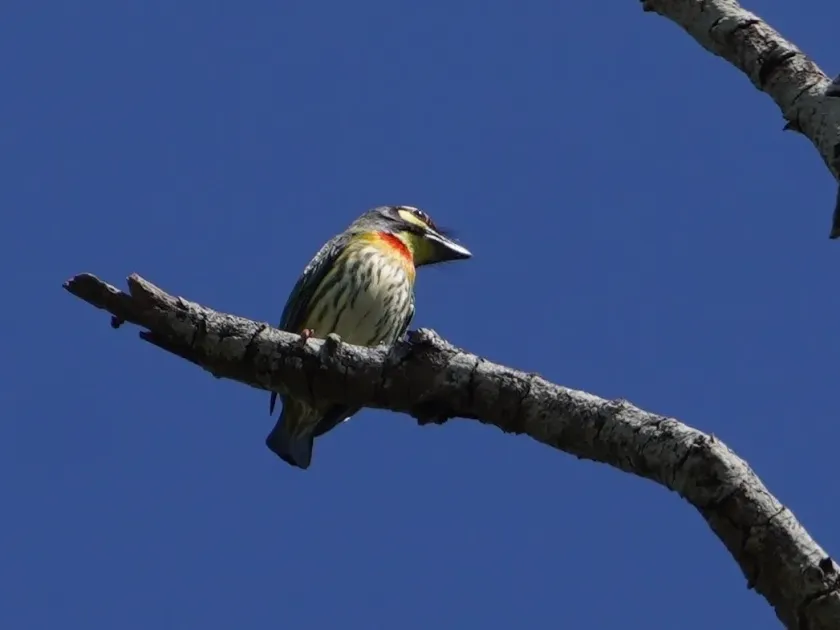
Description
How to identify
Barbets (genus Megalaima) are members of the Asian barbet family, known for their stout bodies and robust, slightly curved beaks. The base of their bill is adorned with bristles, which gives them a bearded appearance.
These birds typically have vibrant green plumage, enabling them to remain well-hidden within the dense foliage of trees in tropical and subtropical regions.
Despite their colorful appearance, they are elusive and often heard before they are seen, thanks to their repetitive, rhythmic calls that resonate through the canopy.
They possess zygodactyl feet, a specialized structure that provides them with an exceptional grip on branches while they forage for fruit in various positions.
Identifying their presence is essential for fruit growers who operate within their geographical range, as these birds are habitual foragers.
What it damages
Barbets are primarily frugivorous, which makes them a notable pest for fruit growers. They feed on a variety of cultivated fruits, causing significant economic losses.
Commonly attacked crops include mangoes, guavas, papayas, and figs. The birds use their strong beaks to pierce the skin of ripening fruits and consume the pulp inside.
This feeding behavior ruins the marketable quality of the fruit, creating deep gouges and holes that make the produce visually unappealing and prone to rot.
In addition to direct loss of produce, the injuries caused by their beaks facilitate the entry of pathogens, leading to secondary fungal or bacterial infections in the remaining crop.
Their persistent feeding can significantly reduce the yield of individual trees, especially when birds establish a regular feeding routine in an orchard.
When it appears
The peak period for pest activity correlates directly with the ripening season of the host fruit trees. In tropical climates, where fruit ripening can be staggered, this period may be prolonged.
Barbets are most active during the early morning and late afternoon hours, when they aggressively forage to meet their nutritional requirements.
As fruit begins to sweeten and soften, the orchard becomes highly attractive to these birds, signaling the start of the risk period for farmers.
Dry seasons may exacerbate the problem, as barbets seek out succulent fruits not just for food but also as an important source of hydration.
Orchard monitoring during the pre-harvest phase is crucial to detect the first instances of damage and implement deterrents before the population becomes established.
Signs of infestation
A primary indicator of barbet activity is the discovery of fallen, partially consumed fruits underneath orchard trees, bearing characteristic beak marks.
Upon inspecting the branches, growers can often observe fruits with deep, precise holes or gouges made by the birds' powerful bills.
The distinctive, rhythmic, and loud call of the barbet is a reliable sign of their presence, often preceding or accompanying their arrival in the orchard.
The accumulation of bird droppings on leaves and branches is another common sign that the birds have been utilizing the tree as a food source.
A gradual increase in the number of damaged fruits across the orchard during the ripening period clearly points to the influence of these avian pests.
Control measures
Managing barbet damage requires a strategic approach, focusing primarily on physical barriers and deterrents to protect high-value crops.
Protective netting is the most effective solution for preventing birds from accessing the fruit, particularly on smaller or high-value trees.
Audio deterrents, such as devices that mimic the calls of raptors or emit distressing sounds, can be used to discourage the birds from settling in the orchard.
Cultural practices, such as thinning the canopy to reduce hiding spots and removing overripe or fallen fruit, can also help mitigate the attractiveness of the orchard.
- Applying reflective tapes or moving visual decoys to disrupt the birds' sense of security.
- Using individual fruit bagging to protect specific high-quality crops.
- Scheduling harvests promptly once maturity is reached to minimize the time fruit is exposed to pest risk.
Taxonomy
- Latin name
- Megalaima
- Family
- Ramphastidae
- EPPO code
- MLAISP
Discussion
No discussions yet — be the first.