
Lybius
Lybius
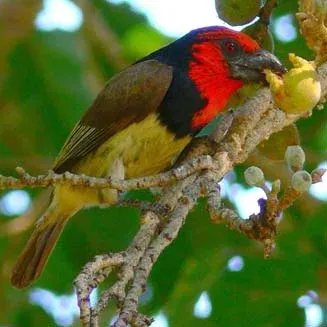
Description
How to identify
The genus Lybius, commonly known as African barbets, belongs to the family Lybiidae within the order Piciformes. In agricultural contexts, they are sometimes considered opportunistic pests in tropical regions due to their fruit-eating habits.
These birds possess a stout, heavy bill specifically adapted for cracking hard fruit skins and foraging in woody vegetation. Their striking, often multicolored plumage provides excellent camouflage in dense canopy.
They are sedentary birds, often remaining in the same vicinity throughout the year if a steady food supply is available. This persistence can lead to repeated damage in specific orchard sections.
Nesting habits involve creating cavities in tree trunks or utilizing existing ones. This activity is crucial for their life cycle and explains their strong association with specific types of tree cover.
Their behavior is characterized by high intelligence and adaptability, allowing them to exploit man-made environments like commercial fruit plantations.
What it damages
The primary crops affected by Lybius include a variety of tropical fruits such as mango, papaya, fig, and citrus varieties. They target fruits that are nearing maturity, causing significant economic impact.
The damage is caused by the birds piercing the fruit with their strong beaks to access the pulp or seeds. This renders the fruit unmarketable and causes physical destruction.
Open wounds on the fruit surface serve as entry points for various pathogens, including fungi and bacteria. This secondary infection often leads to rapid decay of the entire crop.
In high-density fruit orchards, persistent foraging by Lybius can significantly reduce the harvest volume, particularly during the peak ripening season.
Occasional damage to young shoots and buds has also been documented, especially when primary food sources are scarce, negatively impacting the tree's overall vigor.
Control measures
The use of bird exclusion netting is the most effective physical control method. By covering the trees or entire rows, producers can prevent any access to the fruit.
Visual deterrents, including holographic ribbons and life-sized predator decoys, can be used to protect smaller areas, though their long-term efficacy is limited by bird habituation.
Acoustic deterrents that emit distress calls or predator sounds can also discourage the presence of birds, provided the sounds are rotated frequently to prevent acclimation.
Good agricultural practices, such as prompt harvesting, are vital. Removing fruit as soon as it reaches technical maturity limits the window of opportunity for bird attacks.
Sanitation of the orchard floor is essential. Clearing fallen or damaged fruit prevents the creation of a 'bait station' effect that draws more birds to the orchard area.
Taxonomy
- Latin name
- Lybius
- Family
- Ramphastidae
- EPPO code
- LYBISP
Discussion
No discussions yet — be the first.