
Poecilus versicolor
Poecilus versicolor
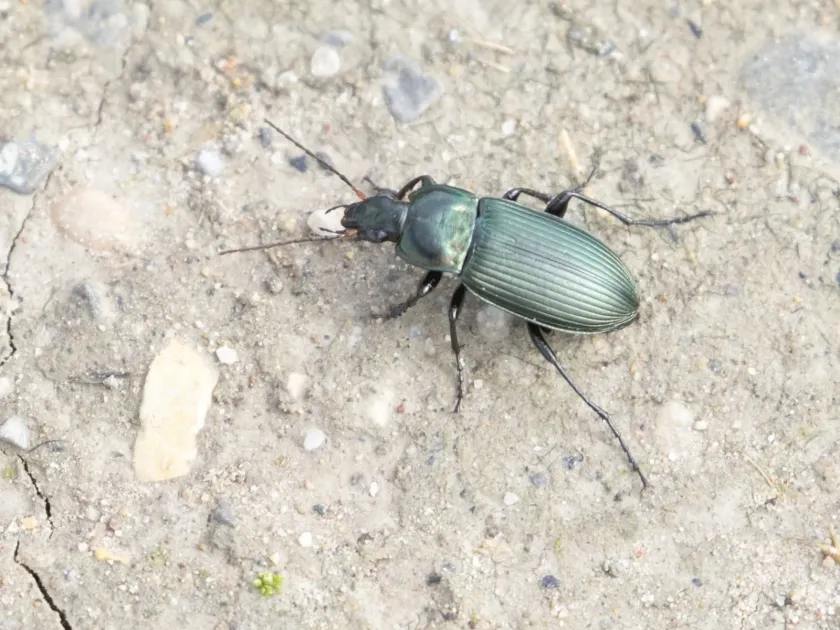
Description
How to identify
Poecilus versicolor is a species of ground beetle belonging to the family Carabidae. It is commonly found in agricultural landscapes across Europe and parts of Asia.
The adult beetle typically measures between 9 and 12 mm in length. Its body color varies, often displaying a metallic green, bronze, or black sheen that is quite distinct.
The elytra of this beetle possess clear longitudinal grooves. Its body is elongated and streamlined, which is typical for predatory beetles, although this species can occasionally feed on plant material.
The larvae are campodeiform, featuring long legs and a highly active nature, which allows them to navigate through the upper soil layers efficiently to find food sources.
This species is highly adaptable to various soil types and moisture levels, which contributes to its wide distribution and persistent presence in diverse cropping systems.
What it damages
The primary economic damage caused by Poecilus versicolor occurs in cereal crops such as wheat, barley, and rye during the germination phase of the seeds.
Both adults and larvae have been observed consuming the germs of sprouting seeds, which directly results in reduced plant density and uneven crop emergence in the fields.
Seedlings are also subject to damage, as the beetles may feed on the tender tissues of young plants, weakening them and hindering their development during the early growth stages.
In years with high beetle population densities, significant yield losses can occur, especially if the environmental conditions favor prolonged seed germination periods.
While primarily predatory on other soil invertebrates, the opportunistic feeding on crops during food scarcity makes them a notable, albeit sporadic, agricultural pest.
When it appears
The life cycle of this beetle usually lasts one year, with both adults and late-instar larvae overwintering deep within the soil profile for protection.
Emergence from the soil happens in early spring once temperatures rise above 8-10 degrees Celsius, coinciding with the sowing period of spring crops.
Reproduction and egg-laying typically occur from late spring through early summer, when the soil moisture is adequate for the survival of the developing larvae.
New adults emerge in the late summer, having completed their metamorphosis, and begin feeding actively to store energy before the winter dormancy sets in.
Fluctuations in climate, particularly humidity and rainfall, play a critical role in determining the population peaks and the subsequent damage level observed in the field.
Signs of infestation
The most evident sign of infestation is thin or patchy crop stands where germinating seeds have been excavated and eaten by the larvae or adults.
Monitoring for the presence of beetles can be achieved through the use of pitfall traps placed within the crop rows to catch active individuals at night.
Damaged seedlings exhibit specific signs such as gnawed leaf margins or destroyed coleoptiles, which are distinct from the damage caused by wireworms or other root pests.
Soil excavations at the base of damaged seedlings may reveal the presence of larvae or adult beetles hiding near the roots or seeds.
Field maps showing areas of low plant density can help identify infestation hotspots that require closer inspection and potential intervention.
Control measures
Deep autumn plowing is a recommended cultural practice as it disrupts the overwintering sites of the beetles and brings them to the surface, reducing their survival rates.
Seed treatment with systemic insecticides provides an effective chemical barrier, protecting the seeds and young seedlings during the initial weeks of establishment.
Maintaining a diverse crop rotation is essential, as it disrupts the availability of specific food resources and helps keep the ground beetle population under control.
Improving soil fertility to promote rapid and vigorous seedling growth helps plants escape the most vulnerable germination phase more quickly.
- Use of certified seeds with high germination energy.
- Mechanical soil disturbance during the larval development stages.
- Field monitoring to determine if threshold levels for intervention are met.
Taxonomy
- Latin name
- Poecilus versicolor
- Order
- Coleoptera (beetles)
- Family
- Carabidae
- EPPO code
- PTESVS
Discussion
No discussions yet — be the first.