
Dull ground beetle
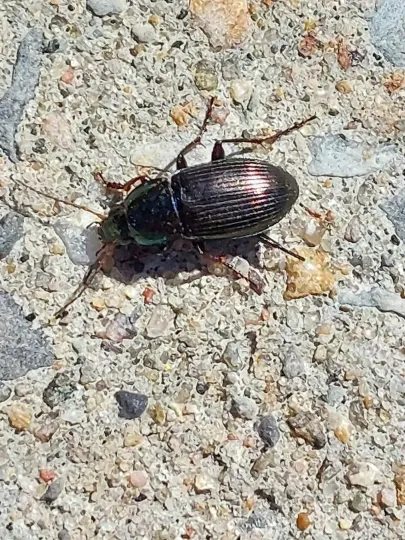
Poecilus lucublandus
Description
How to identify
The dull ground beetle (Poecilus lucublandus) belongs to the Carabidae family, order Coleoptera. Adult beetles measure about 10–12 mm in length and exhibit a dark, bronze-black metallic color with a distinct dull sheen on their elytra.
While most carabids are beneficial predators, Poecilus lucublandus is known for its opportunistic behavior, frequently shifting to plant-based diets. They possess highly developed mandibles suitable for both scavenging and feeding on grain tissues.
They prefer moist soil conditions and habitats with dense vegetation or crop residues. Their physical structure, particularly the flattened body shape, allows them to navigate easily through soil cracks and ground-level debris.
For identification purposes, experts examine the pronotal shape and specific microscopic texture of the elytra. In the field, Barber pitfall traps are the standard tool for monitoring population density and confirming their presence.
It is crucial to distinguish this species from purely predatory ground beetles to avoid unnecessary pesticide application, as beneficial carabids play a major role in suppressing other insect pests.
What it damages
The primary economic damage occurs during the germination and seedling stages of crops. When insect prey is scarce, these beetles attack germinating seeds and young sprouts of cereals like wheat, barley, and corn.
They target the embryo of the seed, effectively preventing germination. This results in uneven stand establishment and significant yield losses in affected areas of the field.
Larvae, which reside in the soil, feed on the root systems of young plants. This root pruning reduces the plant's nutrient uptake, leading to stunted growth, wilting, and increased susceptibility to secondary fungal infections.
Damage intensity is significantly higher in dry years, as the beetles and their larvae compensate for the lack of natural food sources by consuming the starch-rich tissues of crop seedlings.
Agronomists must assess the pest density threshold, as damage becomes economically significant only when the beetle population exceeds a certain number of individuals per square meter.
When it appears
The life cycle of Poecilus lucublandus is deeply linked to the seasonal agricultural calendar. Adult activity peaks during the spring sowing season when seed germination coincides with their emergence from winter diapause.
Adults overwinter in the soil or under crop residue. As temperatures rise, they emerge to feed and reproduce. Egg-laying occurs in the soil, followed by the development of active, campodeiform larvae.
Larval development typically takes several weeks. These larvae remain mobile within the soil profile, constantly searching for food, whether it is organic matter, prey insects, or crop roots.
During the summer heat, surface activity of adult beetles decreases as they retreat into deeper, cooler soil layers. However, this does not mean the threat is over, as larvae continue their development in the rhizosphere.
A single generation per year is common, though climate and food availability can lead to localized variations in the timing of each developmental stage throughout the growing season.
Signs of infestation
The first sign of infestation is thin or patchy crop stands. Excavation of these areas reveals seeds with characteristic "hollowed-out" damage, where the embryo has been consumed.
Seedlings may appear wilted or show signs of retarded growth. Closer inspection of the base of the stem or the root system often reveals feeding scars or severed lateral roots caused by larval activity.
Surface feeding on the leaves of young sprouts is another indicator, though less diagnostic than seed damage. It can sometimes be confused with feeding by other generalist insect pests.
Nighttime observation with a flashlight or the use of pitfall traps is the most reliable way to confirm the presence of adult beetles in the field during the evening hours.
A systematic survey of the roots and soil in damaged spots should be conducted to differentiate Poecilus lucublandus damage from soil-borne diseases or nutritional deficiencies.
Control measures
Effective management begins with sound agronomic practices. Rapid, uniform germination via optimal seeding depth and soil conditions is the best way to minimize the time crops are vulnerable.
Crop rotation helps disrupt the life cycle of the beetle. Avoiding consecutive seasons of susceptible crops in fields with historically high carabid populations can significantly reduce the risk.
Seed treatment with systemic insecticides is the most effective chemical control method. It provides a protective chemical barrier around the seed, deterring beetles from feeding during the germination phase.
Foliar insecticide applications are only recommended if the pest density exceeds the economic threshold. Treatments should be timed for the evening to match the beetles' nocturnal activity.
- Utilize certified, high-vigor seed.
- Manage field weeds to reduce beetle habitat.
- Monitor pest populations using consistent trapping methods.
- Implement Integrated Pest Management (IPM) strategies.
Taxonomy
- Latin name
- Poecilus lucublandus
- Order
- Coleoptera (beetles)
- Family
- Carabidae
- EPPO code
- PTESLU
Discussion
No discussions yet — be the first.