
Poecilus
Poecilus
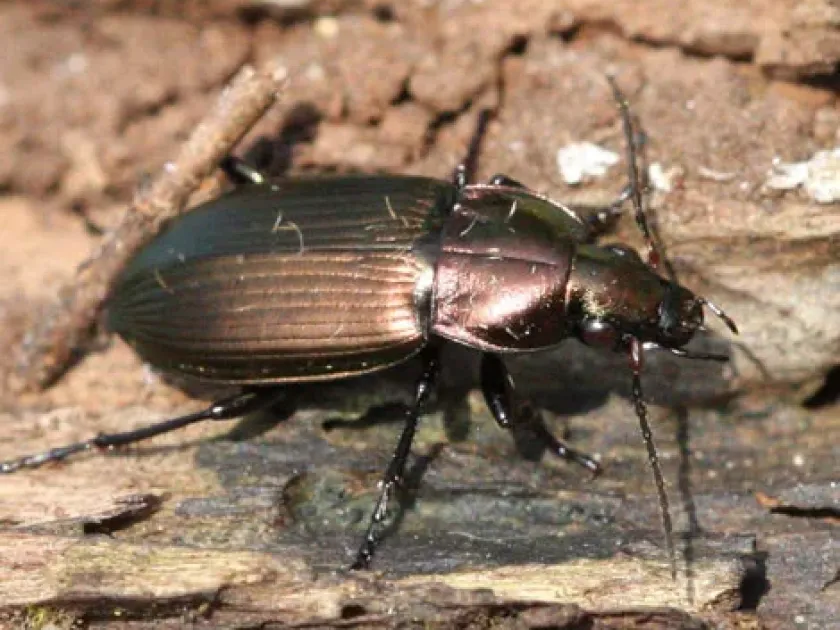
Description
How to identify
The genus Poecilus belongs to the family Carabidae (ground beetles) within the order Coleoptera. These beetles are typically recognized by their elongated bodies and often possess a distinct metallic sheen, ranging from bronze and green to deep blue or black.
Adult beetles generally measure between 10 to 15 millimeters in length. Identifying characteristics include the specific shape of the pronotum and the longitudinal striae found on the elytra. Larvae are campodeiform, featuring well-developed legs and strong mouthparts suited for active movement and feeding.
What it damages
While most ground beetles are beneficial predators, certain members of the Poecilus genus exhibit mixophagy. This means that when animal prey is scarce, they shift their dietary habits toward consuming plant tissues, potentially becoming significant pests in agricultural fields.
They are known to damage cereal crops such as wheat, barley, and rye, particularly during the vulnerable seedling stage. Corn and sugar beet crops can also be affected, as the beetles feed on the cotyledons and tender young shoots of the developing plants.
Feeding damage typically manifests as irregular notches or shredded edges on leaves, which can stunt plant growth or lead to total crop loss if the population density is high enough to cause thinning of the stands.
When it appears
These beetles are primarily nocturnal, remaining hidden in soil crevices or beneath plant debris during the daylight hours. Their period of peak activity occurs during the spring, coinciding with the germination and early growth phases of major cereal crops.
Adults typically overwinter in the soil or under leaf litter, emerging as soon as spring temperatures allow. The life cycle involves egg, three larval instars, and pupation within the soil, creating multiple overlapping generations depending on local climate conditions.
Control measures
Effective management begins with sound agronomic practices, such as deep autumn tillage, which disturbs overwintering sites and reduces the subsequent population. Maintaining clean fields by removing dense weed cover also limits alternative food sources for the beetles.
- Monitor fields regularly during the seedling stage.
- Use seed treatments if historical pressure is high.
- Apply registered insecticides only when economic thresholds are exceeded.
Biological control also plays a role, as natural enemies like parasitic wasps and birds can help regulate beetle populations in healthy, balanced agroecosystems.
Taxonomy
- Latin name
- Poecilus
- Order
- Coleoptera (beetles)
- Family
- Carabidae
- EPPO code
- POCLSP
Discussion
No discussions yet — be the first.