
Bosphorus bush-cricket
Poecilimon bosphoricus
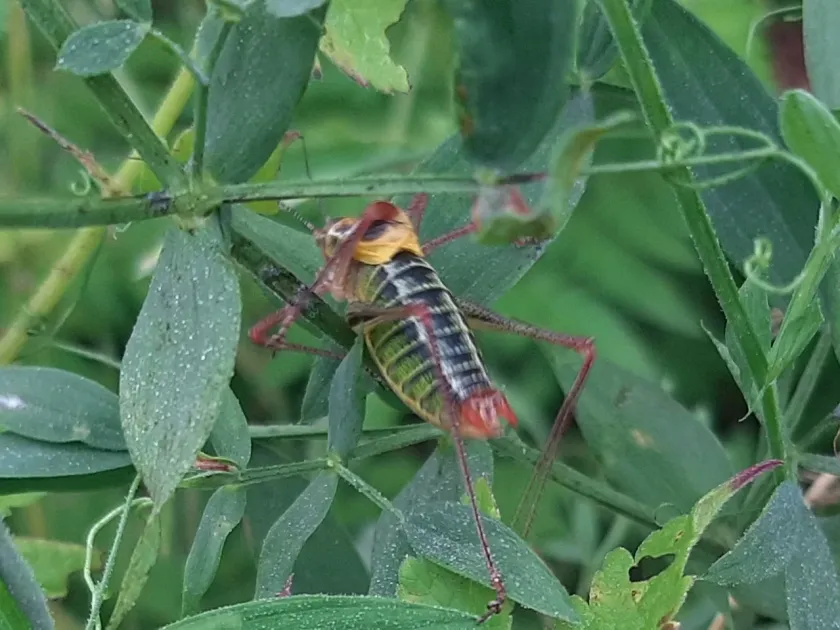
Description
How to identify
The Bosphorus bush-cricket (Poecilimon bosphoricus) is a member of the Tettigoniidae family, belonging to the order Orthoptera. These insects are well-adapted to their environment, relying on camouflage to remain hidden from predators.
The adult insect has an elongated, slender body, usually bright green, which allows it to blend seamlessly into the foliage of host plants. They are typically medium-sized compared to other bush-crickets.
A distinctive feature of the females is the ovipositor, which is curved and serrated, resembling a saw or a blade. This specialized tool is used for depositing eggs into plant stems or soil crevices.
Unlike many other insects in the region, their wings are vestigial or significantly reduced, which makes them poor fliers. Consequently, their primary mode of movement is hopping or crawling along stems.
Identification is often based on the specific morphology of the male cerci, which feature unique appendages and curvatures that help distinguish this species from others within the genus Poecilimon.
What it damages
This species is a generalist herbivore (polyphage), meaning it feeds on a wide variety of plant species. Its diet includes various weeds, garden vegetables, and ornamental plants.
The primary damage occurs on leaves, where the bush-cricket consumes tissue, leaving behind irregular, ragged edges. Severe infestations can result in significant defoliation, which impairs the plant's photosynthetic capacity.
In vegetable gardens, these crickets frequently target young shoots, flower buds, and developing fruits. This can cause deformation of the produce and directly reduce the total marketable yield.
Floral crops are especially vulnerable, as the insect's feeding behavior can destroy buds, preventing blooming and causing long-term damage to the plant's aesthetic and commercial value.
In addition to tissue loss, the feeding wounds provide an entry point for secondary pathogens, such as fungi and bacteria, which can lead to localized rot and eventual plant dieback.
When it appears
The life cycle of the Bosphorus bush-cricket is strictly univoltine, meaning there is only one generation per year. Their development is closely synchronized with the local climate.
Winter is spent in the egg stage. Eggs are laid in the soil or protected plant tissues during late summer and autumn, where they remain dormant and resistant to harsh winter temperatures.
Nymphs emerge in the spring, typically around May, once temperatures rise. They undergo several molts as they develop, gradually increasing in size and feeding intensity throughout the process.
The peak period for adult activity occurs in mid-summer, specifically July and August. During this time, they are most noticeable and cause the most significant damage to agricultural crops.
By late autumn, the adult population dies off, but not before mating and oviposition, ensuring the continuation of the species for the following growing season.
Signs of infestation
The most reliable sign of an infestation is the appearance of jagged, uneven bites on leaves. The crickets typically avoid heavy veins, leaving a skeletonized or notched leaf structure.
Dark, granular excrement pellets found on the leaves or the soil below are clear indicators of recent feeding activity by the nymphs or adults.
Early-stage damage on young seedlings may appear as tiny holes, which enlarge over time as the insects reach their final developmental stages.
If the fruit or vegetables are affected, one may see shallow surface scars or deep gouges. These marks often darken and desiccate, making the produce appear unhealthy or unappealing.
Searching the plants during the cool evening hours can often reveal the insects themselves, as they tend to be more active and stationary while feeding on the plant stalks.
Control measures
Cultural control is the most effective approach for residential gardens. Deep autumn tillage disrupts the overwintering eggs, bringing them to the surface where they perish from exposure.
Sanitation practices, such as removing weeds around the garden perimeter, are essential. Weeds act as alternative hosts that support populations during the early stages of the insect's life cycle.
Hand-picking the crickets is a viable control measure for small-scale gardening. This is most effective in the early morning when the insects are sluggish due to lower temperatures.
In cases of severe infestation, targeted application of broad-spectrum insecticides may be necessary. Always ensure that the product is approved for the specific crop and follow label guidelines carefully.
- Implement physical barriers such as floating row covers to protect young vegetable beds.
- Encourage local bird populations, as they are natural predators of bush-crickets.
- Use biological control agents like entomopathogenic fungi if large-scale management is required.
Taxonomy
- Latin name
- Poecilimon bosphoricus
- Order
- Orthoptera (locusts)
- Family
- Tettigoniidae
- EPPO code
- POEMBO
Discussion
No discussions yet — be the first.