
Moon moth
Plutella porrectella
Description
How to identify
The Moon moth (Plutella porrectella) is a small lepidopteran belonging to the family Plutellidae, often recognized as a minor but persistent pest.
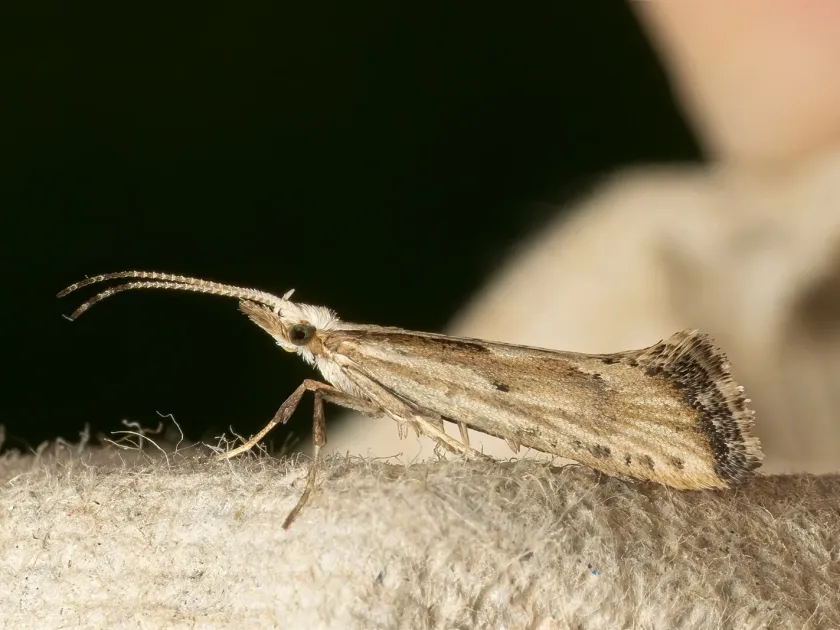
Adult moths have a wingspan of approximately 14–16 mm, featuring brownish-grey forewings with a distinct pale streak that appears when the wings are folded.
The larvae are typically greenish in color, featuring sparse, fine setae along their bodies and light-colored heads, growing up to 12 mm in length.
Pupation occurs within a loose, spindle-shaped silken cocoon, which is usually attached to the underside of leaves or within folded leaf margins.
They are primarily nocturnal insects, remaining inactive and hidden within vegetation during the bright daylight hours.
What it damages
The species primarily feeds on plants within the Brassicaceae family, making it a target pest for various cruciferous crops and ornamental plants.
Common host plants include species like Lunaria, Hesperis, Arabis, and occasionally cultivated crops like mustard and rapeseed.
Larvae feed by consuming leaf tissue, creating holes or skeletonizing leaves, which significantly impacts the photosynthetic capacity of the plant.
Heavy infestations can lead to the destruction of terminal buds and reproductive structures, causing stunted growth and reduced yields.
For ornamental plants, the aesthetic damage caused by leaf feeding and webbing can render nursery stock unsellable or lower its market value.
When it appears
The lifecycle of Plutella porrectella includes several overlapping generations within a single growing season, depending on the climate.
Adults emerge from hibernation in early spring as temperatures rise, typically starting their activity cycle once conditions exceed 10°C.
The breeding cycle is continuous during warm summer months, with larvae actively feeding on the vegetative parts of host plants.
Generation turnover is rapid, allowing the population to increase significantly if environmental conditions remain favorable and warm.
Adults are the primary overwintering stage, seeking shelter in leaf litter, debris, or other protected sites until the following spring season.
Signs of infestation
Early symptoms include small, irregular holes or "windowpane" marks on leaves caused by early-instar larvae consuming only one layer of the leaf tissue.
The presence of fine, silvery silken webbing on the foliage is a key diagnostic indicator, often used by larvae to create protective shelters.
Stunted or deformed growth at the plant tips is frequently observed when larvae attack the developing apical meristems and flower buds.
The presence of dark, granular frass concentrated near leaf veins or within webs provides strong evidence of an active larval infestation.
As larvae mature, they consume more leaf tissue, eventually causing noticeable skeletonization of the plant's foliage.
Control measures
Cultural management includes the removal and destruction of cruciferous weeds that serve as alternative host plants and reservoirs for the pest.
Deep cultivation of soil after the harvest can help disrupt the overwintering sites of adult moths, reducing the population for the next season.
Biological control agents, particularly products containing Bacillus thuringiensis, are effective against young larvae and are environmentally safe.
Chemical control using systemic or contact insecticides should be applied based on scouting results and specific economic thresholds for the crop.
- Regular monitoring of host plants.
- Sanitation by removing crop residues.
- Use of pheromone traps for early detection.
Taxonomy
- Latin name
- Plutella porrectella
- Order
- Lepidoptera (butterflies)
- Family
- Plutellidae
- EPPO code
- PLUTPO
Discussion
No discussions yet — be the first.