
Leek moth
Acrolepia
Description
How to identify
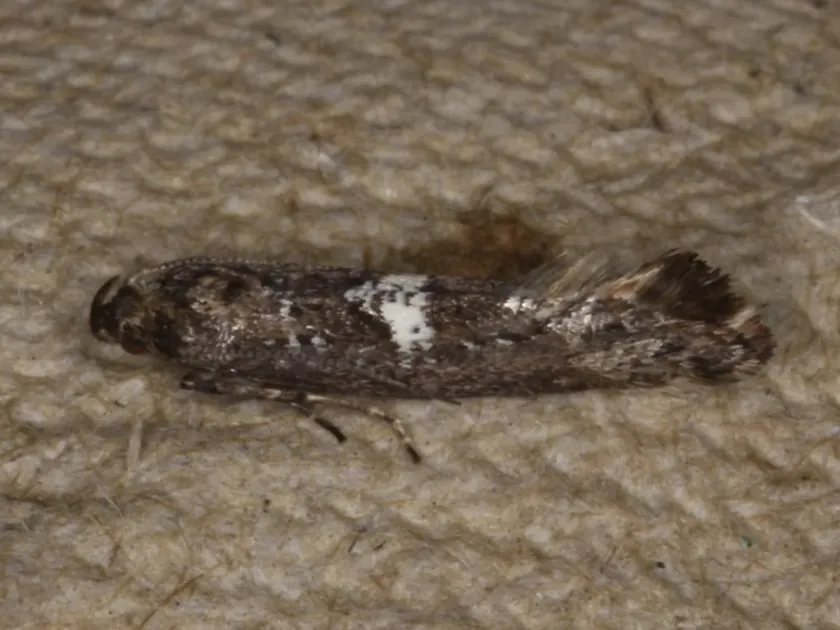
The leek moth (Acrolepia assectella) is a small moth belonging to the Acrolepiidae family. With a wingspan of only 12–15 mm, it is a cryptic insect, often difficult to spot in the field during the day.
The adult moth is brownish in color with distinct pale markings on the wings. It remains hidden in debris or soil during daylight hours and becomes active at dusk, when mating and egg-laying occur.
The larvae, which cause the actual damage, are yellow-green with small brownish warts. They grow up to 10–12 mm long and possess a distinctive brown head capsule, which is a key identification feature for agronomists.
The pupal stage occurs within a loose, net-like white cocoon. These cocoons are typically found on the leaves of the host plant or occasionally on weeds surrounding the vegetable plot.
Adults overwinter in protected areas such as plant debris, hedges, or sheds, emerging in early spring as soon as the temperature rises sufficiently for the first generation to begin development.
What it damages
The leek moth specifically targets members of the Alliaceae family. Its primary hosts include onions, leeks, garlic, shallots, and chives, posing a significant threat to these crops.
Larvae feed on the leaf tissues, creating translucent windows or mines. As they grow, they burrow deeper into the foliage, often entering the center of the hollow leaves, leading to severe structural damage.
Infested plants exhibit withered, drooping leaves, which severely stunts the growth of the bulb or the development of the leek stalk, ultimately leading to significant yield losses.
The tunnels created by larvae allow pathogens, such as fungal and bacterial soft rots, to enter the plant tissues, leading to secondary infections that can ruin the entire crop.
Young plants are particularly vulnerable; a heavy infestation can cause complete plant failure, necessitating early intervention to protect the integrity of the vegetable stand.
When it appears
The leek moth typically completes two to three generations per year, depending on the climatic conditions of the region and the total heat units accumulated during the season.
The first generation emerges in late spring, usually May, coinciding with the rapid growth phase of onions and leeks, making the crops highly susceptible during this period.
Successive generations emerge throughout the summer months, creating a continuous pressure on the crops. The overlap of generations often makes it difficult to pinpoint a single window for treatment.
The peak of larval activity usually occurs in mid-summer when warm temperatures accelerate their metabolism, leading to faster larval development and more intensive feeding.
As temperatures drop in the autumn, the final generation of moths seeks shelter to enter diapause, effectively ending the period of active damage for that growing season.
Signs of infestation
Early symptoms include small, irregular white spots on the leaves, which are the result of young larvae grazing on the internal leaf tissue without breaking the outer epidermis.
As the larvae mature, their feeding habits result in more noticeable mines, often accompanied by the presence of fine silk webbing woven inside the foliage for protection.
Wilting of the leaves, starting from the tip downwards, is a classic sign of infestation. Affected leaves often turn yellow, die back, and may become distorted or twisted.
A closer inspection of the damaged area will often reveal the frass (excrement) of the larvae, which appears as dark particles inside the hollow sections of the onion or leek leaf.
- Small translucent window-like marks on foliage.
- Premature yellowing and dying of leaf tips.
- Presence of white, lace-like cocoons on leaves.
Control measures
Cultural control practices are fundamental; these include clearing crop residues immediately after harvest to remove overwintering sites and implementing crop rotation.
Physical barriers, such as using horticultural fleece (row covers) during the flight periods of the moths, are highly effective in preventing females from laying eggs on plants.
Biological control using Bacillus thuringiensis (Bt) has proven effective against younger larvae, providing an environmentally friendly alternative to traditional chemical insecticides.
For chemical control, targeted application of contact or systemic insecticides may be necessary during the peak of adult flight, based on monitoring with pheromone traps.
Monitoring is crucial; deploying pheromone traps allows farmers to detect the arrival of the moths and time their interventions accurately to minimize damage to the crop.
Taxonomy
- Latin name
- Acrolepia
- Order
- Lepidoptera (butterflies)
- Family
- Plutellidae
- EPPO code
- ACROSP
Discussion
No discussions yet — be the first.