
Apple capsid
Plesiocoris
Description
How to identify
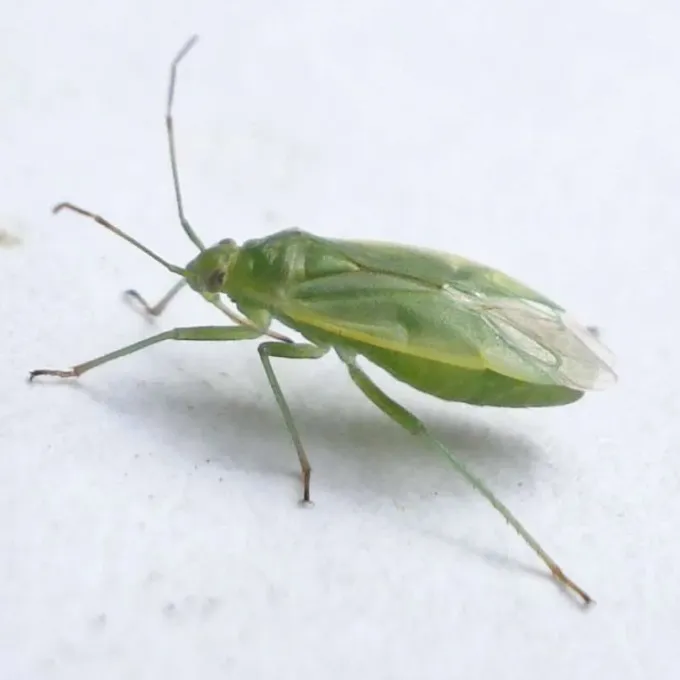
The apple capsid Plesiocoris rugicollis is a mirid bug known as a significant pest in orchards. The adult insect is approximately 5–6 mm long and possesses a vibrant green color, providing excellent camouflage against leaves.
The body of the adult is oval and flattened with long antennae. It is a highly active insect that can fly quickly when disturbed, making it difficult to detect during standard inspections.
Nymphs of this species resemble the adults but lack wings and are generally smaller. They go through five developmental stages (instars) while feeding primarily on new shoots and fruitlets.
Eggs of the apple capsid are inserted into the bark of one-year-old shoots in autumn. These overwinter successfully, hatching in early spring as the buds begin to open.
This species is widely distributed across temperate regions and poses a particular challenge in commercial apple and pear orchards during the early growing season.
What it damages
The apple capsid feeds on sap, targeting succulent tissues such as young leaves, buds, and developing fruit. Its saliva contains toxins that break down plant cells.
Leaves affected by feeding develop small holes with dark brown necrotic margins as the leaf expands. In cases of heavy infestation, the entire foliage can become severely distorted and shriveled.
Fruit damage is the most economically significant. As the insect pierces the young fruitlet, it leaves behind small pits that result in corky tissue formation and deep, irregular depressions as the fruit grows.
Deformed fruit is often stunted and develops a lumpy, scarred appearance, rendering it unsalable. This quality degradation leads to substantial financial losses for orchardists.
Severe infestations can lead to premature fruit drop and may stunt the growth of young trees due to the constant loss of vital leaf area and damage to terminal shoots.
Signs of infestation
Early spring signs include the presence of numerous small necrotic holes in the young unfolding leaves. These spots are surrounded by a characteristic yellow or brown necrotic ring.
Distorted growth patterns, including leaves that are twisted or crinkled, are clear indicators that nymphs have been feeding on the developing shoot tips during the spring months.
Tiny dark punctures on the fruit surface shortly after petal fall are a definitive sign of capsid activity. As the season progresses, these punctures grow into woody or corky scars.
When shaking the tree branches, one might observe small green insects falling or flying away, which confirms the presence of active adult or late-instar capsid populations.
A reduced overall growth rate of the canopy and brown, withered tips of current-season shoots are common symptoms of high pest pressure in the orchard.
Control measures
Management focuses on early intervention. The most vulnerable period is the time between bud burst and flowering, when the nymphs are active but have not yet caused extensive damage.
Insecticides applied before flowering are effective; however, they must be chosen to minimize risk to honeybees and other beneficial pollinators visiting the orchard.
Biological control plays an important role. Protecting native predatory insects, such as earwigs and other predatory bugs, can help keep capsid populations below the economic injury level.
Good orchard hygiene, including the removal of heavily infested shoots and keeping the area around the trees free of dense weeds, can reduce the success of egg-laying and nymph survival.
- Use pheromone or sticky traps for early detection.
- Apply targeted insecticides post-bud burst.
- Encourage biodiversity to attract natural predators.
Taxonomy
- Latin name
- Plesiocoris
- Order
- Hemiptera (bugs, aphids, leafhoppers)
- Family
- Miridae
- EPPO code
- PLESSP
Discussion
No discussions yet — be the first.