
Brown long-eared bat
Plecotus auritus
Description
How to identify
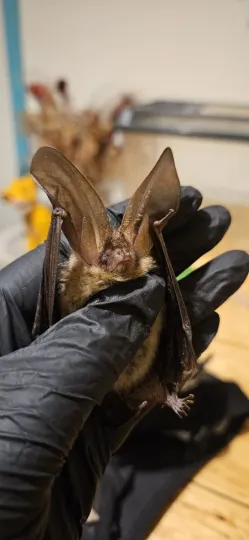
The brown long-eared bat (Plecotus auritus) is a distinctive species of vesper bat characterized by its exceptionally long ears, which can reach nearly the length of its body. When inactive, these ears are often tucked beneath the wings.
The fur color of this species varies from brownish-grey on the dorsal side to a lighter, paler shade on the ventral side. Adults typically have a body length of 40–50 mm, with wingspans ranging between 230 and 285 mm.
Its flight is slow and highly maneuverable, allowing it to navigate dense foliage and forest canopies with ease. This adaptation is crucial for hunting insects directly from leaves and branches.
The species utilizes low-intensity echolocation, which makes its hunting sounds almost undetectable by the insects it preys upon. This biological trait gives it a tactical advantage as a predator.
Brown long-eared bats are commonly found in mature deciduous and mixed woodlands. They also frequently inhabit parks, orchards, and traditional farm buildings, where they roost in crevices or rafters.
What it damages
The brown long-eared bat is definitively not a plant pest. On the contrary, it acts as a highly effective biological control agent that consumes vast quantities of nocturnal insects that are harmful to agriculture.
Their diet primarily consists of moths, beetles, and flies, many of which are known agricultural pests. By hunting these insects, bats significantly reduce the pest load in orchards and field margins.
There is no evidence of this species consuming plant matter, fruits, or crops. They lack the morphological traits, such as strong incisors for gnawing, that would allow them to damage trees or agricultural products.
The presence of these bats in an agricultural area is a positive bio-indicator, suggesting a healthy ecosystem where natural pest control is occurring without the need for intensive chemical applications.
Labeling this species as a pest is scientifically inaccurate and detrimental to sustainable farming practices. They are strictly insectivores and are ecologically beneficial to the rural landscape.
When it appears
Brown long-eared bats are active from spring through autumn. After waking from their winter torpor, they relocate to maternity roosts where females raise their young during the summer months.
Activity levels peak during the summer, coinciding with the abundance of insects. They are strictly nocturnal, emerging shortly after sunset to hunt and returning to their roosts before dawn.
As autumn progresses, the bats focus on foraging to build up sufficient fat reserves. These reserves are vital for their survival during the cold winter months when insect populations crash.
Hibernation typically begins in late autumn and lasts until early spring. They hibernate in cool, stable environments like caves, mines, hollow trees, or insulated parts of traditional buildings.
Environmental conditions strongly influence their cycle. Warm, humid nights in summer enhance their activity, while extreme weather shifts can lead to temporary periods of torpor even during the active season.
Control measures
As the brown long-eared bat is a protected and beneficial species, no control measures against them are either necessary or permitted by law in many regions. They are essential for biodiversity.
In cases where bats roost in human-occupied structures, exclusion techniques are recommended. These should only be performed outside the breeding and hibernation seasons to ensure the safety of the colony.
Chemical deterrents or pesticides should never be used, as they are harmful to the bats and cause collateral damage to the surrounding environment and beneficial insect populations.
Farmers are encouraged to install bat boxes to promote the presence of this species. This simple practice fosters a natural pest management system that reduces the need for synthetic chemicals.
Good agricultural stewardship involves preserving the habitats of these bats, such as hedgerows and old trees, to ensure they can continue their vital role in protecting crops from insect pests.
Taxonomy
- Latin name
- Plecotus auritus
- Family
- Vespertilionidae
- EPPO code
- PLKTAU
Discussion
No discussions yet — be the first.