
Western barbastelle
Barbastella barbastellus
Description
How to identify
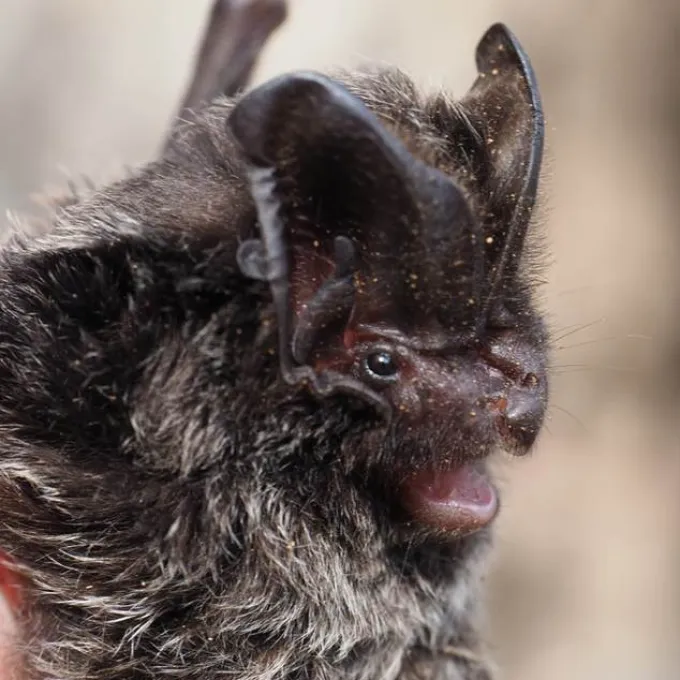
The Western barbastelle (Barbastella barbastellus) is a species of vesper bat characterized by its broad ears that join at the base on the forehead.
These bats are easily identified by their dark brown or black fur and small, pug-like faces, which are unique traits within the European bat family.
They are strictly nocturnal animals, spending their days roosting in crevices, tree hollows, or abandoned man-made structures, making them elusive to most observers.
The species is highly sensitive to habitat changes and is listed as a protected species across many European countries, requiring specific conservation efforts.
In an agricultural setting, they function as beneficial insectivores, significantly reducing the populations of nocturnal insects that may otherwise harm crops.
What it damages
The Western barbastelle is not a crop pest. It possesses no physiological ability to feed on plant tissue, nor does it inflict physical damage to fruits, grains, or roots.
On the contrary, this species provides an essential ecosystem service by consuming large quantities of insects, including many known agricultural pests.
There is no evidence of these bats interfering with farm machinery or infrastructure in a way that would classify them as pests for farmers.
Misconceptions regarding the harm caused by bats often stem from general misunderstandings, but the Western barbastelle is strictly harmless to agriculture.
Farmers benefit from their presence, as these bats help maintain a healthy ecological balance in agroecosystems without the need for additional chemical input.
When it appears
The activity of the Western barbastelle begins in spring when ambient temperatures rise and the availability of their insect prey increases.
During summer months, they are highly active, with nursing colonies establishing sites near forest edges and agricultural fields to forage nightly.
As autumn approaches, these bats focus on feeding to build fat stores essential for surviving the cold winter period in a dormant state.
During the winter, Western barbastelles enter hibernation in caves, tunnels, or cellars, meaning their activity in open farmland ceases entirely.
The seasonal cycles of this bat are strictly determined by the climate and the migration or emergence patterns of the insects they hunt.
Control measures
As the Western barbastelle is a protected and beneficial species, control measures or extermination attempts are strictly prohibited and illegal.
The best practice for land managers is to preserve natural roosting sites, such as older trees with hollows and hedgerows, which provide essential habitat for these bats.
Reduced reliance on broad-spectrum pesticides is recommended to protect bat populations, as these chemicals can kill the very insects they rely on for food.
Integrated Pest Management (IPM) strategies that prioritize biological control are the most effective ways to utilize the services provided by this bat species.
Promoting biodiversity around farmland encourages the Western barbastelle to remain in the area, providing sustainable and natural pest control for crops.
Taxonomy
- Latin name
- Barbastella barbastellus
- Family
- Vespertilionidae
- EPPO code
- BBSTBA
Discussion
No discussions yet — be the first.