
Big brown bat
Eptesicus fuscus
Description
How to identify
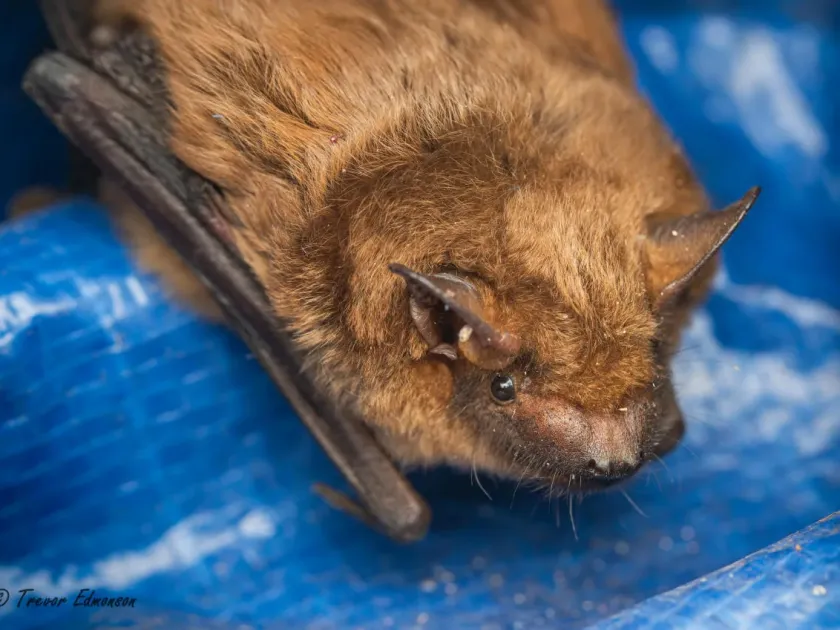
The big brown bat (Eptesicus fuscus) is a common species of bat belonging to the family Vespertilionidae. It is identified by its sturdy build, broad nose, and brown fur, which provides excellent camouflage during its nocturnal activities.
In an agronomic context, the big brown bat is not a pest. Instead, it is highly regarded as a natural biological control agent that consumes large quantities of insects, many of which are known agricultural pests.
These bats are highly adaptable and frequently roost in trees, barns, and other farm structures, allowing them to exert pressure on insect populations in close proximity to managed lands.
They utilize sophisticated echolocation to navigate and capture prey in total darkness, making them exceptionally efficient at patrolling fields during the night.
Adult bats are physically robust with a wingspan of approximately 30 to 35 cm, which gives them the maneuverability needed for catching diverse flying insects.
What it damages
The big brown bat causes zero damage to crops, vegetables, grains, or fruit. It is an exclusive insectivore that feeds entirely on insects and lacks the biological apparatus to consume plant tissue.
Farmers do not face crop loss, yield reduction, or quality degradation due to the activity of this species. There is no evidence of these bats interfering with agricultural harvest processes.
The only minor concern for farmers might be the accumulation of guano in enclosed storage spaces, which is a sanitation issue rather than an agronomic pest problem.
The impact of the big brown bat on the farm environment is largely beneficial. By preying on nocturnal moths and beetles, they naturally reduce the necessity for excessive chemical pesticide use.
Therefore, they should be considered essential components of an integrated pest management strategy rather than agricultural pests.
Control measures
Direct control measures are not recommended and are often prohibited by law due to the important ecological role big brown bats play in sustaining natural insect control.
Management, if necessary, should focus on exclusion techniques such as sealing entry points to buildings or installing barriers to prevent roosting in specific locations.
It is vital to limit the use of broad-spectrum pesticides on crops, as these chemicals can accumulate in the bats' bodies through the insects they ingest, posing a health risk to the colony.
Farmers are encouraged to create bat-friendly environments, such as installing bat boxes, to promote their presence as natural predators of crop-damaging insects.
Sustainable agriculture practices favor the coexistence of farmers with big brown bats, leveraging their natural hunting habits to support healthier crop production.
Taxonomy
- Latin name
- Eptesicus fuscus
- Family
- Vespertilionidae
- EPPO code
- EPTEFU
Discussion
No discussions yet — be the first.