
Long-eared bat
Plecotus
Description
How to identify
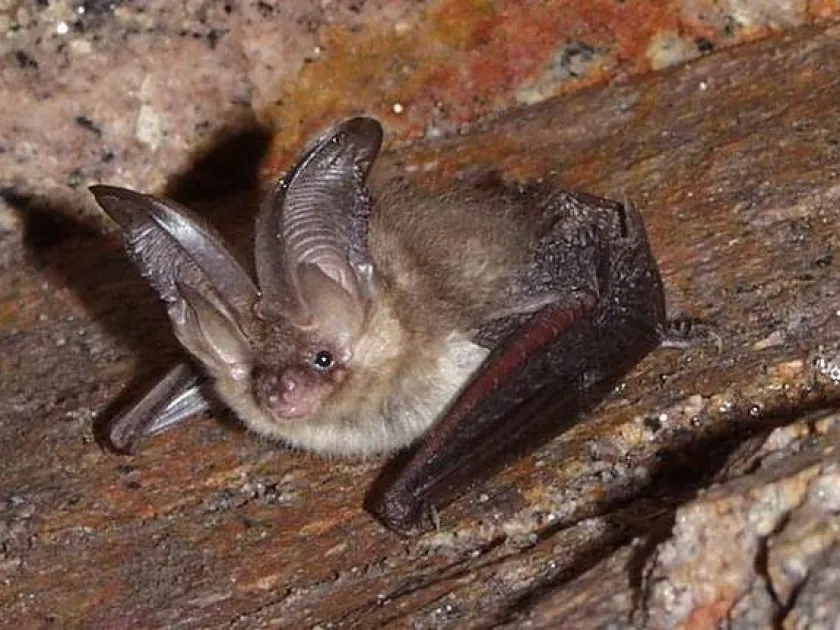
The long-eared bat (genus Plecotus) is a mammal belonging to the order Chiroptera, family Vespertilionidae. Its most striking feature is its exceptionally long ears, which are nearly as long as its body.
Their fur ranges in color from light grey to brownish, providing excellent camouflage in wooded or rocky environments. They are relatively small animals that spend their days resting in hollow trees, attics, or crevices.
These bats navigate and hunt using sophisticated echolocation, allowing them to capture insects in total darkness. They are strictly nocturnal and insectivorous predators.
In agronomy, the long-eared bat is considered a highly beneficial species rather than a pest. They contribute to the ecosystem by maintaining natural balance.
Understanding their biology is essential for modern farmers who aim to utilize natural biological control methods to protect their crops.
What it damages
The long-eared bat is not an agricultural pest; it does not damage crops, fruit trees, or any other plants. They do not feed on vegetation, sap, or plant tissues.
Instead, they are efficient predators that feed on moths, beetles, and other insects that can be harmful to agriculture. They serve as a natural barrier against pest infestations.
No reports exist of Plecotus species causing damage to harvests. They are strictly carnivores, focusing their activity on the management of insect populations.
Misidentifying bats as pests is a major misconception in traditional agriculture. They are allies that work silently to reduce the burden of harmful insects on farm plots.
Farmers are encouraged to value the presence of these bats as a sign of a healthy, productive field where natural pest suppression is taking place.
When it appears
Long-eared bats are active during the warmer months, typically from spring through autumn, which aligns with the insect breeding season.
During the spring, they emerge from hibernation to feed and regain strength. This period is crucial for the early growth stages of agricultural plants.
In the summer, the demand for food increases significantly as they raise their offspring, leading to higher rates of insect consumption across the landscape.
As autumn arrives, they feed intensively to build up fat reserves necessary for winter hibernation. This activity helps keep late-season insect pests in check.
Winter marks the period of torpor or hibernation, during which the bats remain in protected shelters and have no interaction with agricultural activity.
Signs of infestation
There are no signs of damage caused by long-eared bats, as they do not attack plants. Any leaf holes or fruit bite marks found on crops are the result of insect or rodent activity.
The presence of bats might be noticed through their droppings found in roosting areas like barns or near trees, which serves as a natural fertilizer.
Observing bats flying over fields at twilight is a sign that the local ecosystem is functioning well. It is a biological marker for an environment that supports natural predators.
No agricultural inspection protocol is required to monitor for "bat damage" because such damage is non-existent. You should look for other causes if your crops show symptoms of distress.
Embracing the presence of bats is a sign of sustainable farming practice, reflecting an ecosystem with high levels of natural pest control.
Control measures
Control measures against long-eared bats are not necessary and, in many regions, are illegal due to their protected status as beneficial mammals.
Instead, farmers should implement methods to attract them. Installing bat houses and maintaining hedgerows or old trees helps create habitats for these animals.
Reducing the reliance on broad-spectrum synthetic insecticides is vital, as these chemicals can kill the insects that bats feed on and may even harm the bats themselves.
Supporting bat colonies as part of an Integrated Pest Management (IPM) strategy is a highly effective, low-cost way to enhance farm productivity.
Conserving these natural predators is a forward-thinking practice that aligns modern agriculture with nature conservation and sustainable growth.
Taxonomy
- Latin name
- Plecotus
- Family
- Vespertilionidae
- EPPO code
- PLKTSP
Discussion
No discussions yet — be the first.