
Platysoma
Platysoma
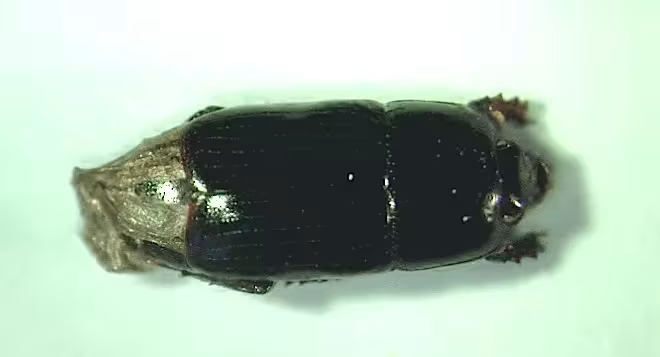
Description
How to identify
The genus Platysoma belongs to the family Histeridae, commonly known as clown beetles or hister beetles. These insects are easily recognized by their highly flattened, shiny bodies, which are an evolutionary adaptation to living in narrow spaces beneath bark.
The adults are typically black or dark brown. Their heads are somewhat retractable into the pronotum, and the elytra feature distinct longitudinal striae, which are crucial diagnostic characteristics for identifying specific species within this group.
The larvae are elongated and possess robust mouthparts designed for navigating and feeding within woody debris or beneath the bark of decaying trees. Their coloration is usually pale, varying from whitish to light yellow.
While many Histeridae are predatory, members of the genus Platysoma are frequently associated with decaying wood and subcortical habitats. Identifying them correctly requires observation of the specific elytral patterns and antennal structure.
In forest and orchard environments, accurate identification is essential to distinguish between species that are truly beneficial as predators and those that may contribute to the breakdown of stressed trees.
What it damages
Platysoma beetles primarily inhabit weakened, stressed, or dying deciduous trees. They are rarely considered primary pests of healthy trees, as they tend to gravitate towards sites where the tree's defenses are already compromised.
The damage caused involves the physical expansion of galleries under the bark. This activity can loosen the bark from the wood, which promotes moisture loss and facilitates the entry of wood-decay fungi and other pathogens.
In managed orchards, their presence serves as a diagnostic indicator of poor tree health. They are often part of a complex of secondary pests that accelerate the decline of trees already affected by drought, disease, or insect borers.
While their impact on live trees is typically secondary, in forest ecology, they play a role in the natural decomposition of wood by accelerating the fragmentation of bark and surface tissues.
Overall, they do not usually kill healthy, vigorous trees, but their population density can become high in areas with significant amounts of unmanaged deadwood or logging residue.
When it appears
The activity of adult Platysoma beetles typically begins in the spring when temperatures consistently rise above the threshold for insect emergence and movement.
Throughout the summer, adults actively search for suitable hosts to colonize. This is the primary period for egg-laying, as the beetles seek out cracks or existing insect holes in the bark of their target trees.
Larval development occurs throughout the warmer months. Depending on the environmental conditions and species, the life cycle may be completed in a single season or span over multiple years.
Overwintering usually takes place in the larval or adult stage, with the insects seeking shelter deep within the bark, in the subcortical layers, or in the leaf litter at the base of the tree.
Monitoring for these beetles is most effective from late spring to mid-summer, when the adults are most active and visible on the surface of tree trunks.
Control measures
The primary control measure for Platysoma is consistent sanitation in forests and orchards. Removing dead, dying, and wind-thrown trees removes breeding grounds and significantly reduces the local population.
Maintaining tree vigor is the best preventive strategy. Regular irrigation, nutrient management, and protection against physical injury ensure that trees remain resistant to infestation by secondary pests.
Chemical control is rarely recommended for these insects. In exceptional cases, such as in high-value nurseries, systemic or contact insecticides may be applied, but this should only be done after confirming the pest's impact.
Biological control, primarily through the encouragement of woodpeckers and other insectivorous birds, is an effective way to keep subcortical beetle populations in check naturally.
Pheromone or visual traps can be utilized for monitoring purposes to determine when to implement management strategies, ensuring that interventions are targeted and ecologically sustainable.
Taxonomy
- Latin name
- Platysoma
- Order
- Coleoptera (beetles)
- Family
- Histeridae
- EPPO code
- PLTSSP
Discussion
No discussions yet — be the first.