
Lesser mealworm
Carcinops pumilio
Description
How to identify
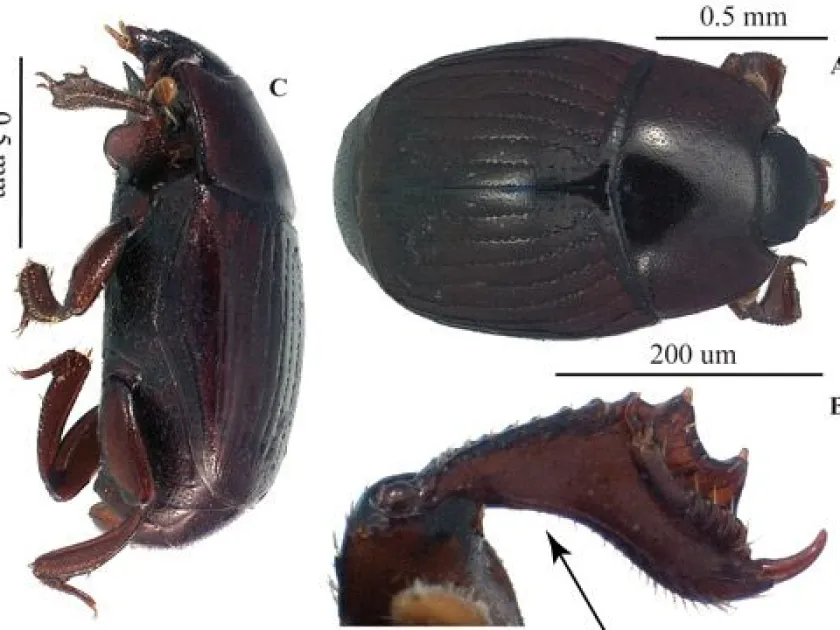
The Lesser mealworm, scientifically known as Carcinops pumilio, belongs to the Histeridae family of beetles. It is characterized by a small, oval-shaped, and heavily sclerotized body.
Adult beetles typically measure between 1.5 and 2.5 millimeters in length. Their appearance is defined by a deep black color with a distinctive metallic sheen on the elytra.
The larvae are slender and cream-colored, possessing a soft body structure that allows them to thrive within compacted organic substrates or moist animal waste.
The antennae are club-shaped, which aids the beetle in navigating through debris and cracks where it often resides to escape environmental stressors.
The lifecycle follows a complete metamorphosis: egg, larva, pupa, and adult. They are remarkably resilient to varying temperatures and can survive in harsh conditions for extended periods.
What it damages
The primary concern regarding Carcinops pumilio is its role as a mechanical vector for various pathogenic bacteria and viruses in intensive livestock and poultry farming operations.
While they are not a primary agricultural pest in terms of crop consumption, they cause significant indirect damage by contaminating organic fertilizer and compost materials intended for field use.
Within farm structures, these beetles are known to bore into structural insulation, such as expanded polystyrene, causing extensive damage that compromises thermal efficiency.
Mass populations in manure pits can significantly alter the decomposition process of organic matter, making it less suitable for high-quality soil amendment applications.
Their presence in storage facilities can lead to the deterioration of grain or other agricultural products if moisture levels allow for their proliferation in associated waste.
When it appears
Carcinops pumilio activity is highly dependent on ambient temperatures. They thrive at temperatures between 20 and 30 degrees Celsius, showing minimal seasonal dormancy in climate-controlled environments.
In industrial poultry houses, the beetle can maintain continuous breeding cycles throughout the year, making seasonal management less relevant than ongoing sanitation.
Peak movement of the beetle population typically occurs during the warmer months, when adults actively fly to migrate or establish new colonies in accessible food sources.
Humidity serves as a major driver for population growth. High moisture content in litter or soil creates an optimal environment for egg-laying and larval development.
As temperatures drop during winter, adults seek shelter deep within building crevices or soil, entering a period of reduced metabolic activity until warmer conditions return.
Signs of infestation
A primary indicator of infestation is the observation of numerous small, black, shiny beetles scurrying across moist litter or manure during low-light hours.
The presence of fine, sawdust-like material beneath structural panels indicates that the beetles have begun burrowing into the building’s insulation layers.
Clusters of larvae concentrated in damp, organic debris are a clear sign of an established breeding colony requiring immediate attention.
The emergence of adults in large numbers following facility cleanup indicates that the population has persisted in structural cracks or deep bedding residues.
A persistent, musty odor often accompanies high-density infestations, caused by the accumulation of insect remains and biological waste produced by the colony.
Control measures
Managing Carcinops pumilio requires a multi-faceted strategy that prioritizes sanitation to remove the resources the beetle depends on for survival.
Frequent removal of litter and manure is the most effective way to disrupt the lifecycle and prevent the establishment of a large population.
Chemical treatments are most effective when applied immediately after facility cleaning, targeting both the adults and the hiding spots within structural gaps.
Recommended management practices include the following:
- Strict sanitation protocols including the removal of all organic buildup.
- Application of targeted insecticides registered for use in agricultural premises.
- Usage of biological control agents, such as entomopathogenic fungi, to reduce larval counts.
- Sealing cracks and crevices in wall structures to prevent migration.
- Monitoring with pheromone or light-based traps to determine the timing and intensity of chemical applications.
Taxonomy
- Latin name
- Carcinops pumilio
- Order
- Coleoptera (beetles)
- Family
- Histeridae
- EPPO code
- CNOPPU
Discussion
No discussions yet — be the first.