
Aeletes beetle
Aeletes
Description
How to identify
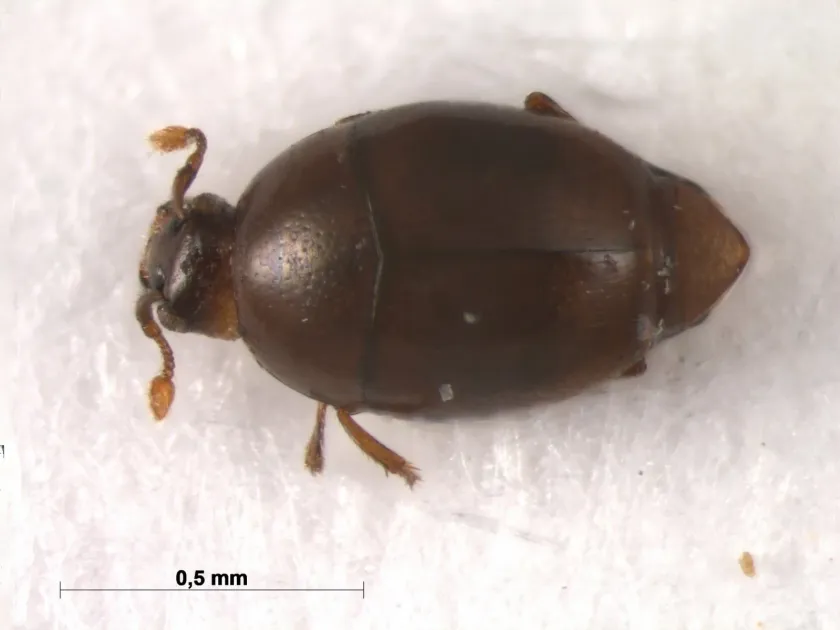
Beetles of the genus Aeletes belong to the Histeridae family, characterized by a compact, strongly convex, and often shiny body of oval or nearly circular shape. Adult specimens are extremely small, usually not exceeding 1–2 millimeters in length, making them difficult to detect during visual inspection.
The coloration of these insects varies from dark brown to coal black. The head is retracted into the pronotum, and the antennae feature a characteristic club at the end, which serves as a diagnostic trait for the family.
The elytra are hard, often featuring shortened grooves or remaining completely smooth, covering the abdomen. The legs are adapted for digging and moving within narrow galleries, reflecting their ecological specialization.
Larvae have an elongated, slightly flattened body, usually white or yellowish with a chitinized head. They lead a cryptic lifestyle, which makes them inaccessible to many contact insecticides.
Systematically, this genus is part of the order Coleoptera. It is important to note that many Histeridae are considered beneficial entomophages, yet some species are closely linked to the decay of wood or accumulation of organic debris.
What it damages
Although Histeridae are more often associated with the decomposition of organic matter, species of the genus Aeletes are frequently found in rotting plant tissues, under the bark of weakened trees, and in piles of plant debris.
In an agronomic context, they may damage crops that are under stress or facilitate the spread of fungal infections by carrying pathogen spores on their bodies while moving through plant tissues.
The primary damage consists of indirect impacts on the integrity of the bark and phloem, which provides access for secondary pests and pathogenic microorganisms, accelerating the death of the weakened plant.
They prefer moist habitats, often occurring in greenhouses with poor ventilation or on plantations where excessive mulching with fresh organic residues is practiced.
In storage conditions, they can be found in areas where damp grain or plant raw materials are stored, feeding on both decay products and small insects inhabiting the environment.
When it appears
Insect activity begins with the onset of sustained warm temperatures, as the topsoil and plant residues where adults overwinter start to warm up.
Peak population numbers are observed in mid-summer, when high humidity promotes the rapid development of larvae in available substrates.
In autumn, adult beetles migrate to overwintering sites, such as bark crevices, deep layers of litter, or soil, where they enter diapause until the following season.
The life cycle includes complete metamorphosis: egg, larva, pupa, and adult. The entire process is highly dependent on temperature regimes and environmental humidity levels.
In greenhouse conditions, with consistent climate parameters maintained year-round, generation development can occur continuously.
Signs of infestation
The first sign of infestation is the presence of small entrance holes in the bark or plant stems, often mistaken for the activity of other pest species.
Upon opening damaged areas, one can discover specific galleries filled with excrement or the beetles themselves, which press their legs tightly against their bodies when threatened.
The presence of large numbers of tiny black beetles in decomposing plant debris indicates a breach of sanitary standards on the site.
An indirect sign is the appearance of rot patches on stems, spreading from areas chosen by insect colonies for feeding.
Intensive development of fungal mycelium on damaged areas often accompanies the activity of these beetles, creating a favorable microenvironment for their further reproduction.
Control measures
The key method of management is the strict adherence to agronomic practices aimed at maintaining cleanliness and dryness in storage facilities and on the plantations themselves.
Timely removal and disposal of rotting plant residues, which serve as primary breeding grounds for pests of this genus, are highly recommended.
Ensuring proper ventilation in greenhouses and warehouses allows for the reduction of humidity to levels unsuitable for the active life of these insects.
In cases of high infestation, the use of biological preparations based on entomopathogenic fungi is possible, as they effectively target adults and larvae in their natural shelters.
Chemical protection requires a targeted approach aimed at localizing outbreaks, as the cryptic lifestyle of the beetles often renders general spraying ineffective.
Taxonomy
- Latin name
- Aeletes
- Order
- Coleoptera (beetles)
- Family
- Histeridae
- EPPO code
- AELESP
Discussion
No discussions yet — be the first.