
Hister beetle
Carcinops
Description
How to identify
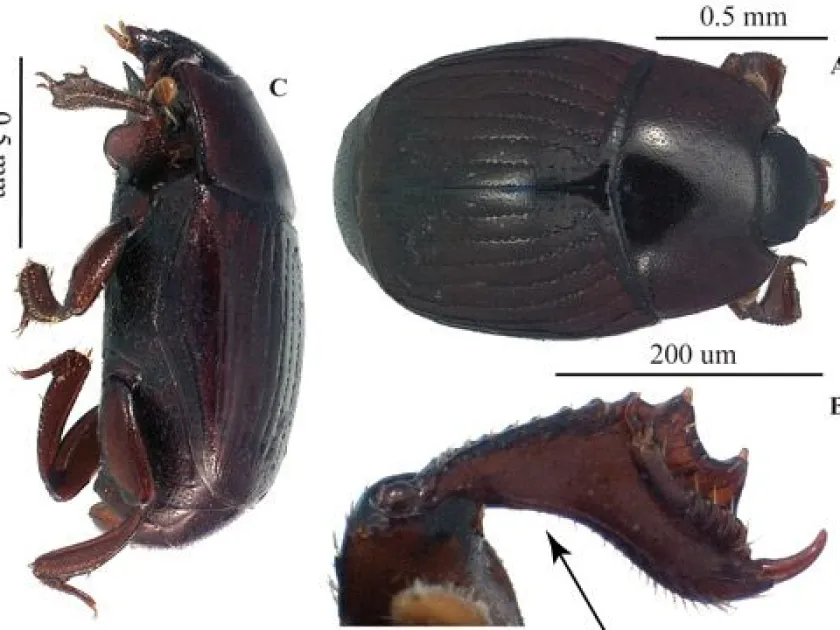
Hister beetles of the genus Carcinops are small, oval-shaped insects characterized by their highly polished, black, and flattened appearance.
The dorsal surface of the elytra displays distinct longitudinal striae, which are critical morphological features for identifying different species.
Their heads are retractable into the prothorax, and they possess short, elbowed antennae that terminate in a club, often hidden in special grooves.
Adults are known for their ability to tuck their appendages tightly against the body, a defensive mechanism that makes them look like small, inert seeds.
Larvae are elongated and somewhat flattened, featuring powerful mandibles and specialized sensory hairs that assist in navigating their decaying organic environment.
What it damages
While many Carcinops species act as beneficial predators of fly larvae in organic debris, they can become a nuisance in specific storage environments.
In agricultural storage facilities, they may contaminate grain and organic materials with their excrement, lowering the overall quality of the product.
These beetles are known to act as vectors for various microorganisms, which can potentially spread pathogens within poultry houses or storage sheds.
High densities of beetles can lead to physical damage of structural components in storage facilities if the material is already moist and degraded.
They can also outcompete other beneficial organisms in managed systems, potentially disrupting the ecological balance required for sustainable waste processing.
When it appears
The life cycle of Carcinops is highly dependent on ambient temperature and the availability of suitable moist organic matter for larval development.
Peak activity generally occurs during warmer months when adults are most mobile and focus their efforts on finding optimal egg-laying sites.
Overwintering typically takes place in the adult stage, with beetles seeking refuge deep within soil, bark crevices, or protected organic debris.
In temperature-controlled storage facilities, reproduction can continue year-round, bypassing the natural seasonal dormancy observed in wild populations.
High humidity levels significantly reduce development time from egg to adult, leading to explosive population growth within a short timeframe.
Signs of infestation
The most reliable sign of a Carcinops infestation is the presence of active adult beetles moving on the surface of organic waste or stored materials.
Observing small, irregular tunnels in decomposing organic substrates or moist grain residues is a strong indication of larval presence and feeding activity.
Accumulation of tiny, dark-colored fecal pellets in specific areas indicates high beetle activity and the presence of established breeding colonies.
A distinctive, slightly musky odor often accompanies large populations of these beetles, especially in poorly ventilated storage environments.
- Visual sighting of adult beetles on the substrate surface.
- Discovery of larvae within moist or decaying organic matter.
- Accumulation of small fecal deposits near infested areas.
Control measures
The most effective strategy for managing these populations is maintaining high levels of sanitation to remove decaying organic matter and food residues.
Implementing strict moisture control in storage areas is crucial, as dry environments are generally unsuitable for the survival of beetle larvae.
Biological control agents, such as specific entomopathogenic fungi, can be used to manage populations without the need for harsh chemical inputs.
When chemical intervention is required, only approved insecticides should be used in accordance with safety regulations for storage and handling facilities.
Routine monitoring using pheromone or food-based traps helps detect infestations early, preventing the population from reaching levels that require intensive treatment.
Taxonomy
- Latin name
- Carcinops
- Order
- Coleoptera (beetles)
- Family
- Histeridae
- EPPO code
- CNOPSP
Discussion
No discussions yet — be the first.