
Platynus assimilis
Platynus assimilis
Description
How to identify
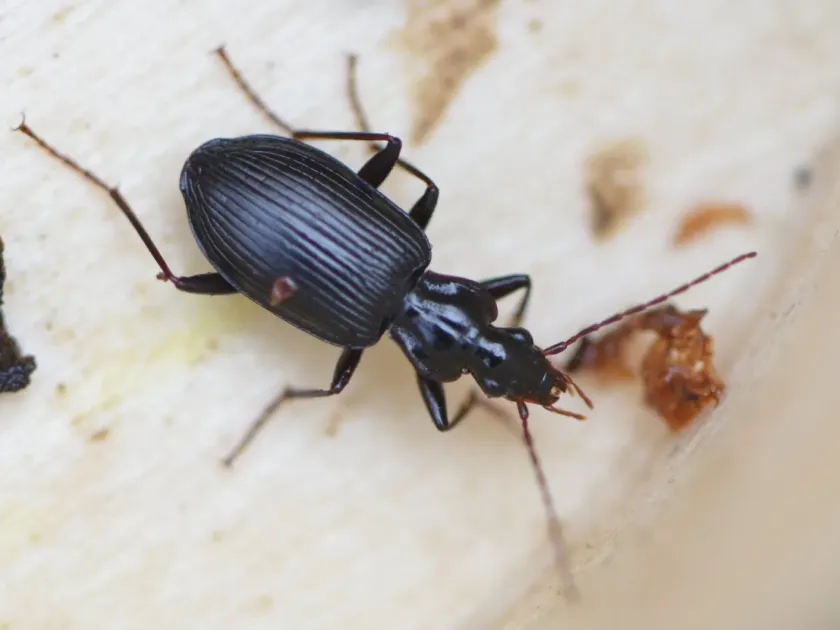
Platynus assimilis is a member of the Carabidae family, commonly known as ground beetles, within the order Coleoptera. It features a flattened, elongated body shape that is typical for insects that dwell under debris and within soil cracks.
The coloration of the adult beetle is generally dark, ranging from dark brown to black, often exhibiting a subtle metallic sheen on the elytra (wing covers).
The head is clearly distinct, equipped with strong, specialized mandibles that are designed for grasping prey, as these beetles are primarily predatory by nature.
Larvae are typically campodeiform, highly active, and sclerotized, allowing them to hunt effectively within the top layer of the soil profile.
The adults are equipped with functional wings and are capable of flight, which facilitates their movement across agricultural landscapes in search of suitable environments.
What it damages
Although Platynus assimilis is primarily categorized as a beneficial predator, it can occasionally shift its diet to phytophagy when natural prey populations are scarce.
The primary concern for farmers arises when these beetles feed on the stems and seed leaves of young crop sprouts, such as cereals and vegetables.
Such damage typically occurs during the early establishment phase of the crop, potentially leading to stand reduction if the beetle population density is high.
Fields with significant weed cover or accumulation of crop residues tend to attract higher numbers of these beetles, increasing the risk of incidental crop injury.
Economic damage is generally observed as isolated patches of stunted or consumed seedlings rather than field-wide devastation.
When it appears
The activity cycle of Platynus assimilis peaks during the spring and early summer when moisture levels and temperatures are optimal for growth.
During the peak activity season, adults and larvae are most mobile, foraging extensively across the soil surface and through the leaf litter.
As the season progresses into late summer and autumn, activity levels decline as the insects seek out overwintering sites for the cold months.
The life cycle encompasses a complete metamorphosis, involving eggs, multiple larval instars, a pupal stage, and the emergence of the adult beetle.
Adverse weather conditions, such as prolonged drought, force the beetles to retreat into deeper soil crevices to avoid desiccation.
Signs of infestation
Visual identification of infestation involves spotting damaged sprouts that show signs of gnawing at the base of the stem or on the cotyledons.
Observation of the soil surface during dusk or dawn can reveal the presence of the beetles, as they are often nocturnal or crepuscular hunters.
High population densities can often be confirmed using pitfall traps, which are standard tools for monitoring ground-dwelling beetle populations.
The presence of beetle feces or remnants of consumed soil invertebrates near the base of crop plants can serve as an additional diagnostic sign.
Accurate species confirmation usually requires entomological examination to distinguish this species from other similar ground beetles inhabiting the same niche.
Control measures
Integrated pest management strategies focusing on crop rotation are effective in preventing the buildup of ground beetle populations in specific fields.
Tillage practices, particularly fall plowing, can disrupt the lifecycle by destroying overwintering habitats and reducing the success of larval development.
- Applying insecticidal seed treatments to protect seedlings during the critical germination phase.
- Maintaining clean fields by removing weeds that provide shelter for adult beetles.
- Targeted application of insecticides if population thresholds are consistently exceeded.
Conserving natural habitats adjacent to fields can promote a balance of natural enemies, which may help regulate ground beetle numbers biologically.
Ensuring optimal field conditions for rapid crop growth helps seedlings bypass the highly vulnerable stage before the beetles can cause significant damage.
Taxonomy
- Latin name
- Platynus assimilis
- Order
- Coleoptera (beetles)
- Family
- Carabidae
- EPPO code
- PLTNAS
Discussion
No discussions yet — be the first.