
Platynus
Platynus
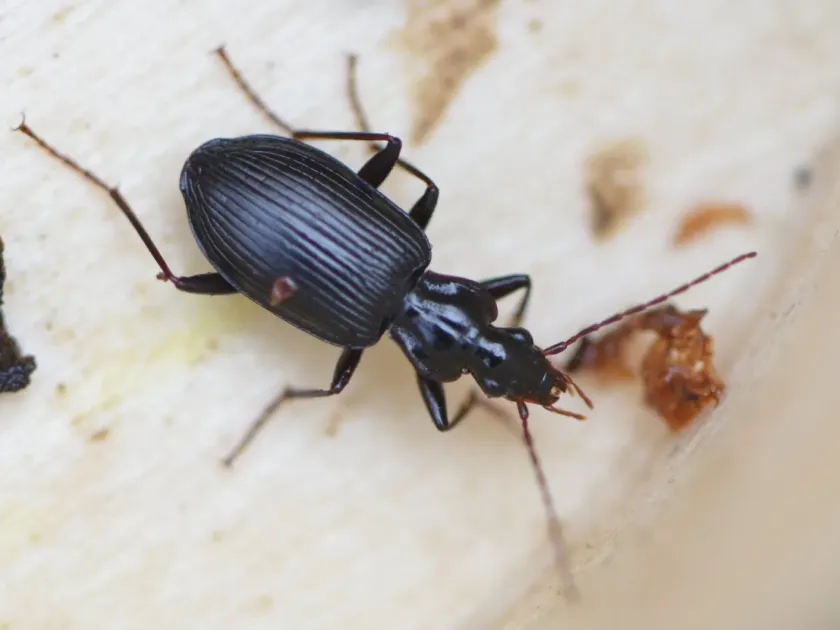
Description
How to identify
The genus Platynus belongs to the ground beetle family (Carabidae), within the order Coleoptera. These beetles are generally recognized by their flattened body shape, which allows them to navigate narrow crevices in the soil and under decaying organic matter.
Adult beetles typically possess a dark, sometimes iridescent or metallic, coloration. Their morphology often includes a heart-shaped or rounded pronotum and well-developed elytra featuring distinct longitudinal striae, with body lengths ranging from 7 to 12 mm.
Larvae of the genus are characterized by an elongated, sclerotized appearance with robust mouthparts suited for predatory behavior, although some species exhibit mixed feeding habits in agricultural environments.
Correct identification is critical, as many carabids are beneficial predators that consume crop pests. Misidentifying Platynus can lead to unnecessary chemical applications that disrupt natural ecological balances.
Professional identification often requires specimen collection using pitfall traps (Barber traps) and subsequent examination of genitalia or structural features under a microscope to confirm the specific species.
What it damages
While most Platynus species function as beneficial predators, high population densities in agricultural fields can lead to facultative phytophagy, especially when their primary prey source is scarce.
The damage usually occurs during the early seedling stages of crops like cereals or vegetables. Adults and larvae may feed on the epidermis of young leaves or damage the growing point of seedlings, which can significantly reduce plant stand density.
Fields with high amounts of crop residue or minimal tillage are more susceptible to damage, as these environments provide ideal shelters and breeding grounds for the beetles.
Damaged plants often show weakened growth and are more susceptible to secondary infections by soil-borne pathogens, as the feeding wounds create entry points for bacteria and fungi.
Economic losses are usually assessed by the density of the population per square meter, which helps determine whether the pest impact justifies active control interventions.
When it appears
Platynus activity is strongly correlated with temperature and soil moisture. Beetles typically emerge from overwintering sites in early spring, once soil temperatures rise above 5-8 degrees Celsius.
Summer activity is often reduced during periods of heat and drought, as the beetles seek refuge in deeper soil layers or dense vegetation to avoid desiccation. A secondary activity peak often occurs in the autumn.
The life cycle is closely linked to humidity. Moderate spring rainfall creates optimal conditions for the emergence and subsequent larval development, increasing the potential for crop damage during the sensitive seedling stage.
Overwintering occurs primarily in the adult stage within the soil profile, underneath decaying vegetation, or in field margins, where they wait for favorable conditions to reactivate.
Tracking seasonal trends and local climate patterns is essential for agronomists to anticipate peak activity and implement timely monitoring in at-risk fields.
Signs of infestation
A primary indicator of Platynus presence is the appearance of jagged or irregular feeding marks on the edges of young leaves. Unlike slugs, these marks are typically dry and lack slime trails.
Visual confirmation can be achieved by inspecting the base of plants during early morning or late evening. The use of subterranean or surface-level pitfall traps provides a more objective measure of population size.
The sudden appearance of localized thin spots or "gaps" in the crop row shortly after emergence can be a sign of feeding activity, particularly if the plant tissue shows signs of necrosis.
In cases of severe infestation, the growing points of cereals may be completely destroyed, causing the plant to wither and fail to produce viable stems, which significantly impacts the harvest density.
Always distinguish these signs from similar damage caused by other coleopteran pests like the cereal ground beetle (Zabrus tenebrioides), which typically causes much more severe economic damage.
Control measures
Integrated Pest Management (IPM) for Platynus begins with cultural practices. Deep plowing and soil cultivation can disrupt overwintering habitats and significantly reduce local beetle populations.
Crop rotation serves as a powerful tool to break the life cycle of the pest, preventing the buildup of beetle populations that can occur in continuous monoculture systems.
Chemical control should be considered a last resort. If the economic threshold is exceeded, seed treatments or systemic insecticides may be applied to protect the crop during the vulnerable establishment phase.
Sanitation of field edges and the removal of excessive organic trash near the soil surface can make the environment less hospitable for the beetles to reside and proliferate.
Promoting a healthy environment for natural predators, such as birds or entomopathogenic fungi, is an effective long-term strategy to naturally regulate populations within the agroecosystem.
Taxonomy
- Latin name
- Platynus
- Order
- Coleoptera (beetles)
- Family
- Carabidae
- EPPO code
- PLTNSP
Discussion
No discussions yet — be the first.