
Platyderus depressus
Platyderus depressus
Description
How to identify
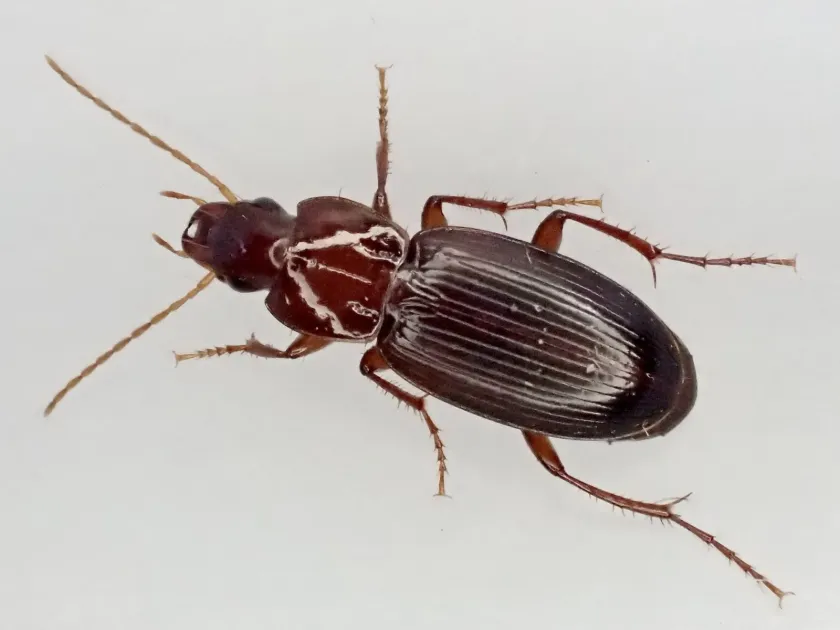
Platyderus depressus is a species belonging to the family Carabidae (ground beetles) within the order Coleoptera. These insects are primarily nocturnal and reside in the upper soil layers and forest floor litter.
Adult beetles are characterized by their flattened body shape, which allows them to move efficiently through narrow soil crevices and beneath plant debris. Their color is typically dark, often displaying a metallic or dull sheen.
The larvae exhibit a campodeiform body shape typical of ground beetles. They are equipped with well-developed mouthparts and are highly mobile within the soil profile, actively searching for food sources.
Identification of the species is based on specific morphological features, such as the shape of the pronotum and elytra. Because they resemble other carabid species, laboratory examination is often required for precise identification.
These beetles prefer moist, grassy, or undisturbed environments. Consequently, they are frequently found on the edges of agricultural fields, near woodland, or in uncultivated areas that provide suitable habitat.
What it damages
The primary damage is caused by the larvae, which, when natural food sources are scarce, may feed on the underground parts of young crop plants. Vulnerable crops include winter cereals and emerging seedlings.
Larval feeding involves gnawing on roots and the base of the stems of young plants. This activity results in the weakening of the seedlings, stunted growth, and in severe cases, the death of the plants.
When environmental stress such as drought occurs, or when crop rotation practices are neglected, Platyderus depressus may shift its diet toward young agricultural crops, causing significant damage to the stand density.
The damage is typically localized, leading to thin patches in the field. This necessitates supplementary sowing or complete reseeding in affected areas, increasing production costs and reducing overall yield.
Furthermore, the physical injury to root systems creates entry points for various soil-borne pathogens, including fungi and bacteria, which can lead to secondary infections and systemic plant stress.
When it appears
Adult activity begins in early spring as soil temperatures rise. Following overwintering, beetles emerge from deep soil layers to resume feeding and search for mating partners.
The reproductive period occurs during late spring and early summer. This timeframe coincides with the most active growth stage of many crops, placing seedlings at high risk of larval feeding damage.
During the summer months, insects typically retreat to deeper soil strata to avoid desiccation and high temperatures. They require a stable, humid microclimate to sustain their biological functions.
In the autumn, activity levels may increase again following rainfall as the beetles prepare for the upcoming winter. They accumulate energy reserves to ensure survival during the colder months.
Overwintering occurs in the soil at depths of 20–30 cm. Both adults and larvae can survive the winter, with their survival rate largely dependent on soil moisture and the presence of protective plant cover.
Signs of infestation
A primary indicator of infestation is the emergence of patchy, stunted areas within the field. Affected plants often display yellowing leaves and reduced vigor compared to healthy neighbors.
Upon careful inspection of the root system, one can observe clear signs of gnawing. The tissues exhibit uneven edges and damaged surfaces, indicating the presence of insects with chewing mouthparts.
Soil tunnels and small burrows created by the larvae are often visible in the vicinity of the damaged plants. Excavating the soil to a depth of 5–10 cm often reveals the larvae or adult beetles.
It is common to find the highest concentrations of damage along field borders adjacent to uncultivated land. This spatial distribution is a hallmark sign of beetle migration from permanent habitats into the field.
Field scouting should be prioritized following periods of increased precipitation, as the moisture encourages insect movement closer to the soil surface, making the signs of damage more apparent to observers.
Control measures
Cultural control is the most effective management strategy. Practices such as intensive tillage, stubble cultivation, and thorough weed management help disrupt the insect’s habitat and reduce population density.
Crop rotation is essential for preventing the buildup of beetle populations. Avoiding consecutive plantings of cereals on the same field disrupts the lifecycle and reduces the likelihood of severe outbreaks.
The application of high-quality insecticidal seed treatments is recommended to protect emerging seedlings. This provides a critical window of protection for the developing root system during the initial stages of growth.
In cases of high pest pressure, the application of granulated soil insecticides during planting can be highly effective. This method ensures a protective barrier around the seed against soil-dwelling larvae.
Regular monitoring through soil sampling and excavation is necessary to assess population levels. Management decisions should be based on economic thresholds to ensure cost-effective and sustainable pest control.
Taxonomy
- Latin name
- Platyderus depressus
- Order
- Coleoptera (beetles)
- Family
- Carabidae
- EPPO code
- PDERDE
Discussion
No discussions yet — be the first.