
Platycleis
Platycleis
Description
How to identify
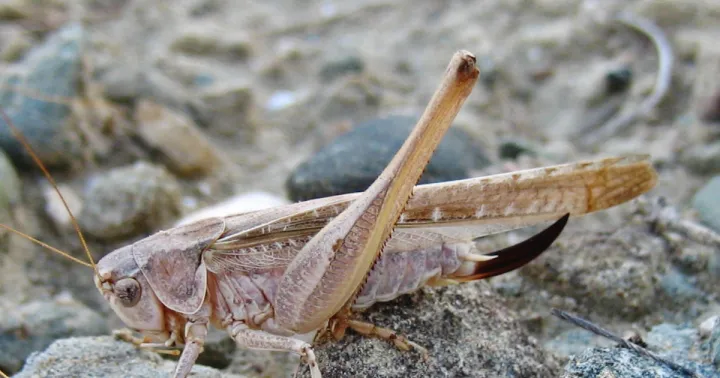
Platycleis is a genus of bush-crickets belonging to the family Tettigoniidae. These insects are characterized by long, thread-like antennae that significantly exceed the length of their bodies, which is typical for the family.
Their coloration ranges from grayish-brown to greenish, providing effective camouflage in dry or lush vegetation. They have robust bodies and well-developed wings with dark spots, allowing them to be highly mobile.
Females are equipped with a long, sword-shaped ovipositor, which allows them to deposit eggs deep into the soil or within plant stems. Adult individuals are primarily active during the day, preferring warm and sunny environments.
Nymphs resemble the adults morphologically but lack developed wings. During their development, they pass through several instars, gradually increasing in size and acquiring adult features.
Correct species identification usually requires a detailed examination of the male's cerci and the female's ovipositor shape. In agro-ecosystems, they are commonly found in open fields, meadows, and grain crops.
What it damages
Platycleis species are polyphagous, meaning they feed on a wide variety of plants. They cause significant damage to cereal crops, such as wheat, barley, and rye, by consuming tender plant parts.
Beyond cereals, these pests frequently attack technical and vegetable crops, including sunflowers, soybeans, alfalfa, and sugar beets. High population densities can result in the destruction of a significant amount of leaf mass.
During droughts, when natural food sources in pastures wither, these bush-crickets migrate to irrigated fields and vegetable gardens, causing severe damage to crops.
Damage to the generative organs is particularly dangerous. By chewing on anthers and ovaries, they can significantly reduce crop yields and negatively impact the quality of grains or fruits.
In addition to direct consumption of leaves and stems, the insects can injure the plant's epidermis, creating entry points for secondary infections such as fungal and bacterial pathogens.
When it appears
The life cycle of Platycleis includes an egg stage, where they overwinter in the soil. Nymph emergence occurs in the spring when average daily temperatures rise consistently.
Development from the nymph stage to adulthood typically takes between one and one and a half months, depending on weather conditions. Higher temperatures and adequate humidity accelerate the developmental cycle.
The peak emergence of adult insects usually occurs in the second half of summer, which corresponds to the period of maximum pest activity and damage. During this time, they feed and reproduce most actively.
Oviposition begins in late summer and continues until late autumn. Females lay eggs a few centimeters deep into the soil, protecting their offspring from winter frosts.
They typically have one generation per year. Favorable autumn conditions may extend the egg-laying period, setting the stage for potentially higher population densities in the following season.
Signs of infestation
The first sign of infestation is the appearance of ragged edges on leaf blades. The damage often presents as irregular notches, which helps distinguish it from the damage caused by moth caterpillars.
In the early morning hours, one can easily detect the bush-crickets themselves, which will jump or hide in the foliage when disturbed by human presence.
The presence of frass (excrement) on leaves and stems is another indirect sign of pest activity. A high accumulation of frass spots indicates a high population density in the area.
In cereal crops, damage manifests as "empty" or "eaten" spikelets where the husks have been compromised, leading to poor grain filling or total loss of yield in affected parts of the head.
Affected areas of the field often take on a "beaten" appearance, especially along the edges where these pests migrate from adjacent uncultivated land and wild meadows.
Control measures
Cultural control methods are the foundation of management. It is essential to perform deep fall plowing, which disturbs egg clutches in the soil and reduces the population for the following year.
Weed management along field edges and borders eliminates vital refuge and nesting areas for the pests. Maintaining field hygiene is crucial, as weeds serve as alternative food sources for nymphs.
When economic injury thresholds are reached, chemical insecticides from the organophosphate or pyrethroid groups can be used. It is important to time applications to the mass emergence of nymphs.
Biological control involves the use of natural predators and parasitoids, though in industrial-scale farming, timely monitoring and targeted localized spraying remain the most reliable tactics.
- Monitoring population density using sweep nets.
- Implementing crop rotation to disrupt the pest's life cycle.
- Applying systemic insecticides when population levels are critically high.
Taxonomy
- Latin name
- Platycleis
- Order
- Orthoptera (locusts)
- Family
- Tettigoniidae
- EPPO code
- PTCLSP
Discussion
No discussions yet — be the first.