
Planchonia stentae
Planchonia stentae
Description
How to identify
Planchonia stentae is a species of scale insect belonging to the Asterolecaniidae family. These small, sap-sucking insects are often overlooked due to their ability to blend into the texture of the bark or leaves of their host plants.
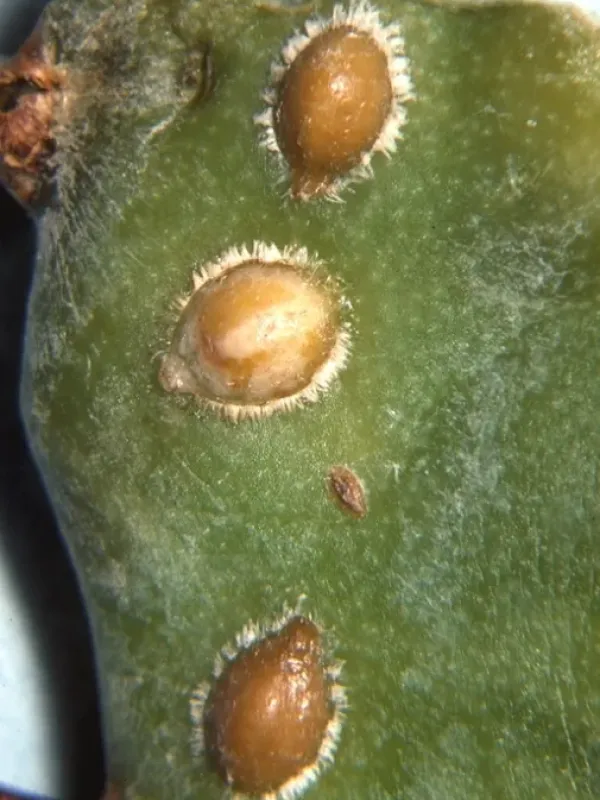
The adult females possess a characteristic shield that adheres tightly to the plant surface. The coloration of the scale varies from light yellow to brownish, allowing the insect to camouflage effectively with the plant tissues.
The individuals have a simplified body structure, typical of sedentary coccid stages. The first-instar nymphs, known as "crawlers," possess developed legs and are capable of actively moving across the plant to find optimal feeding sites.
Systematically, this species belongs to the order Hemiptera. In the context of specialized agronomic monitoring, identification requires the use of a magnifying glass or microscope to inspect the underside of leaves and young shoots.
An important morphological feature is the presence of waxy filaments or a specific residue that the insect secretes during its life cycle to protect its colony from external environmental factors.
What it damages
This pest specializes in attacking a wide range of woody and ornamental crops. The primary damage is caused by the systematic extraction of sap from the plant's phloem, which leads to serious metabolic disturbances.
During mass infestations of Planchonia stentae, stunted growth of young shoots and deformation of leaf blades are commonly observed. The plant loses turgor, making it susceptible to secondary infections and fungal diseases.
A particular danger is the depletion of the host plant's energy resources, which in the long term can lead to the death of individual branches or the entire specimen if adequate protection measures are not implemented.
The excretion of honeydew, which accompanies the pest's feeding, promotes the development of sooty mold. This fungus covers the leaf surfaces with a black coating, disrupting photosynthesis and significantly reducing the plant's productivity.
- Weakening of the immune system of woody plants.
- Premature yellowing and leaf drop.
- Reduced biomass and annual shoot growth.
When it appears
The life cycle of the pest is closely linked to the phenological development phases of plants. The highest activity of "crawlers" occurs during the onset of sap flow and vegetation when plant tissues are most saturated with nutrients.
In warm climates, generation development occurs continuously; however, the peak of colony density is usually observed in mid-summer when the temperature is most favorable for the reproduction of scale insects.
The overwintering stages of the insect localize in bark crevices, where they can withstand significant temperature drops. During this period, the pest is in a dormant state, making it difficult to detect.
Spring awakening of the pest is synchronized with the bud break of host plants. This is a critical moment to begin monitoring, as the population is most vulnerable to contact insecticides during this phase.
In the autumn, gradual preparation for winter begins, during which insect activity decreases, and the formation of the protective waxy shield becomes increasingly dense.
Signs of infestation
The first sign of infestation is the appearance of small bumps on the bark that are not part of the natural plant structure. When attempting to remove them, a characteristic mark remains on the surface.
The presence of a sticky residue on the upper side of leaves located below the pest's feeding zone is a classic symptom. This liquid consists of the pest's excrement, known as honeydew.
Gradual leaf deformation and curling indicate a prolonged infestation. In areas where the epidermis has been punctured, chlorotic spots often appear, which may eventually undergo necrosis.
The plant's overall appearance becomes depressed, and partial crown desiccation is observed. If groups of stationary "shields" are found during branch inspection, this confirms the localization of the pest colony.
A secondary sign is the attraction of ants, which feed on the honeydew secreted by the scale insects and actively protect them from natural predators, facilitating the spread of the colony throughout the area.
Control measures
Effective protection begins with agrotechnical measures, including the sanitary pruning of infested branches. Removing and immediately burning infected plant parts reduces the total population size in the garden.
The use of systemic insecticides shows high effectiveness, as the product penetrates the plant's sap, making it toxic to sucking insects over an extended period.
During the crawler emergence phase, the use of contact products based on oils or soap solutions is justified, as they block the insects' spiracles and lead to their death.
Biological control includes attracting natural entomophagous insects, such as ladybugs and specific parasitoid wasps, which prey on scale insects and suppress their reproduction.
Regular monitoring and the use of sticky bands on tree trunks help track pest movement and prevent its expansion to healthy areas of your garden or nursery.
Taxonomy
- Latin name
- Planchonia stentae
- Order
- Hemiptera (bugs, aphids, leafhoppers)
- Family
- Asterolecaniidae
- EPPO code
- PCNIST
Discussion
No discussions yet — be the first.