
Placonotus
Placonotus
Description
How to identify
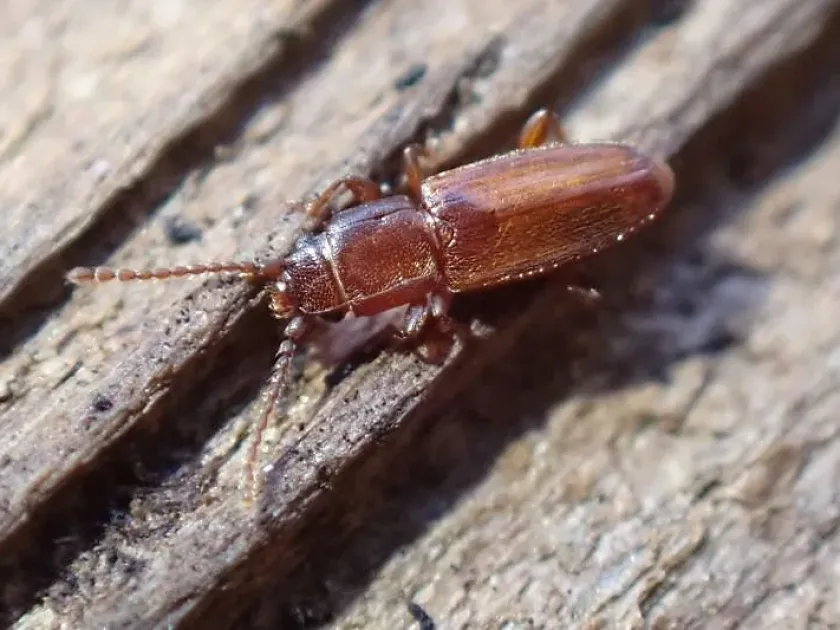
Placonotus belongs to the family Laemophloeidae (lined flat bark beetles) within the order Coleoptera. These insects are characterized by their extremely flattened bodies, an evolutionary adaptation that allows them to thrive in narrow crevices and gaps in storage infrastructure.
Adult beetles are typically small and brownish in color. Their morphology allows them to hide effectively, making early detection of an infestation challenging for warehouse managers and agronomists without specialized monitoring tools.
What it damages
This beetle is primarily a scavenger that feeds on grain products, flours, dried fruits, and damaged seeds. It often acts as a secondary pest, colonizing grain stocks that have already been compromised by other primary insect pests or fungal infections.
High moisture levels in storage facilities significantly exacerbate the damage caused by Placonotus. In such conditions, the beetles can rapidly multiply, leading to the heating of grain piles, weight loss of the stored goods, and overall degradation of grain quality.
When it appears
In temperature-controlled storage facilities, Placonotus can complete multiple life cycles throughout the year. The optimal temperature range for their rapid development is between 20°C and 30°C, typical for many indoor grain storage environments.
In unheated warehouses, their activity decreases during winter months, though they can survive in a dormant state. The peak of their movement and infestation spread usually occurs during spring and summer as ambient temperatures rise.
Signs of infestation
Infestation is often signaled by the presence of excessive grain dust and fine debris on the surface of grain mounds. The grain itself may become dull and develop a characteristic musty or rancid odor due to the waste produced by the beetles.
Visible signs of localized heating are common, as the insects' feeding and respiration processes release heat. Regular inspections using sampling probes are essential to identify the presence of these pests before they inflict severe damage.
Control measures
Effective management begins with strict sanitation practices in storage facilities, including the thorough removal of residual debris. Maintaining grain moisture content below 14% is a critical factor in preventing the establishment of these populations.
- Regular monitoring of stored grain temperature.
- Fumigation of storage facilities with phosphine-based agents.
- Aeration systems to keep the grain cool and dry.
- Thorough cleaning of equipment and conveyor systems.
If an infestation is confirmed, immediate action must be taken to contain the spread. This typically involves professional fumigation combined with mechanical grain cleaning and cooling processes to disrupt the life cycle of the pest.
Taxonomy
- Latin name
- Placonotus
- Order
- Coleoptera (beetles)
- Family
- Cucujidae
- EPPO code
- PLCOSP
Discussion
No discussions yet — be the first.