
Rusty grain beetle
Cryptolestes ferrugineus
Description
How to identify
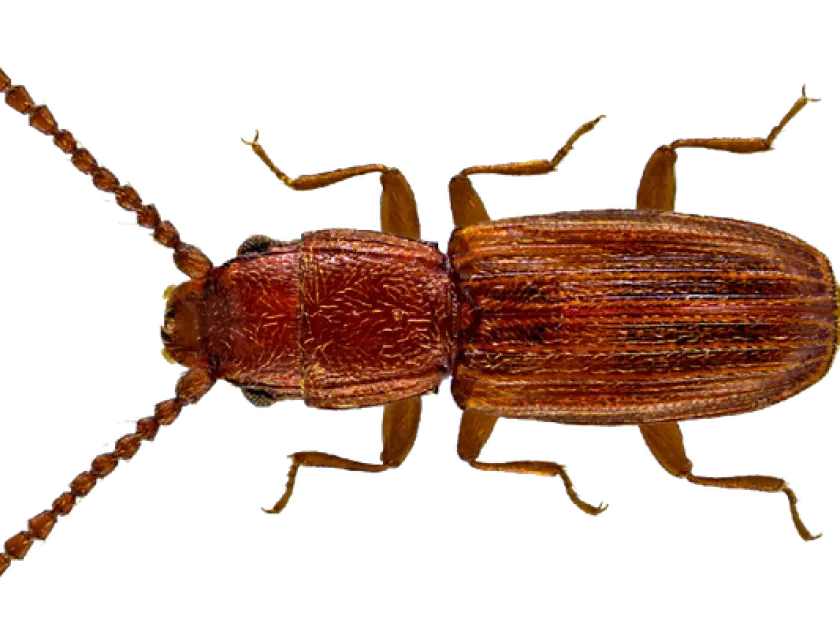
The rusty grain beetle (Cryptolestes ferrugineus) is a small, flat, reddish-brown beetle belonging to the family Cucujidae. Adult beetles are typically 2.0 to 2.5 mm long and possess a distinctively flattened body shape.
One of the key identifying features of this species is the pair of long, thread-like antennae. In males, these antennae can be as long as half the body length, which is a useful diagnostic trait for entomologists.
The larvae are whitish, slender, and covered in scattered fine hairs. They undergo several molts before spinning a protective cocoon made of food particles and secretions, which is often hidden within the crevices of the grain mass.
The life cycle is highly temperature-dependent. At optimal temperatures of around 30°C to 35°C and high grain moisture content, the development from egg to adult can occur in as little as three weeks.
These beetles are known for their ability to fly, allowing them to disperse and infest new storage facilities, bins, and warehouses by entering through vents or structural gaps in the building.
What it damages
The rusty grain beetle is a primary pest of stored grain, including wheat, barley, rye, corn, and rice. It also infests processed products such as flour, meal, and various cereal mixtures stored in bulk.
The larvae primarily feed on the germ of the grain, which significantly reduces the germination capacity of seeds meant for planting. They also consume the endosperm, causing a loss in weight and volume of the grain.
As the insects feed, they produce frass and fine dust, which contaminate the grain. This organic material provides a substrate for secondary mold and fungi growth, leading to further degradation of grain quality.
Large infestations lead to "hot spots" in grain bins, where the metabolic activity of the insects increases the moisture and temperature of the grain mass, often resulting in widespread spoilage.
Economic damage is substantial, as infested grain often fails quality standards for human consumption and animal feed, forcing processors to reject shipments or incur costs for decontamination and treatment.
Signs of infestation
The presence of fine grain dust or "flour" accumulation on the surface of the grain pile is a classic sign that rusty grain beetles are actively feeding within the bulk.
Increased temperature in specific zones of the storage facility, detected via temperature monitoring sensors or probes, often indicates an active infestation center where beetles are clustering.
An unusual, musty, or sweetish odor emanating from the grain storage can be an indicator of mold growth encouraged by beetle activity and moisture accumulation within the grain mass.
Adult beetles can often be observed moving across the surface of the grain or congregating near the edges of storage containers, particularly when the ambient temperature is warm.
Using a grain probe or a sampling sieve is the most effective method for formal identification. Insects sifted from the grain sample can then be examined under a lens to confirm the presence of Cryptolestes ferrugineus.
Control measures
Sanitation is the first line of defense. Thorough cleaning of empty bins, conveying equipment, and surrounding areas before the new harvest arrives is essential to eliminate residual populations.
Managing the moisture content of grain is critical. Keeping the grain below 13% moisture inhibits the ability of the rusty grain beetle to successfully reproduce and maintain high infestation levels.
Aeration systems should be utilized to maintain a low grain temperature. Cooling the grain below 15°C will significantly slow the metabolism and reproductive rate of these pests.
If an infestation is confirmed, fumigation with phosphine-based products is the standard industry practice. This gas effectively penetrates deep into the grain mass to eliminate both larvae and adult beetles.
Integrated pest management (IPM) should incorporate the regular use of pheromone traps to detect the arrival of the pest early, allowing for targeted interventions before a major outbreak occurs.
Taxonomy
- Latin name
- Cryptolestes ferrugineus
- Order
- Coleoptera (beetles)
- Family
- Cucujidae
- EPPO code
- CRYLFE
Discussion
No discussions yet — be the first.