
Cape flat grain beetle
Cryptolestes capensis
Description
How to identify
The Cape flat grain beetle (Cryptolestes capensis) is a minute insect belonging to the Laemophloeidae family, widely known as a serious pest of stored agricultural commodities.
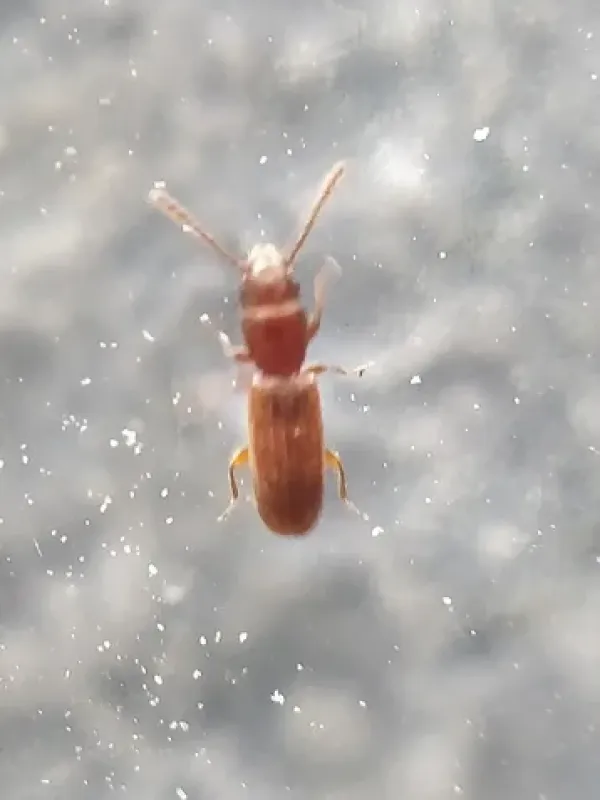
Adult beetles are characterized by their extremely flattened body shape, which typically measures between 1.5 and 2.5 mm in length. This morphology allows them to reside in narrow cracks and crevices of grain storage facilities.
The coloration of the adult ranges from reddish-brown to dark brown. Their body surface is shiny and usually covered with fine, sparse hairs that require magnification to observe clearly.
They possess long, thread-like antennae that are notably distinct from other stored product beetles. In males, the mandibles are often elongated, which is a key trait for accurate species identification.
The larvae are elongated, cream-colored, and active, featuring a darkened head capsule and specialized structures at the tip of the abdomen that help in identification.
What it damages
These beetles are primary pests of stored grains, specifically targeting wheat, barley, oats, and maize. They also frequently infest processed cereal products such as flour and semolina.
They typically attack the germ of the grain, which is the most nutritious part. This behavior significantly reduces the germination rate of seed stocks and degrades the overall quality of grain.
Cape flat grain beetles often act as secondary invaders. They thrive in grain that has already been damaged by primary pests like grain borers, exploiting the existing damage to reach the grain kernel.
High infestation levels lead to substantial weight loss in stored grain due to the consumption of kernels and the accumulation of frass (insect excrement) and larval skins.
The damage caused by these beetles can also facilitate secondary infections by mold and fungi, as the insects introduce spores into the grain mass and increase local moisture levels.
When it appears
In temperature-controlled storage facilities, the Cape flat grain beetle can reproduce throughout the year, with generation times depending on the ambient temperature and moisture content of the grain.
The lifecycle, from egg to adult, typically takes between 4 and 6 weeks under optimal conditions, characterized by temperatures between 25°C and 30°C and grain moisture above 13%.
Females lay eggs in small clusters or singly in cracks and crevices within the storage structure or directly onto the surface of the grain kernels.
As temperatures drop, the beetle enters a state of reduced activity. However, they are resilient and can survive in cool, unheated conditions if they find protected shelter within the grain pile.
Increased activity and population booms are most commonly observed during the warmer months of the year when conditions within silos and warehouses become ideal for rapid development.
Signs of infestation
Detection of these beetles is often achieved through the use of grain probes and pheromone traps, which reveal the presence of adults moving within the grain mass.
A distinctive sweet or musty odor emanating from the grain, often described as a typical "storage smell," can be a sign of a significant infestation.
Small quantities of "dust" or flour-like material consisting of excrement and larval debris on the floor or near storage containers indicate active feeding by the insect population.
Hot spots in the grain pile, detectable by temperature monitoring systems, often indicate localized areas of high insect activity that lead to moisture buildup and heating.
In packaged flour or processed goods, the presence of webbing or clumped particles can indicate a severe infestation of this beetle species.
Control measures
Good warehouse hygiene is the foundation of control. This includes removing old grain residues, cleaning dust from machinery, and sealing cracks in storage structures before new harvests arrive.
Maintaining low grain moisture levels (below 13%) is a highly effective way to inhibit the reproductive rate of these pests and keep the population at manageable levels.
Fumigation using phosphine-based products in sealed storage units is the standard professional method for eradicating existing infestations of both larvae and adult beetles.
Regular aeration and cooling of the grain mass are critical strategies to lower the temperature below 10°C, which significantly slows down the life cycle and minimizes damage.
- Conduct routine inspections of stored grain stocks.
- Remove any spilled grain or debris around the storage perimeter.
- Ensure all storage equipment is disinfected periodically.
Taxonomy
- Latin name
- Cryptolestes capensis
- Order
- Coleoptera (beetles)
- Family
- Cucujidae
- EPPO code
- CRYLCA
Discussion
No discussions yet — be the first.