
Cryptamorpha
Cryptamorpha
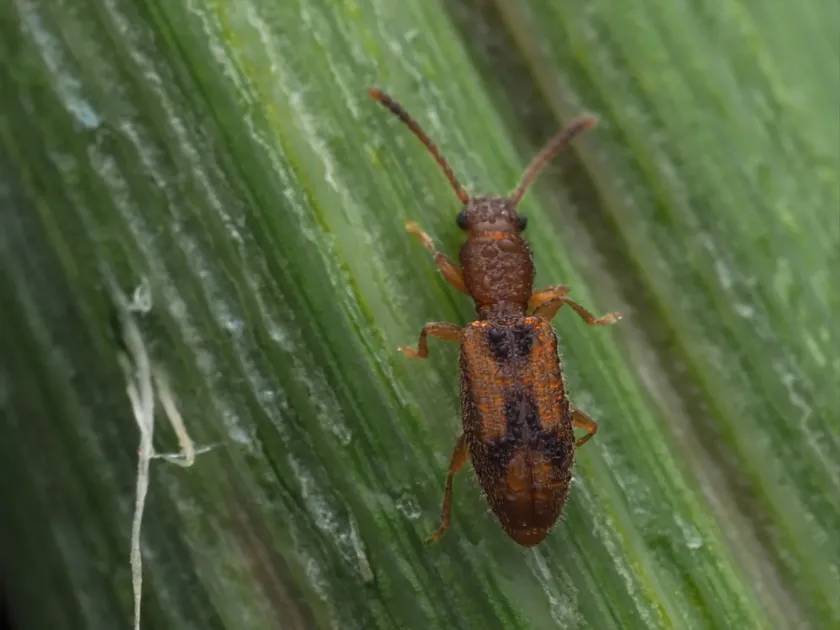
Description
How to identify
Cryptamorpha is a genus of beetles belonging to the family Silvanidae (flat bark beetles), characterized by their slender and flattened bodies.
These insects are small, typically measuring between 3 to 4 mm in length, which allows them to hide effectively in tight crevices and under plant debris.
The coloration of these beetles usually ranges from yellowish-brown to reddish-brown, enabling them to blend in with the bark or foliage of their host plants.
The larvae are typically flattened and exhibit active behavior, possessing specialized mouthparts for feeding on plant tissues or associated organic matter.
As strong fliers, adult Cryptamorpha beetles are capable of dispersing across nurseries and landscapes, making early detection a primary challenge for growers.
What it damages
Cryptamorpha species primarily affect various tree and shrub species, as well as several ornamental plants found in greenhouses or tropical climates.
Damage is largely caused by both adults and larvae feeding on tender plant tissues, including buds, young leaves, and damaged bark surfaces.
Feeding activities often result in superficial necrotic lesions, which can stunt the growth of young shoots and affect the overall vitality of the plant.
These insects are also known to frequent plants already stressed or suffering from fungal infections, further damaging the weakened tissues.
In commercial nurseries, the presence of these beetles on export-bound materials often leads to quarantine restrictions and significant economic losses.
When it appears
The activity cycle of Cryptamorpha is highly dependent on climate, with peak activity occurring during warm and humid months in temperate regions.
In controlled greenhouse environments, the pest can reproduce continuously throughout the year if temperatures remain consistently optimal.
Overwintering typically occurs in the adult stage, with beetles seeking refuge in tree bark cracks, dry foliage, or protected areas around horticultural structures.
With the onset of spring, adult beetles emerge from hibernation to begin their search for suitable host plants for feeding and oviposition.
The speed of the life cycle, from egg to adult, is significantly accelerated by higher temperatures and adequate humidity levels in the surrounding microclimate.
Signs of infestation
Early signs of infestation include the physical presence of small beetles on the undersides of leaves, particularly during early morning or late evening.
Visible damage markers include small, irregular holes or pitted areas on the foliage, often accompanied by minute dark frass deposits left by the feeding insects.
Stunted growth, curled leaves, or deformed buds are common indicators that the pest is actively feeding on the plant's vital growth points.
The occurrence of dark, necrotic tissue around feeding sites can also suggest the onset of secondary opportunistic pathogens introduced by the beetles.
Mass infestations often result in an overall decline in plant health, characterized by yellowing of foliage and general lack of vigor in the affected specimens.
Control measures
Integrated Pest Management (IPM) is essential for controlling Cryptamorpha, focusing on habitat modification and routine monitoring of plant stocks.
Good sanitation practices, such as removing dead bark, clearing leaf litter, and pruning infested plant parts, are highly effective at reducing local populations.
The use of sticky traps provides an excellent method for tracking population dynamics and determining the precise timing for intervention measures.
When chemical control is necessary, targeted application of systemic insecticides may be employed, following local environmental safety regulations.
- Implement strict quarantine protocols for new plant materials.
- Regular inspection of bark and foliage to catch early infestations.
- Use of biological control agents where applicable in greenhouse settings.
Taxonomy
- Latin name
- Cryptamorpha
- Order
- Coleoptera (beetles)
- Family
- Cucujidae
- EPPO code
- CRPMSP
Discussion
No discussions yet — be the first.