
Common pipistrelle
Pipistrellus pipistrellus
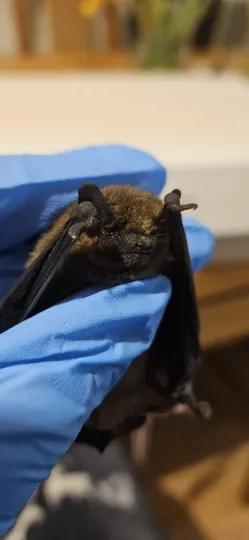
Description
How to identify
The common pipistrelle (Pipistrellus pipistrellus) is a small microbat belonging to the order Chiroptera and the family Vespertilionidae. It is widely distributed across Europe.
These mammals are nocturnal, characterized by their small size and rapid, erratic flight patterns while hunting for small flying insects in the dark.
Their biology involves complex reproductive cycles, with females usually giving birth to a single pup in maternity colonies established in buildings or trees.
The species is highly specialized for insectivory, utilizing echolocation to detect and track fast-moving targets in total darkness with great precision.
It is crucial to recognize that the common pipistrelle is not an agricultural pest; it is a vital part of the local ecosystem and a predator of pests.
What it damages
The common pipistrelle does not feed on any agricultural crops. It lacks the biological mechanisms to damage plant leaves, fruits, stems, or seeds in any way.
There is no evidence in agronomic research suggesting that these bats cause economic loss to farming operations; in fact, the opposite is true.
By consuming vast quantities of nocturnal insects, including many agricultural pests like moths and beetles, they provide a valuable ecosystem service to farmers.
While the accumulation of guano in buildings might be a nuisance, this is an infrastructure issue rather than an agronomic or crop-protection concern.
Farmers should consider the presence of common pipistrelles as a positive sign of a healthy, biodiverse farm environment that requires less chemical intervention.
Control measures
No control measures are needed or advised against the common pipistrelle, as they are not pests and are protected by law in many jurisdictions worldwide.
Instead of control, integrated pest management strategies should focus on habitat conservation to support bat populations near fields and orchards.
If common pipistrelles cause inconvenience in farm buildings, farmers are encouraged to use humane exclusion techniques after the breeding season is over.
Providing artificial bat boxes is a recognized method for encouraging these animals to stay near fields, where they act as natural controllers of harmful insect populations.
Ultimately, the agricultural community should foster a coexistence with common pipistrelles to leverage their ability to reduce the need for synthetic insecticides.
Taxonomy
- Latin name
- Pipistrellus pipistrellus
- Family
- Vespertilionidae
- EPPO code
- PIPIPI
Discussion
No discussions yet — be the first.