
Pine leaf adelgid
Pineus pinifoliae
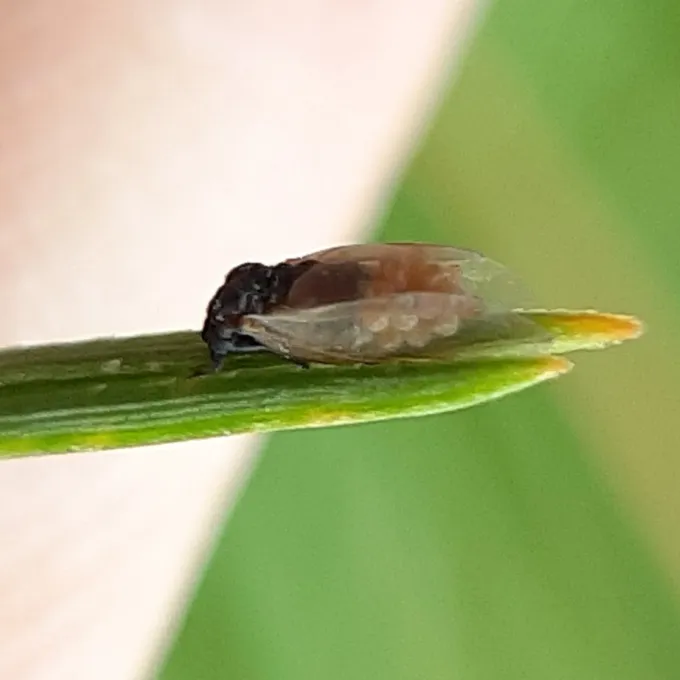
Description
How to identify
The pine leaf adelgid (Pineus pinifoliae) is a specialized insect belonging to the Adelgidae family, characterized by a complex life cycle involving two host plants.
The insects are very small, typically measuring about 1–1.5 mm, and are often covered by a white, waxy secretion that protects them from external hazards.
A primary diagnostic feature is the formation of elongated galls on spruce trees, which develop from the buds and look like small cones during the growing season.
The pest exhibits a host-alternating life cycle, moving from spruce trees, which serve as the primary host, to white pines, which are the secondary hosts.
Because they are small and often hide under protective wax, infestations are frequently overlooked until the damage to the foliage becomes clearly visible.
What it damages
Spruce trees are the essential primary hosts where sexual generations develop and specific galls are formed on the new shoots.
White pines (Pinus strobus) and other five-needled pine species serve as the secondary hosts where the asexual generations feed and thrive.
Feeding by these insects damages the conductive tissues of the shoots and needles, leading to stunted growth and reduced tree vigor.
Severe infestations can cause significant needle loss, branch dieback, and, in the case of young or vulnerable trees, eventual death of the specimen.
The stress caused by the adelgids makes the trees highly susceptible to secondary attacks by other pests like bark beetles or various fungal pathogens.
When it appears
Activity begins in early spring as overwintering nymphs emerge from bark crevices and move toward the swelling spruce buds to feed.
Galls develop during the late spring and early summer months, protecting the developing nymphs throughout the peak growth period of the spruce shoots.
By mid-summer, winged adults emerge from the galls and migrate to pine trees, where they lay eggs to initiate the summer generation.
The return migration to spruce occurs in the autumn, where the next generation of overwintering nymphs is established on the bark.
The precise timing of these events is highly dependent on local weather conditions, particularly spring temperatures which regulate bud burst and insect emergence.
Signs of infestation
The most visible sign of an infestation on spruce is the presence of pale green to brown, elongated galls appearing on the new terminal or lateral shoots.
On pine trees, the presence of white, cotton-like fluff on the needles indicates active colonies of adelgids feeding on the sap.
Yellowing, curling, or distortion of the needles and stunted shoot growth are common symptoms of long-term feeding damage.
Premature needle drop results in a sparse and thinning crown, which significantly diminishes the ornamental value of the conifer.
Black sooty mold may appear on branches and trunks, growing on the sticky honeydew excreted by the insects during their feeding process.
Control measures
Effective control involves the application of systemic insecticides, particularly during the early spring when the overwintering nymphs become active.
For ornamental or nursery settings, mechanical removal and disposal of infested shoots containing galls should be performed before the winged forms emerge.
Proper landscape planning is essential; keeping white pines and spruce trees separated helps break the required host-alternating cycle of the adelgid.
Biological control, including the encouragement of natural predators like lady beetles and lacewings, can help suppress small populations naturally.
- Application of horticultural oils or insecticidal soaps.
- Use of systemic neonicotinoid treatments for severe infestations.
- Regular inspection of needles during the spring growth phase.
- Maintaining tree health through adequate watering and balanced fertilization.
Taxonomy
- Latin name
- Pineus pinifoliae
- Order
- Hemiptera (bugs, aphids, leafhoppers)
- Family
- Adelgidae
- EPPO code
- PINDPI
Discussion
No discussions yet — be the first.