
Spruce adelgid
Pineus pineoides
Description
How to identify
The spruce adelgid (Pineus pineoides) is a small insect belonging to the family Adelgidae. These pests are specialized sap-suckers that exclusively target coniferous trees, with spruce being one of their primary hosts in various regions.
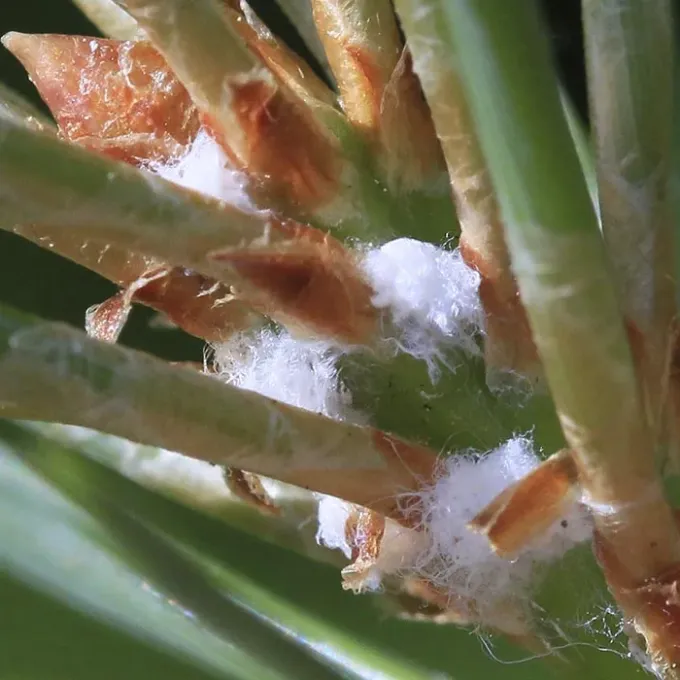
Their most striking feature is the production of white, cottony, or woolly wax filaments. This waxy coating serves as a protective barrier, making it difficult for contact insecticides to reach the insects during the feeding stage.
The life cycle of the spruce adelgid is complex and often involves asexual reproduction during the summer months. This enables the population to expand rapidly, covering needles and shoots with their characteristic white secretions.
Adults and nymphs are typically found in crevices of the bark, at the base of needles, or near the buds of young shoots. Because of their tiny size and camouflaging behavior, they are often overlooked until the damage becomes visible.
The biology of this pest is synchronized with the phenology of the spruce. Their developmental stages are highly responsive to ambient temperature, making seasonal timing critical for any intervention strategy.
What it damages
Spruce adelgids feed by inserting their stylets into the plant tissue to suck sap from young needles and shoots. This continuous removal of nutrients causes significant physiological stress to the tree.
Initial signs of damage include the yellowing and discoloration of needles. As the infestation progresses, needles may become distorted, lose their lustre, and eventually drop prematurely, leading to thinning of the tree's crown.
The extraction of sap disrupts the tree's growth hormones, causing deformed or stunted shoot development. This growth inhibition is particularly harmful to young trees or those struggling with other environmental factors.
The excretion of honeydew promotes the growth of sooty mold, a black fungus that covers the needles. This interferes with photosynthesis, weakening the tree further and making it susceptible to secondary pests.
Severe infestations over multiple years can lead to the dieback of individual branches or the entire tree, especially in cases where the spruce is already weakened by drought, soil compaction, or poor site conditions.
When it appears
The active season begins in early spring when overwintering nymphs emerge from their dormant state to feed on the swelling buds of the spruce tree, coinciding with the start of the spring growth flush.
Late spring to early summer, specifically May and June, is a peak period for the development of winged adults, which disperse to new sites. This is when the white waxy evidence of their presence is most noticeable.
During the hot summer months, the pest continues its reproductive cycle on the new growth. High temperatures generally accelerate the maturation process, leading to rapid population surges if environmental conditions are favorable.
As autumn approaches, the insects prepare for overwintering. They migrate to protected spots, such as needle bases or bark fissures, where they remain as nymphs throughout the winter, surviving freezing temperatures.
Monitoring throughout the growing season is essential because the pest's presence can be subtle in the early stages, even though the damage potential remains high throughout the entire cycle.
Signs of infestation
The presence of white, woolly, or cottony patches at the base of spruce needles is the most reliable sign of a spruce adelgid infestation. These patches are often visible on the underside of branches.
A yellow or mottled appearance of the foliage, followed by needle drop, indicates that the tree is suffering from the sap-sucking activity of the insects. The canopy may appear sparse or sickly.
The presence of sticky honeydew on the branches, often accompanied by a black, soot-like substance (sooty mold), is a strong indicator of an adelgid or aphid-like infestation.
Ant activity on spruce branches is a common secondary sign, as ants are frequently attracted to the honeydew secreted by the adelgids during their feeding process.
Stunted growth, characterized by significantly shorter needles or deformed shoots compared to surrounding healthy branches, is a clear sign that the tree's development has been compromised.
Control measures
Effective management requires a combination of cultural practices and chemical interventions. Systemic insecticides are generally the most effective, as they are absorbed into the plant and target the pests wherever they feed.
Early spring treatments are highly recommended to target nymphs as they emerge from their overwintering sites, effectively reducing the population before the main reproductive phase begins.
- Use systemic insecticides containing neonicotinoids or similar active ingredients.
- Ensure thorough coverage of all branches, including the inner canopy and trunk.
- Prune and destroy severely infested branches to lower the overall pest pressure.
- Utilize horticultural oils in late winter to smother and kill overwintering stages.
- Maintain tree vigor through proper watering and fertilization to help the spruce recover from stress.
Encouraging natural predators such as ladybugs, lacewing larvae, and hoverflies can help suppress adelgid populations. These beneficial insects are effective allies in integrated pest management.
Regular inspections and maintaining a healthy landscape environment, such as preventing overcrowding of trees, are critical strategies to minimize the risk of spruce adelgid outbreaks.
Taxonomy
- Latin name
- Pineus pineoides
- Order
- Hemiptera (bugs, aphids, leafhoppers)
- Family
- Adelgidae
- EPPO code
- PINEPD
Discussion
No discussions yet — be the first.