
Pine woolly adelgid
Pineus cembrae
Description
How to identify
The Pine woolly adelgid (lat. Pineus cembrae) belongs to the family Adelgidae and order Hemiptera. These tiny insects are sap-sucking pests that specifically target coniferous tree species.
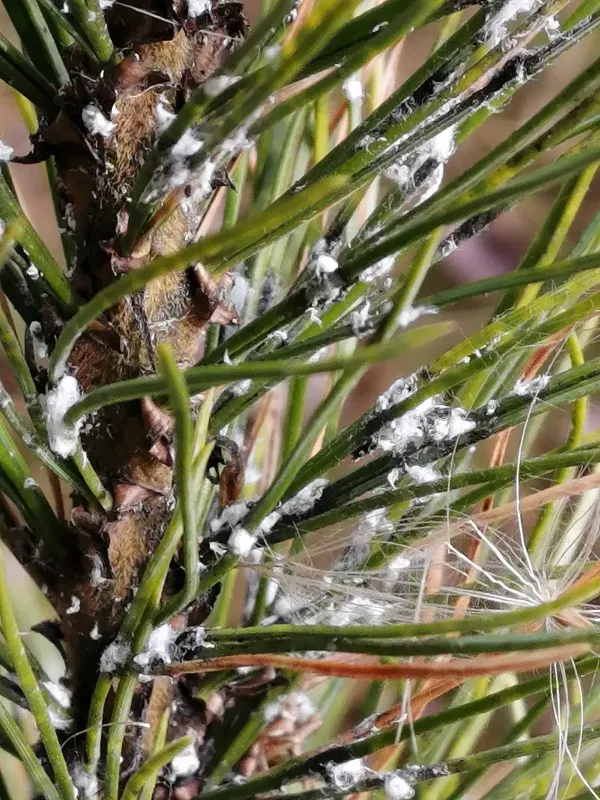
They are easily identified by the white, cotton-like, or fluffy wax secretions they produce, which cover their bodies and egg masses as a protective mechanism against predators and environmental stress.
The life cycle of the woolly adelgid is notoriously complex, involving multiple generations and sometimes complex migration patterns between different parts of the same host tree.
These insects can reproduce both sexually and parthenogenetically, which allows for rapid population explosions under favorable climatic conditions.
They tend to thrive in dense, poorly ventilated plantings where high humidity and mild temperatures facilitate the survival of overwintering nymphs.
What it damages
The primary hosts for this species include members of the genus Pinus, most notably the Swiss stone pine (Pinus cembra), Siberian pine, and other native pine species.
The pests feed on young shoots, needles, and bark, extracting phloem sap, which depletes the tree of vital nutrients and severely weakens its physiological state.
Heavy infestations lead to stunted growth, distorted needles, and premature needle drop, significantly diminishing the aesthetic value of ornamental pines.
Affected trees are highly susceptible to secondary attacks from bark beetles, wood-boring insects, and various opportunistic fungal pathogens that enter through damaged tissues.
In forest nurseries and plantations, severe infestations can lead to widespread mortality of young trees if proper integrated pest management is not implemented.
When it appears
The active life cycle begins in early spring when overwintering nymphs break dormancy and start intensive feeding on the developing buds.
Late spring and early summer mark the period when winged adults may emerge and disperse, often moving to adjacent trees to establish new colonies.
Several generations can occur throughout the summer months, necessitating precise timing for any chemical treatments to ensure they cover the most vulnerable life stages.
By autumn, the pests prepare for winter, settling into bark crevices where they enter a state of diapause, allowing them to endure freezing winter temperatures.
The highest level of damage usually occurs during the peak growth period of the host tree, when the sap flow is abundant and tissues are easy to penetrate.
Signs of infestation
The most diagnostic sign of infestation is the presence of white, woolly, or waxy tufts at the base of the needles, which look like small bits of cotton.
Needles on infested branches typically turn yellow, curl, and eventually drop off, leading to a sparse, sickly appearance of the pine canopy.
Local distortions, stunted shoots, and bark abnormalities may be observed as a result of the toxic saliva injected by the adelgids during the feeding process.
- Sticky honeydew secretions appearing on the foliage, often followed by the growth of black sooty mold.
- General thinning of the crown and premature yellowing of older needles.
- Visible white flecks covering the twigs and branch undersides.
Close inspection of the branch nodes with a hand lens will usually reveal the presence of tiny, dark-bodied insects hidden beneath the white wax.
Control measures
Effective management requires an integrated approach because the protective wax layer makes the insects resistant to many standard contact insecticides.
Dormant season applications of horticultural oils are highly effective, as they work by smothering the overwintering nymphs before the growing season begins.
During the growing season, systemic insecticides (such as those containing imidacloprid) are recommended, as they move within the tree to reach the sap-feeding pests.
Maintaining tree health through proper irrigation, fertilization, and avoiding overcrowding is crucial to increasing the tree's natural resistance to adelgid attacks.
In garden settings, encouraging natural predators like lady beetles, lacewings, and hoverflies can help suppress the population and maintain balance in the ecosystem.
Taxonomy
- Latin name
- Pineus cembrae
- Order
- Hemiptera (bugs, aphids, leafhoppers)
- Family
- Adelgidae
- EPPO code
- PINECE
Discussion
No discussions yet — be the first.