
Asian cabbage white
Pieris canidia
Description
How to identify
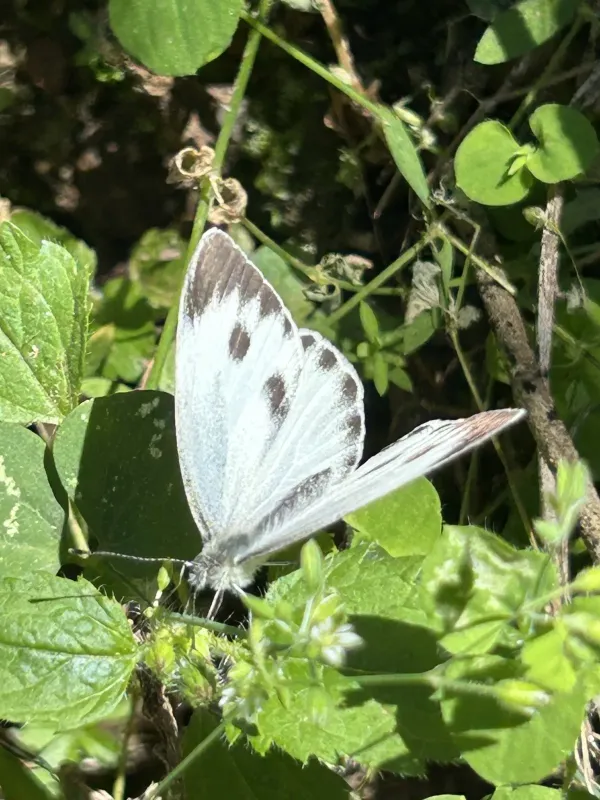
The Asian cabbage white (Pieris canidia) is a butterfly belonging to the Pieridae family. Adult insects feature white wings with distinct black spots at the tips of the forewings and dark markings along the edges.
The larvae, or caterpillars, have cylindrical bodies covered in fine hairs, displaying a greenish-grey coloration with longitudinal yellowish stripes along the sides and back.
The pupa of the pest has a characteristic angular shape and is colored in greenish or greyish-brown tones, allowing it to camouflage effectively on plant stems.
The biology of the species is closely linked to regional temperature conditions: development from egg to imago occurs rapidly under high humidity and moderately warm climates.
Females lay their eggs in small groups or singly on the underside of the host plant's leaf blade, ensuring the protection of the egg clusters.
What it damages
The pest primarily attacks plants in the Brassicaceae family, including various types of cultivated cabbage, radishes, turnips, and mustard.
The caterpillars are active phytophages capable of destroying a significant portion of the leaf surface in a short time, leaving behind only the larger veins.
During mass outbreaks, the pest does not limit itself to leaves but moves onto young inflorescences, leading to a total loss of commercial product quality and reduced yields.
The damage caused by the larvae creates entry points for various pathogenic microorganisms and infections to penetrate plant tissues.
The economic impact of Pieris canidia is particularly high in Asian regions, where it is a dominant pest in large-scale vegetable production.
When it appears
The butterfly's activity season begins with the arrival of stable warmth, as soil and air temperatures facilitate the insects' emergence from diapause.
Several generations of the pest develop throughout the growing season, making its control a continuous task for agronomists throughout the summer.
The most active feeding period of the caterpillars coincides with the rapid growth stages of host plants, when the foliage is maximally succulent and nutrient-rich.
Pupation typically occurs on plant stems, fences, or other vertical surfaces in close proximity to the food source.
The overwintering stage of the pest is the pupa, which settles in plant debris or soil substrates to survive unfavorable winter temperatures.
Signs of infestation
The primary signs of infestation include skeletonized leaves and large, irregular holes chewed into the leaf blades by the caterpillars.
Excrement in the form of small dark granules can be found on leaf surfaces, which are easily visible even in the early stages of infestation.
Close inspection of crops reveals bottle-shaped, yellowish egg clusters on the undersides of leaves.
Stunted plant growth and yellowing of leaf edges can also serve as indirect indicators of severe damage to the root system or leaf structure.
The presence of a large number of butterflies hovering over the field during the day serves as a warning to begin monitoring for preventive protection measures.
Control measures
Agrotechnical methods include regular weeding of cruciferous weeds, which serve as reservoirs for the pest during the off-season.
A crucial factor in reducing population density is deep plowing of the soil after harvest to destroy overwintering pupae.
Biological control agents, such as formulations based on Bacillus thuringiensis, show high efficacy against early-instar larvae.
Upon reaching the economic threshold of damage, contact-stomach insecticides permitted for vegetable cultivation should be applied.
It is recommended to implement crop rotation and spatial isolation of cruciferous crops to break the life cycle of the pest in a specific area.
Taxonomy
- Latin name
- Pieris canidia
- Order
- Lepidoptera (butterflies)
- Family
- Pieridae
- EPPO code
- PIERCS
Discussion
No discussions yet — be the first.