

Description
How to identify
The filbert bud mite (Phytoptus avellanae) belongs to the family Eriophyidae. These are microscopic, worm-like pests measuring approximately 0.2 to 0.3 mm in length, making them invisible to the naked eye.
The mites are cream or yellowish in color and possess four legs. Their entire life cycle occurs inside the hazelnut buds, where they feed on the sap and embryonic tissues.
The biology of the mite is synchronized with the growth cycle of the hazelnut tree. They overwinter in the buds, and activity intensifies as temperatures rise in the spring.
Spring migration is the critical phase when adult mites crawl out of the infested buds to colonize new, healthy buds on growing shoots.
Dispersal primarily occurs via wind currents, but mites can also be spread by human activity, movement of nursery stock, or contaminated pruning tools.
What it damages
The primary host for this pest is the cultivated hazelnut (Corylus avellana). High-sugar varieties are often more susceptible to colonization than others.
The mite attacks both vegetative and reproductive buds. By feeding on the floral primordial tissue, the mite directly impacts the plant's ability to produce nuts.
Heavy infestation prevents the buds from developing normally, often causing them to fail to open or to abort completely during the growing season.
Weakened trees exhibit poor vigor, reduced leaf area, and stunted shoot growth, making them more vulnerable to secondary infections or environmental stress.
Significant economic damage occurs when the pest density reaches a threshold that renders a large percentage of potential floral buds sterile, drastically reducing harvest yields.
Signs of infestation
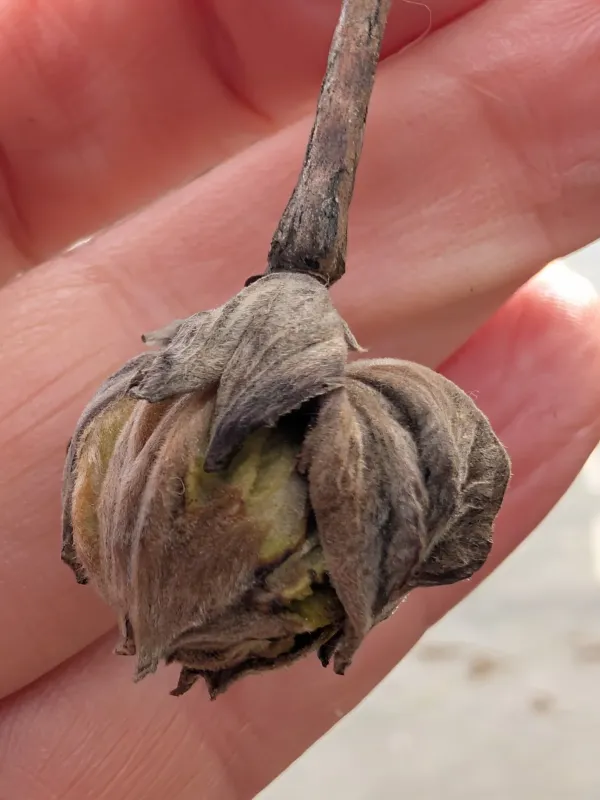
The hallmark symptom of infestation is the formation of hypertrophied, swollen, spherical buds that look like tiny cabbage heads, commonly referred to as "galls".
Infested buds fail to bloom properly in the spring and usually dry out, turning dark brown or black while remaining on the twig as a visual indicator of the pest.
A lack of male catkins or stunted, deformed female flowers in early spring is a clear sign that mites have destroyed the reproductive organs within the buds.
In addition to the galls, affected branches may show uneven distribution of foliage and retarded growth of new lateral shoots compared to healthy branches.
- Hypertrophied, globose buds (galls)
- Aborted flowering and catkin development
- Desiccation of buds in early spring
- General tree stunting and loss of vigor
- Malformed leaves on infested branches
Control measures
Cultural control is highly effective for low-level infestations and involves pruning and destroying infested buds before they dry out and release the mites.
It is recommended to inspect orchards during the winter months when the swollen, abnormal buds are easily identifiable against the dormant wood.
Chemical control must be applied strategically during the peak migration period, which usually coincides with the time of bud burst and leaf development.
The use of sulfur-based or systemic acaricides can reduce mite populations, but strict adherence to application timing is required for satisfactory results.
Integrated pest management (IPM) should be prioritized, focusing on resistant cultivars and maintaining overall orchard health to improve the tree's resilience to pest pressure.
Content graph
Connections · Filbert bud mite
Most often together:
Marketplace
Products · 1
Biology
Taxonomy
- Latin name
- Phytoptus avellanae
- Order
- Mites
- Family
- Phytoptidae
- EPPO code
- ERPHAV
Community
Discussion
No discussions yet — be the first.