
Nalepella
Nalepella
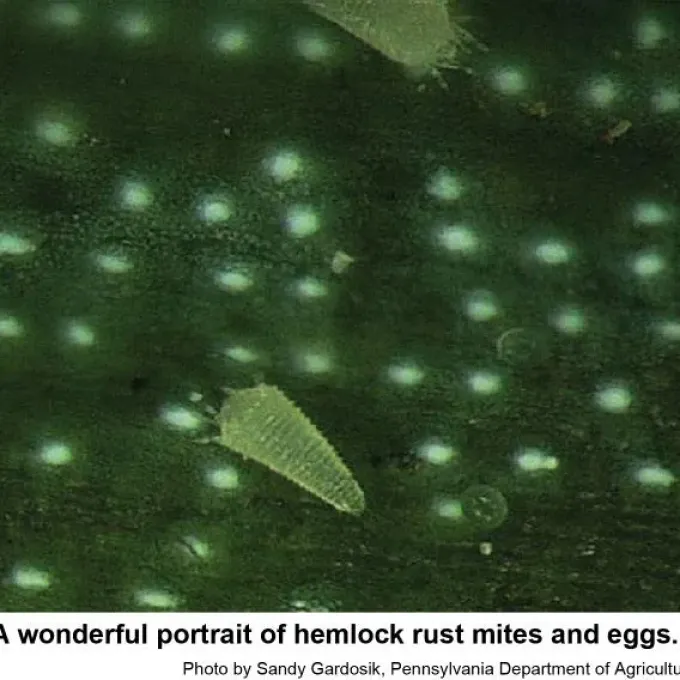
Description
How to identify
The genus Nalepella belongs to the Eriophyidae family, commonly known as gall or rust mites, within the order Trombidiformes. These pests are extremely small, worm-like, and feature a specialized body structure with only two pairs of legs, requiring a microscope for accurate identification.
What it damages
Nalepella species are host-specific and primarily target various coniferous trees. Major hosts include species of spruce (Picea), fir (Abies), and occasionally various cultivars of junipers and arborvitae found in both forestry and ornamental landscapes.
When it appears
The life cycle of these mites is synchronized with the bud burst and early growth of conifers. They become active in the early spring as temperatures rise, moving from hibernation sites to the fresh, tender needles to feed and reproduce throughout the growing season.
Signs of infestation
Damage typically manifests as needles turning yellow, mottled, or brown, which eventually leads to needle drop. In severe infestations, the overall health of the tree declines, growth is stunted, and the tree may appear sparse or sickly due to the loss of photosynthetic tissue.
Control measures
Effective management requires the application of registered acaricides specifically formulated to control eriophyid mites. It is crucial to monitor the trees starting in early spring and apply treatments promptly. Proper tree care, including adequate irrigation and fertilization, helps trees withstand mite pressure.
Taxonomy
- Latin name
- Nalepella
- Order
- Mites
- Family
- Phytoptidae
- EPPO code
- NALESP
Discussion
No discussions yet — be the first.