
Variegated willow leaf beetle
Phrator variegatum
Description
How to identify
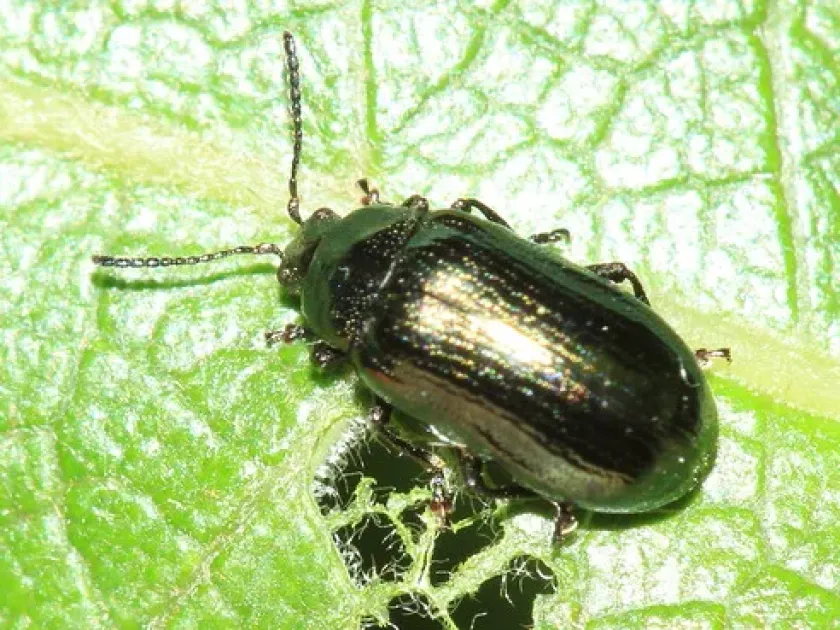
The variegated willow leaf beetle, scientifically known as Phratora variegata, is a member of the leaf beetle family (Chrysomelidae). This insect is a specialist feeder commonly found on various willow and poplar species.
Adult beetles are relatively small, typically measuring between 3 and 5 millimeters in length. They are characterized by a striking metallic luster, often displaying green, bronze, or bluish hues.
The larvae are distinct in their appearance, usually featuring yellowish-grey or brownish bodies with rows of dark tubercles. They often feed in communal groups, making their presence quite obvious on host plants.
The beetle completes its life cycle through metamorphosis, including the egg, larva, pupa, and adult stages. Overwintering occurs in the adult stage, typically in sheltered areas like tree bark crevices.
These insects are well-adapted to the temperate climate, and depending on local environmental conditions, they can produce multiple generations within a single growing season.
What it damages
The primary hosts for this species are plants within the Salicaceae family, specifically willows (Salix spp.) and, occasionally, poplars (Populus spp.).
Both adult beetles and larvae contribute to the damage by feeding on the leaves. Adults create small, irregular holes in the leaf blades, a process often referred to as shot-hole damage.
The larvae are responsible for significant foliage destruction. They feed primarily on the leaf epidermis and soft tissues, leading to skeletonized leaves that eventually turn brown and wither.
Extensive feeding can lead to severe defoliation of the host plant. This process significantly impacts the tree's photosynthetic capability and overall vigor.
In nurseries and commercial willow plantations, such damage leads to stunted growth, reduced biomass production, and increased susceptibility to other environmental stressors.
Signs of infestation
The most recognizable sign is the presence of numerous small holes or skeletonized areas across the leaves of the willow trees.
Clusters of larvae found on the underside of leaves are a definitive indicator of an active infestation, especially during the spring and summer months.
Visible decline in the tree's canopy, characterized by chlorosis or premature leaf drop, often follows heavy feeding activity by both larvae and adults.
The accumulation of frass on leaves or at the base of branches can serve as a diagnostic feature indicating a high density of the pest population.
Observation of the adult beetles themselves, which display a characteristic metallic shine when exposed to sunlight, is a primary way to identify the species early.
Control measures
Effective management begins with strict sanitation practices, including the removal and destruction of leaf litter where adults overwinter to reduce early-season populations.
Encouraging natural enemies such as predatory bugs, lady beetles, and parasitoid wasps can help maintain the population below the economic threshold in natural settings.
In cases of severe infestation in agricultural settings, the application of targeted insecticides is necessary. Treatments should be timed to coincide with peak larval emergence.
Cultural methods, such as maintaining optimal soil and water conditions, help plants recover faster from moderate insect damage, ensuring their resilience.
- Regular monitoring of willow shoots during early spring.
- Application of biological control agents where appropriate.
- Strategic insecticide spraying to protect young nursery stock.
Taxonomy
- Latin name
- Phrator variegatum
- Order
- Coleoptera (beetles)
- Family
- Carabidae
- EPPO code
- PHROVA
Discussion
No discussions yet — be the first.