
Reed leopard moth
Phragmataecia
Description
How to identify
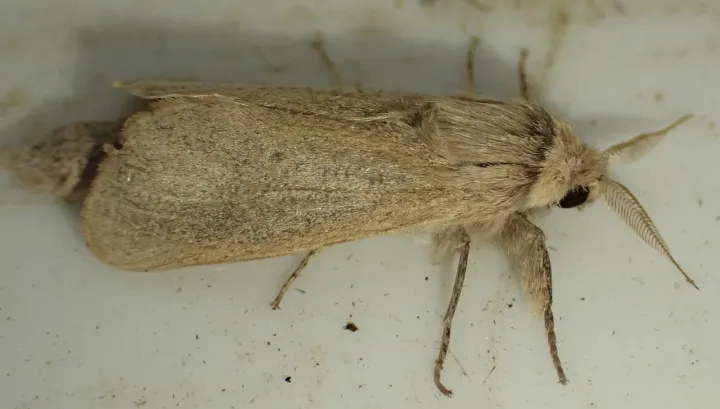
The reed leopard moth (Phragmataecia castaneae) is a member of the Cossidae family, known for its specific habitat preference for reed beds. Adult moths feature narrow, brownish-grey wings with dark spots, with a wingspan typically ranging between 35 and 50 mm.
Males are noticeably smaller than females and possess prominent feathery antennae, which are essential for locating females during nocturnal flight periods. The moth's overall appearance and coloration allow it to blend seamlessly into the texture of dry reeds, providing excellent camouflage.
The larvae, or caterpillars, grow up to 60 mm long. They exhibit a creamy-white or pinkish body with a distinctively dark, sclerotized head capsule. These larvae spend their entire developmental phase feeding inside the reed stems, remaining hidden from external view.
The lifecycle of this insect often spans one to two years, depending on regional climatic conditions. In cooler environments, the developmental process extends into the second year, ensuring a continuous presence of the larvae within the reed beds.
Females deposit eggs in leaf axils or on the surface of stems. Upon hatching, the larvae immediately bore into the plant tissue, which protects them from predators, parasites, and adverse weather conditions for the duration of their growth.
What it damages
The primary host plant for this species is the common reed (Phragmites australis). The larvae specifically target vigorous, thick-walled stems, which provide the necessary nutrients and physical space required for successful maturation.
In areas managed for biofuel production, construction material, or water purification, heavy infestation significantly weakens the reed stands. Stems that have been hollowed out by larval feeding lose their structural integrity and are prone to breaking under wind or precipitation.
The damage disrupts the plant's ability to transport nutrients, leading to poor growth, withered seed heads, and the eventual death of the affected stems. This reduces the overall density and health of the reed community.
Large-scale infestations can lead to the long-term degradation of reed ecosystems. This loss negatively impacts the habitat of various aquatic organisms and diminishes the economic value of the reed biomass.
Furthermore, the tunnels created by the larvae serve as entry points for secondary pathogens, such as fungi and bacteria. These infections cause systemic rot, which can destroy the remaining portions of the reed plant even after the moth has pupated.
Signs of infestation
The most visible indicator of an infestation is the presence of exit holes in the lower sections of the reed stems. These holes are usually surrounded by piles of brownish, sawdust-like frass (larval excrement) expelled by the insects during their feeding process.
Infested reeds often show signs of premature yellowing and wilting. If a particular patch of reeds appears stunted or unhealthy compared to the surrounding vegetation, it is a strong indicator that the stems have been compromised.
Dissecting a suspect reed stem will reveal long, vertical tunnels carved into the pith. The larva itself, or its pupa, can often be found deep within these chambers, especially during the active growth season.
During the flight period, adult moths may be observed in the vicinity of reed beds, particularly at night. They are attracted to artificial lights, making light traps a useful tool for monitoring the local population.
During the winter, finding cocoons inside the dry, hollowed stems is a definitive sign of the pest's presence. This observation indicates that the area requires attention before the next breeding cycle begins.
Control measures
The most effective management strategy is winter harvesting and removal of reed biomass. By cutting and burning the reeds, the larvae and pupae residing within the stems are eliminated before the spring emergence.
Manipulating water levels can also be a powerful control tactic. If possible, flooding the base of the reed beds during the larval stage can lead to suffocation of the pest and significantly reduce the overall population.
Biological control, using formulations of entomopathogenic bacteria or fungi, can be applied during the initial stages of larval hatching. This requires precise timing based on the observation of adult moth activity.
Chemical control with systemic insecticides is generally reserved for high-value areas, such as ornamental ponds. These treatments must be applied in a way that allows the chemical to be absorbed into the stem tissue to reach the hidden larvae.
- Winter mowing and proper disposal of reed debris.
- Use of light traps for population monitoring.
- Biological control through habitat management and natural predators.
Taxonomy
- Latin name
- Phragmataecia
- Order
- Lepidoptera (butterflies)
- Family
- Cossidae
- EPPO code
- PHRTSP
Discussion
No discussions yet — be the first.