
Blue blowfly
Phormia regina
Description
How to identify
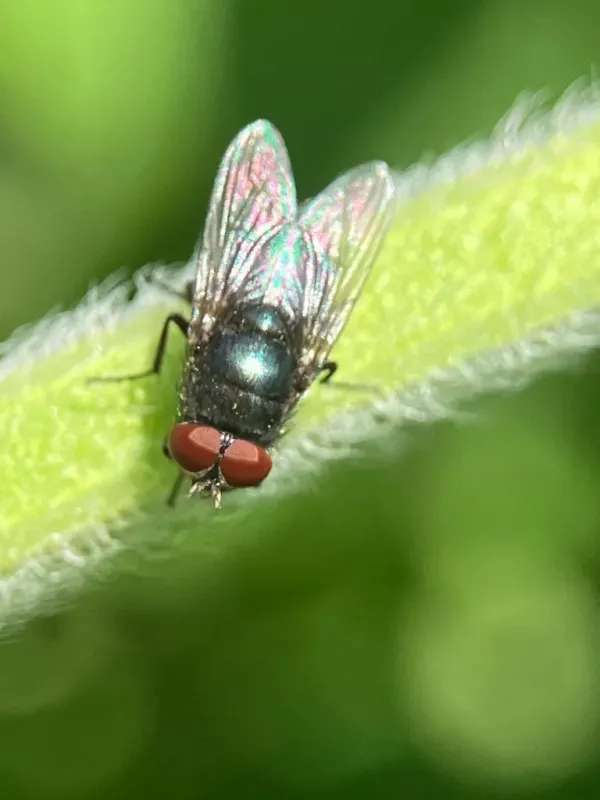
The Blue blowfly (Phormia regina) is a member of the Calliphoridae family, order Diptera. It is characterized by its metallic blue or blue-green body, which makes it easily recognizable in both field and storage settings.
Adult flies measure between 8 to 10 mm in length. They possess large, reddish-brown compound eyes and a body covered with thick black bristles that aid in their sensory perception and movement.
The larvae, commonly known as maggots, are cylindrical, creamy-white in color, and can grow up to 15 mm. They are the stage of the life cycle responsible for the primary damage to organic matter.
The life cycle undergoes complete metamorphosis, consisting of four stages: egg, larva (with three instars), pupa, and adult. Females lay their eggs in batches on suitable substrates.
The rate of development is highly dependent on temperature. In optimal warm conditions, the entire life cycle from egg to adult can be completed in approximately 10 to 14 days.
What it damages
The primary economic damage caused by Phormia regina occurs in the post-harvest sector, specifically in storage facilities and during the processing of agricultural products.
In the field, these flies are attracted to damaged or decaying produce, such as tomatoes, peppers, and other vegetables, especially where skin integrity is compromised.
Once the larvae hatch, they penetrate the plant tissue and consume it rapidly. This feeding process facilitates the entry of bacteria, leading to the rapid decay of the fruit.
In vegetable storage warehouses, poor sanitation can lead to rapid infestations, where the flies lay eggs on decaying remains, eventually spreading to healthy stock.
The damage is not just structural; the flies act as mechanical vectors for various microorganisms, significantly reducing the shelf life and quality of the stored produce.
When it appears
The adult activity of Phormia regina generally begins in late spring when temperatures stabilize above 10°C and continues through until the first autumn frosts.
The peak season for this fly is during the warm summer months, particularly June and July, when conditions are ideal for rapid reproduction and migration.
During the autumn, the flies gradually decrease their activity, although in artificially heated environments, they can remain active throughout the entire winter season.
Multiple generations can occur throughout the growing season, depending on the climatic region and the availability of suitable food sources.
The species typically overwinters in the pupal stage, located within the soil, beneath organic debris, or in sheltered cracks of buildings.
Signs of infestation
The most immediate sign of infestation is the presence of adult metallic-blue flies hovering near composting areas, storage bins, or damaged vegetables.
Clusters of small, white, elongated eggs found in the cracks or damaged skin of fruits are a clear indication of ongoing oviposition by the female flies.
The presence of maggots burrowing within vegetable flesh indicates a severe infestation that usually leads to the softening and rotting of the product.
A foul, putrid odor emanating from a bin or storage crate is a characteristic sign that the produce is decaying and has likely been colonized by larvae.
In storage facilities, the presence of empty pupal cases or dark excrement spots on packing materials serves as evidence of a resident population.
Control measures
The cornerstone of managing Phormia regina is strict sanitation: the prompt removal and disposal of all decaying plant matter and refuse are essential.
Installing fine-mesh screens on all storage facility windows and ventilation points is a highly effective way to prevent the entry of adult flies.
The use of light-based insect traps (UV traps) and sticky boards is recommended for monitoring and controlling adult fly populations within enclosed structures.
Rigorous sorting and inspection of produce before it enters storage help remove damaged items that might attract flies and provide a breeding site.
When necessary, professional chemical treatments (such as pyrethroids) can be used in empty facilities, provided that all safety protocols for food storage are strictly followed.
Taxonomy
- Latin name
- Phormia regina
- Order
- Diptera (flies)
- Family
- Calliphoridae
- EPPO code
- PHORRE
Discussion
No discussions yet — be the first.