
Bluebottle fly
Phormia
Description
How to identify
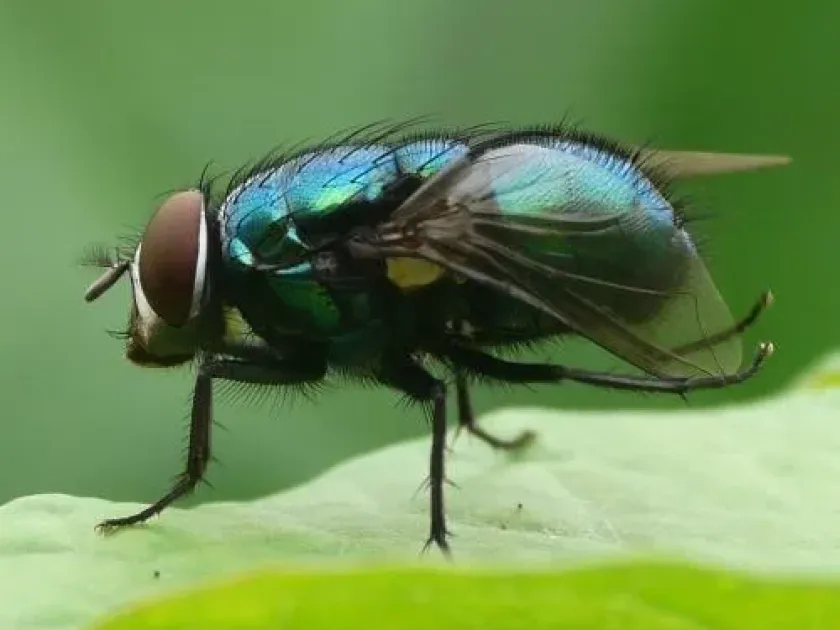
The bluebottle fly, scientifically identified under the genus Phormia (family Calliphoridae), is a medium-to-large fly recognized by its distinct metallic blue or greenish coloration.
These insects typically measure 10–12 mm in length, feature a hairy body, and possess red-brown compound eyes that make them easily distinguishable from houseflies.
The biological cycle consists of egg, three larval instars, puparium, and adult, with the entire development process taking approximately two weeks under warm conditions.
Females are highly prolific, laying hundreds of eggs in clusters on organic substrates, which are crucial for the development of the larvae.
While they are most prevalent in warmer seasons, they can sustain continuous breeding cycles in temperature-controlled agricultural buildings and warehouses.
What it damages
The bluebottle fly is a significant pest in the agricultural sector, primarily acting as a vector for various diseases rather than consuming crops directly.
They contribute to the rapid spoilage of agricultural products by carrying pathogens on their feet and mouthparts, leading to bacterial rot in fruits, vegetables, and meats.
Larval infestation in stored products, particularly in protein-rich feed or animal-based agricultural goods, causes severe degradation and contamination.
Their presence in storage facilities is a critical sanitary issue that results in reduced product quality and significant financial losses for producers.
By contaminating surfaces with excreta and regurgitated digestive fluids, these flies facilitate the transmission of secondary infections to livestock and stored produce.
Signs of infestation
The most immediate sign of an infestation is the sight of buzzing flies congregating around organic waste or stored agricultural commodities.
Egg clusters, appearing as small white masses, are often found deposited on damp organic material, indicating a fresh breeding site.
A foul, sweetish odor of decay often emanates from areas where larvae are actively feeding, signaling an advanced stage of infestation.
Discolored, soft spots on produce or animal products serve as clear evidence of larval penetration and subsequent microbial decomposition.
The presence of empty, barrel-shaped pupal casings left behind in cracks, crevices, or debris confirms that the fly population has already completed its development cycle.
Control measures
Effective management begins with stringent sanitation practices, such as the immediate removal of decaying matter and the cleaning of organic waste from the site.
Installing fine-mesh screens on windows and doors and using air curtains can physically exclude flies from entering critical storage and processing areas.
Chemical control involving the use of residual insecticides or space sprays should be targeted toward resting sites and areas where larvae are known to congregate.
- Strict disposal of organic waste
- Installation of UV light traps
- Sealing cracks and storage containers
- Periodic disinfection of equipment
Implementing a comprehensive Integrated Pest Management (IPM) program that includes monitoring with pheromone or bait traps is essential for maintaining control in agricultural environments.
Taxonomy
- Latin name
- Phormia
- Order
- Diptera (flies)
- Family
- Calliphoridae
- EPPO code
- PHORSP
Discussion
No discussions yet — be the first.