
Eurasian bush-cricket
Pholidoptera
Description
How to identify
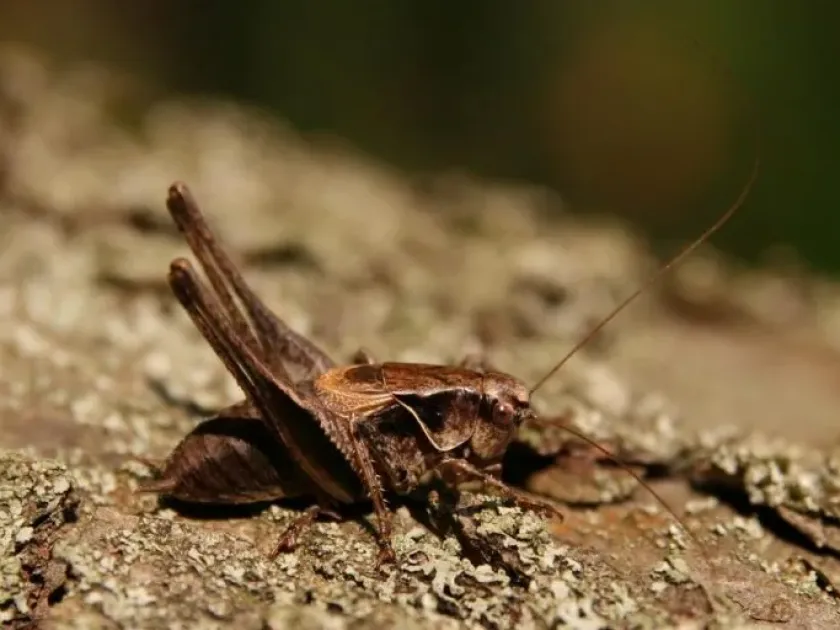
The Eurasian bush-cricket (Pholidoptera) belongs to the Tettigoniidae family within the order Orthoptera. These insects are medium-sized and typically feature a brown or grey color with darker markings, providing excellent camouflage in dried grass.
Adults possess vestigial wing pads, rendering them flightless. Females are easily identified by their long, sword-shaped ovipositor, which is specialized for laying eggs into the soil or plant debris.
Nymphs resemble smaller, wingless versions of the adults. Throughout their development, they undergo several molts, gradually increasing in size until they reach the adult stage.
These insects are primarily diurnal, actively moving through vegetation in search of food. During the evening or inclement weather, they retreat into dense foliage or hide under plant matter.
This species is common in meadows, forest edges, and field margins. In agroecosystems, they can adapt quickly to environmental changes, making them a recurring challenge for local farmers.
What it damages
The Eurasian bush-cricket is a polyphagous pest, meaning it can feed on a wide variety of plants. It often damages vegetable, cereal, and berry crops, particularly during rapid growth phases.
Affected crops include wheat, barley, as well as garden vegetables like tomatoes, cucumbers, and cabbage. In tree nurseries, they can inflict damage by gnawing on young leaves and succulent terminal shoots.
Feeding damage is characterized by ragged, chewed edges on leaf blades. Heavy infestations can lead to substantial loss of foliage, which weakens the plant and slows down its overall development.
A significant risk involves damage to reproductive plant parts, such as flower buds, blooms, and fruit ovaries. This results in reduced yields and a decrease in the market quality of the harvest.
Feeding wounds often serve as entry points for secondary infections by fungi and bacteria. Thus, the damage caused by these insects can have long-lasting negative effects on plant health.
When it appears
The life cycle of this species consists of one generation per year. The wintering stage is the egg, which remains dormant in the soil or within dry weed stems several centimeters below the surface.
Nymphs hatch in the spring, typically during April or May, once air temperatures consistently stay above a certain threshold. Initial nymphal stages feed primarily on tender weed species.
Population density peaks between June and July, when nymphs mature into adults. During this period, their feeding activity on agricultural crops becomes most intense and visible.
By late summer, adults reach sexual maturity and begin mating. Females deposit eggs into the ground or plant residue, ensuring the survival of the population through the winter months.
As autumn arrives, activity declines, and the first frosts lead to the death of the adults. The success of the next season's generation depends heavily on soil conditions and winter temperatures.
Signs of infestation
The most prominent sign of infestation is irregular damage to leaves. Leaf edges look gnawed, often showing ragged or torn margins, which helps distinguish them from typical caterpillar feeding patterns.
- Presence of numerous brownish adult bush-crickets on the field.
- Small holes or notched patterns on young shoots and seedling leaves.
- Damaged fruit ovaries that may deform or drop off the plant.
- The distinct chirping sounds produced by males during warm daylight hours.
Visual inspection often reveals the insects hiding in leaf axils or on the underside of stems. They are highly alert and will often jump into thick cover when approached by humans.
Large congregations of these crickets at field margins near uncultivated land are early warning signs. Regular monitoring is essential to prevent the population from exceeding economic damage thresholds.
Control measures
Management of the Eurasian bush-cricket relies heavily on cultural practices, particularly the destruction of breeding grounds. Regular mowing of weeds along field borders and drainage ditches is highly effective.
Deep autumn plowing of the soil can help destroy egg clusters located in the topsoil layer. This practice significantly reduces the potential population size for the following season.
On smaller plots, manual collection of the insects during early morning hours—when they are less active due to lower temperatures—can be a practical control method.
If population density exceeds the economic injury level, the use of contact-stomach insecticides may be necessary. Synthetic pyrethroids are generally effective against these orthopteran pests.
When applying chemical treatments, it is crucial to follow all label instructions, observe pre-harvest intervals, and ensure safety measures are taken to protect pollinators such as bees.
Taxonomy
- Latin name
- Pholidoptera
- Order
- Orthoptera (locusts)
- Family
- Tettigoniidae
- EPPO code
- PHDPSP
Discussion
No discussions yet — be the first.