
Black-headed beetle
Philorhizus melanocephalus
Description
How to identify
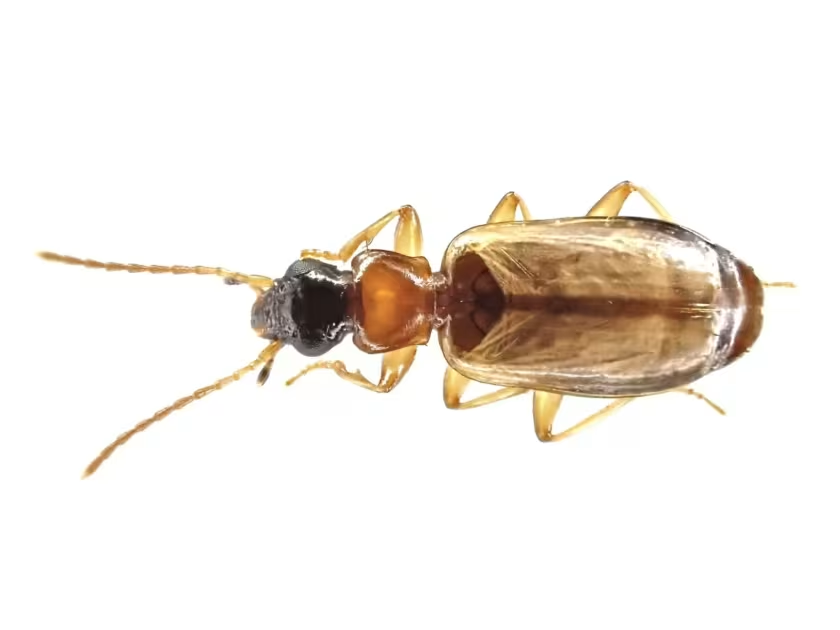
The black-headed beetle (Philorhizus melanocephalus) is a small predatory beetle belonging to the Carabidae family, order Coleoptera. It is identifiable by its distinct dark, nearly black head and pronotum, which contrast with its brownish or yellowish elytra.
Adult beetles typically measure between 4 and 5 millimeters in length. They have a slender, elongated body structure and strong legs, allowing them to move rapidly across the soil surface and between plant debris to forage.
The larvae develop within the soil layer. They are characterized by a pale, slender body and well-developed mouthparts suited for navigating the soil environment and feeding on the underground portions of vegetation.
While often considered a natural part of the agro-ecosystem, this species can exhibit phytophagous behavior, causing localized damage to emerging crops when population levels are high during sensitive growth stages.
Professional identification requires field scouting, particularly in the morning or evening when these beetles are most active. Soil sampling and the use of pitfall traps are the most effective ways to assess their density within the field.
What it damages
The primary economic damage caused by Philorhizus melanocephalus occurs during the germination and early vegetative growth of crops. Winter cereals and early-sown vegetables are particularly susceptible to attack.
Both adults and larvae feed on the tender tissues of young plants. They often target the stem base near the soil line or the root system, causing plant wilting, stunted growth, or even complete plant death if damage is severe enough.
The severity of the damage is often linked to the rate of seedling emergence. In conditions where seeds germinate slowly due to cold or dry soil, the young sprouts remain in the susceptible stage for longer, increasing their vulnerability to infestation.
Damage to the plant tissue often opens pathways for secondary infections, such as root rot pathogens, which further weaken the stand and complicate recovery. Sparse stands often lead to significant yield reductions.
While the impact is often patchy, high infestations can spread across larger field sections, particularly in fields with significant organic mulch or reduced tillage practices that provide shelter for the beetle population.
When it appears
Activity is highly dependent on soil temperatures. Overwintering adults typically emerge in early spring once soil temperatures reach approximately 5–8 degrees Celsius, coinciding with the beginning of the planting season.
The peak period for reproduction and egg-laying occurs throughout April and May. During this time, the beetles are most active in searching for food, which aligns with the critical window of seedling emergence for many major field crops.
As summer approaches, adult activity may decrease, though they remain present in the soil. They are capable of continuing development as long as adequate soil moisture is maintained, sheltering under debris during the heat of the day.
The beetle overwinters as an adult deep in the soil, which helps it survive extreme winter temperatures. As autumn temperatures drop, they migrate to these deeper soil layers to enter a state of dormancy until the following spring.
Understanding the link between weather patterns and life cycle stages is essential for effective farm management, as it allows growers to time their planting or preventative treatments to avoid the peak activity periods of the pest.
Control measures
Managing the black-headed beetle requires an integrated approach that emphasizes cultural practices to disrupt the pest's life cycle. Reducing the availability of overwintering sites through field hygiene is a critical first step.
Deep autumn tillage is highly effective in disrupting the overwintering habitat of the beetles and their larvae. Proper seedbed preparation in the spring also helps to reduce the survival rate of the population present in the topsoil.
Chemical control via insecticidal seed treatments is the most reliable method for protecting seedlings. Modern systemic treatments ensure that young plants have an internal defense against feeding during their most vulnerable stage.
In cases where threshold levels are exceeded, targeted applications of soil insecticides or border treatments may be warranted. These interventions should be carefully managed to minimize adverse effects on beneficial insects and the surrounding environment.
- Planting at optimal times to encourage rapid seedling establishment.
- Maintaining soil nutrient balance to support vigorous crop growth.
- Effective weed control to eliminate alternative food sources.
- Ongoing monitoring using traps to determine if chemical intervention is necessary.
Taxonomy
- Latin name
- Philorhizus melanocephalus
- Order
- Coleoptera (beetles)
- Family
- Carabidae
- EPPO code
- PHRZME
Discussion
No discussions yet — be the first.