
Phaulernis fulviguttella
Phaulernis fulviguttella
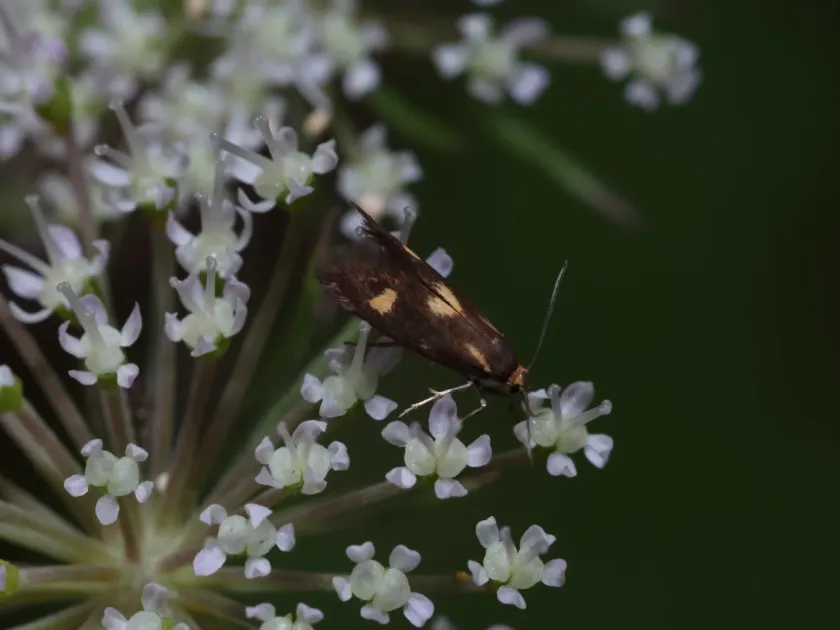
Description
How to identify
Phaulernis fulviguttella is a moth species belonging to the family Epermeniidae, order Lepidoptera. It is a small insect, typically characterized by a wingspan ranging from 10 to 12 mm.
The forewings of the moth are generally brownish or ochre-colored, adorned with tiny, faint light spots. The hindwings are narrow and possess a distinct fringe, which is a common morphological trait for this family.
The larvae are typically creamy-white or pale yellow with a dark head capsule, making them somewhat inconspicuous within the intricate structures of flowering plants.
The life cycle involves a pupal stage that is well-adapted to survive the winter, often residing within dense, silk-like cocoons attached to stems or debris.
As a specialized feeder, its presence is usually dictated by the distribution of its host plants within the Apiaceae family, both in agricultural settings and wild habitats.
What it damages
This pest primarily targets plants of the Apiaceae family, with carrots, parsnips, and various wild species serving as the main hosts for the larvae.
The larvae feed specifically on the reproductive organs of the plant, including flower buds, developing florets, and immature seeds within the umbels.
By consuming the floral tissues, the larvae disrupt the plant's ability to produce viable seeds, leading to distorted development and reduced yield in seed crops.
Heavy infestations can cause significant economic losses, as the damage to the umbels is often severe enough to prevent the formation of any harvestable seed.
The feeding behavior, characterized by webbing and internal tunneling, makes it difficult for natural predators to effectively control the larval population.
When it appears
Adult moths typically emerge in late spring or early summer, synchronized with the budding and flowering period of their host umbelliferous plants.
After mating, females lay eggs on or near the umbels, ensuring that larvae have an immediate food supply upon hatching.
Larval development occurs throughout the summer months, with caterpillars continuously feeding on the soft tissues of the flower heads.
Pupation generally occurs in late summer or early autumn, where the larvae move to the stems or nearby plant debris to construct their overwintering cocoons.
The species passes the winter in the pupal stage, showing high resilience to cold temperatures until the cycle repeats the following year.
Signs of infestation
The most prominent sign of infestation is the presence of silk webbing that binds together florets or entire umbels, creating a protected micro-environment for the larvae.
Premature browning, wilting, or drying of flower buds while the rest of the plant appears healthy is a clear indicator of larval internal feeding.
Small, dark, granular frass (excrement) found within the umbels or near the base of the flower stalks indicates active larval presence.
Entry holes in the peduncles or stems can cause structural weakness, leading to bending or breaking of the flower heads.
Dissection of a suspicious-looking umbel often reveals the larvae or the remains of damaged floral parts, confirming the cause of the infestation.
Control measures
Cultural control practices, such as the removal and destruction of crop residues after harvest, are essential to destroy overwintering pupae.
Maintaining a distance from wild Apiaceae populations can help reduce the migration of moths into agricultural fields, minimizing the risk of infestation.
Biological control using microbial insecticides, such as those containing Bacillus thuringiensis, is effective during the early stages of larval development.
Chemical intervention should be restricted to periods of high pest pressure, utilizing selective insecticides that are safe for pollinators if applied during the flowering phase.
- Deep autumn plowing to bury plant debris containing pupae.
- Systematic weeding to remove alternate host plants near crops.
- Regular field scouting to monitor moth emergence and coordinate timing for control measures.
Taxonomy
- Latin name
- Phaulernis fulviguttella
- Order
- Lepidoptera (butterflies)
- Family
- Epermeniidae
- EPPO code
- PAULFU
Discussion
No discussions yet — be the first.