
Epermenia
Epermenia
Description
How to identify
Epermenia is a genus of small moths within the Epermeniidae family. These insects are known for their specialized morphology, which allows them to effectively navigate and survive within their host plants.
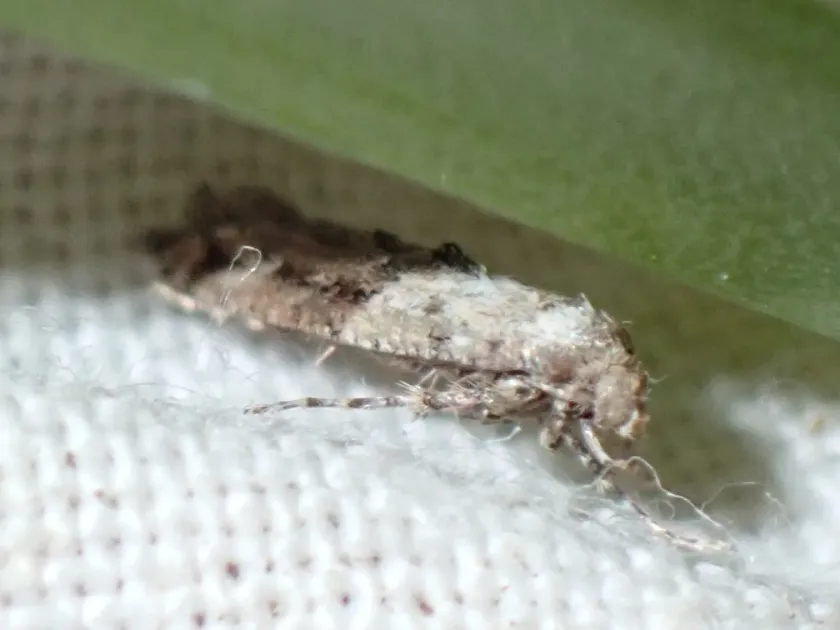
The adult moth typically has a wingspan of 10-15 mm. The wings are notably narrow and are often characterized by a prominent fringe of long scales, which is a diagnostic trait for this group.
The larvae (caterpillars) are spindle-shaped and highly mobile within the tissues of the plant. Their development involves a complete metamorphosis, moving through egg, larval, pupal, and adult stages.
Systematically, the genus contains several species that are highly host-specific, favoring plants of the Apiaceae family. Their identification often requires expert examination of genital structures due to visual similarities between species.
Their biological cycle is tightly synchronized with the growth phases of their host plants, ensuring that larvae emerge when the plant tissues are most nutritious.
What it damages
Epermenia species primarily affect wild and cultivated umbelliferous crops. Crops such as carrots, parsnips, dill, and fennel are highly susceptible to their infestation.
The larvae are internal feeders. They burrow into the stems, leaf petioles, and flower umbels, consuming the plant tissues from the inside, which causes significant disruption to the plant's vascular system.
This feeding behavior causes direct damage to the crop, leading to stunted growth, wilting, and reduced seed production. In severe cases, the entire plant may die.
Secondary damage is often more critical than the primary feeding, as the entry holes created by the larvae provide easy access for various fungal and bacterial pathogens.
In commercial vegetable production, these infestations lead to significant yield losses and degrade the aesthetic quality of the harvest, making it unsuitable for market sale.
When it appears
The emergence of adult moths from overwintered pupae typically occurs in late spring, coinciding with the onset of favorable temperatures for flight and mating.
Eggs are deposited on the underside of leaves or directly onto the developing flower heads. Larval development takes approximately two to four weeks depending on local climatic conditions.
In regions with mild climates, the pest can complete two generations within a single growing season, leading to persistent pressure on crops throughout the summer.
Pupation generally occurs within the plant debris or the upper soil layer, where the pupae remain protected from extreme temperature fluctuations.
Overwintering is usually achieved in the pupal stage, with the insects entering diapause until the return of spring conditions triggers the start of the next cycle.
Signs of infestation
The earliest signs of an Epermenia infestation include small, precise holes appearing on the stalks or leaf stems of the plant.
As the larvae continue to feed, infested areas begin to show signs of necrosis or wilting, despite regular irrigation. A close examination often reveals frass (excrement) around these entry points.
- Stunted or deformed leaf growth in infested areas.
- Webbing observed between flower umbels or twisted leaves.
- Premature fruit or seed drop in umbelliferous plants.
- Discoloration and rotting around the damaged stems.
- Weakened stem integrity, making the plant susceptible to breaking in the wind.
If the stems are cut open, the tunnels created by the larvae are clearly visible, often leading to a hollowed-out central core.
Control measures
Effective crop rotation is the most reliable agricultural strategy. Avoiding planting Apiaceae crops on the same site for at least three to four years helps break the pest's lifecycle.
Sanitation is crucial; removing wild umbelliferous weeds from the field borders and surroundings helps eliminate the primary reservoirs for this pest.
Chemical control measures should be timed with the larval hatching phase. Systemic insecticides are preferred as they penetrate plant tissues to reach hidden larvae.
Biological control, including the release of specific parasitoid wasps that target Epermenia eggs and larvae, is an effective integrated pest management (IPM) strategy.
Deep plowing or soil cultivation after harvest helps disrupt the pupation cycle by exposing the pupae to environmental conditions and natural predators, thus reducing the population for the following year.
Taxonomy
- Latin name
- Epermenia
- Order
- Lepidoptera (butterflies)
- Family
- Epermeniidae
- EPPO code
- EPRMSP
Discussion
No discussions yet — be the first.