
Phaneroptera gracilis
Phaneroptera gracilis
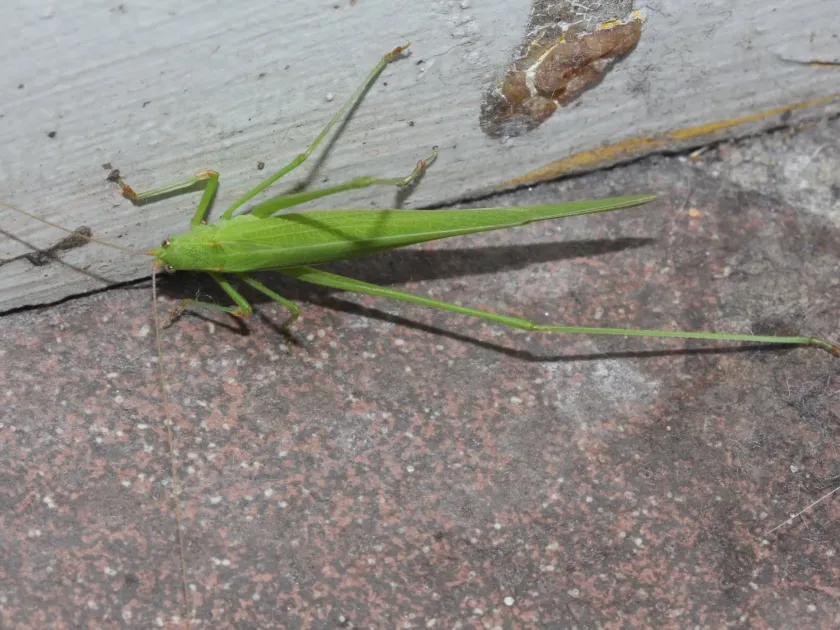
Description
How to identify
Phaneroptera gracilis belongs to the order Orthoptera and the family Tettigoniidae (bush crickets). This insect has an elongated body, typically bright green in color, reaching 12–18 mm in length.
The pest is characterized by long, thin, thread-like antennae that significantly exceed the body length. The pronotum has a distinct shape, and the wings are considerably longer than the abdomen, enabling the insect to jump actively.
A key feature of this species is its long hind legs, adapted for jumping, and specific wing venation. Adults are primarily nocturnal, spending their days hidden within dense plant foliage.
The life cycle includes the egg stage, five nymphal instars, and the adult stage. Females lay eggs by inserting them into plant tissues, most often along the leaf edges, using a robust, saber-shaped ovipositor.
The species overwinters primarily in the egg stage, with eggs embedded within plant tissue, which ensures high survival rates even during moderately cold winter periods.
What it damages
Phaneroptera gracilis is a polyphagous pest, meaning it feeds on a wide range of vegetation. It poses a significant threat to vineyards, fruit trees, and various ornamental shrubs.
Both nymphs and adults cause damage by actively feeding on soft plant tissues. They prefer young shoots, flower buds, and leaves, leading to deformation and reduced photosynthetic activity of the host plants.
The greatest damage is observed in specialized orchards and vineyards, where the pest can decimate foliage, leading to overall plant weakness and reduced yields.
In addition to direct feeding, these insects can puncture the skin of fruits, which provides an entry point for secondary infections, such as gray mold and other fungal pathogens.
Crops most susceptible to attacks include:
- Cultivated grapes
- Citrus and fruit trees
- Various ornamental plants
- Greenhouse vegetable crops
When it appears
The active development period for Phaneroptera gracilis begins as soil warms up, typically triggering the hatching of the first generation of nymphs in late spring or early summer.
The population peak for adults occurs in mid-to-late summer, when the insects are at their most active feeding stage. During this period, the pests become highly noticeable in fields and orchards.
In warm climates, the development of generations may be extended, complicating the timing for control measures. Egg-laying occurs over a long period, concluding in the autumn before the first frosts.
As nighttime temperatures drop, adult activity decreases, and they eventually die off, leaving behind eggs that will ensure the survival of the population for the next season.
It is essential to monitor plant health from June through August, as this is when the population density reaches levels capable of causing economic damage.
Signs of infestation
The main sign of infestation is the presence of characteristic "notches" on the leaf edges. Leaves appear as if they have been punctured by small, round holes or gnawed along the margins.
When inspecting plants in the morning or evening, one can spot the bright green insects, which jump away quickly when approached, making identification challenging during the early stages.
The presence of eggs inside leaf tissues can be detected through careful examination of the leaf edges, where they appear as small swellings or scars on the margin.
Wilting or deformation of young shoots without clear causes can also indicate damage from phytophagous insects, including the bush cricket.
The appearance of secondary fungal infections on fruit skin punctures is an indirect but reliable sign that this pest is present on the site.
Control measures
Controlling Phaneroptera gracilis requires an integrated approach that combines agrotechnical practices and chemical methods to keep the population density under control.
Agrotechnical measures include removing weeds along the edges of fields and orchards, which serve as reservoirs for the pest. Deep autumn plowing can help destroy a portion of the overwintering eggs in the soil.
Chemical control involves the use of broad-spectrum insecticides during the peak periods of nymph hatching. Products based on organophosphates or neonicotinoids are commonly recommended.
It is important to monitor population levels using sticky traps or visual inspection. If the economic injury threshold is exceeded, immediate insecticide treatment is advised.
Biological control methods include encouraging natural enemies such as birds and predatory insects (like mantises or specific parasitoids), which naturally suppress population spread in gardens.
Taxonomy
- Latin name
- Phaneroptera gracilis
- Order
- Orthoptera (locusts)
- Family
- Phaneropteridae
- EPPO code
- PHNEGR
Discussion
No discussions yet — be the first.