
Fork-tailed bush katydid
Phaneroptera furcifera
Description
How to identify
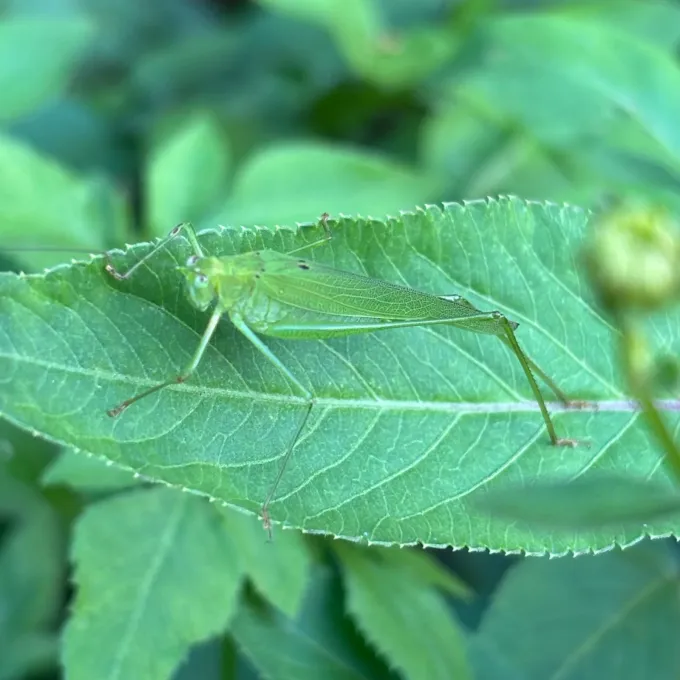
The fork-tailed bush katydid (scientific name: Phaneroptera furcifera) belongs to the order Orthoptera and the family Tettigoniidae. These insects are easily recognized by their vibrant green color, which provides excellent camouflage against green foliage.
A distinctive morphological feature of this species is the specific structure of the male cercus and the shape of the pronotum. The forewings are noticeably longer than the abdomen and exhibit a curved, sickle-like shape.
Adults typically measure between 15 and 20 mm in length. They possess long, thread-like antennae that are significantly longer than their bodies, a typical trait for the Tettigoniidae family.
Unlike many other katydids, this species is primarily nocturnal or crepuscular, spending the daylight hours resting in dense foliage, which makes detection challenging.
The reproductive strategy involves laying eggs directly into plant tissues, particularly along the margins of leaves, which serves as a protective measure for the developing embryos.
What it damages
The fork-tailed bush katydid is a generalist herbivore that feeds on a wide range of agricultural and ornamental plants, including grapevines, fruit trees, and various garden shrubs.
Both adults and older nymphs feed on leaf tissue, creating irregular, notched holes. High population densities can lead to significant defoliation, which hampers the plant's ability to photosynthesize.
Feeding also extends to buds and developing fruit, causing mechanical damage that can result in scarred, deformed fruits or premature fruit drop.
For ornamental plants, such damage reduces aesthetic value, making them unsuitable for commercial use. Prolonged feeding weakens the plant, making it more susceptible to environmental stressors and pathogens.
The constant removal of plant material interrupts the normal growth patterns and reduces the overall vigor of the affected crops.
When it appears
Adult activity usually peaks in the second half of the summer, beginning in July and continuing until the first autumn frosts arrive.
Nymphal development takes place throughout the spring and early summer. The speed of growth is highly dependent on ambient temperature and humidity levels.
The insect overwinters in the egg stage, with eggs embedded in plant tissues. This phase allows the species to survive harsh winter conditions until the following season.
The most significant damage usually occurs during the critical periods of fruit set and active vegetative growth when the plants are most nutritious.
While typically univoltine, meaning one generation per year, warmer climates may occasionally support a partial second generation if weather conditions remain mild.
Signs of infestation
The presence of this pest is primarily indicated by jagged, irregular feeding patterns on leaf edges and surfaces.
- Small, dark fecal droppings left on leaves or on the ground beneath the plant canopy.
- Ragged leaf margins resulting from persistent feeding by nymphs and adults.
- Distinctive stridulation (chirping) sounds made by males during the evening and night hours.
- Visual identification of adults on the undersides of leaves during nighttime inspections with a flashlight.
- Minute scarring on the edges of leaves where eggs have been inserted into the tissue.
Control measures
Chemical control involves the application of registered insecticides that target chewing mouthparts, typically applied during the nymphal stage to minimize population growth.
Cultural management includes the removal and destruction of infested plant debris, which helps reduce the number of overwintering eggs present in the garden.
Biological control options, such as using entomopathogenic fungi or predators that target Orthoptera, can be effective in maintaining population levels below the economic threshold.
Light traps are useful for monitoring adult populations, allowing growers to time intervention strategies more accurately and reduce unnecessary pesticide use.
Maintaining proper plant health through adequate irrigation and balanced fertilization helps plants recover more quickly from light feeding damage.
Taxonomy
- Latin name
- Phaneroptera furcifera
- Order
- Orthoptera (locusts)
- Family
- Phaneropteridae
- EPPO code
- PHNEFU
Discussion
No discussions yet — be the first.