
Sickle-bearing bush-cricket
Phaneroptera falcata
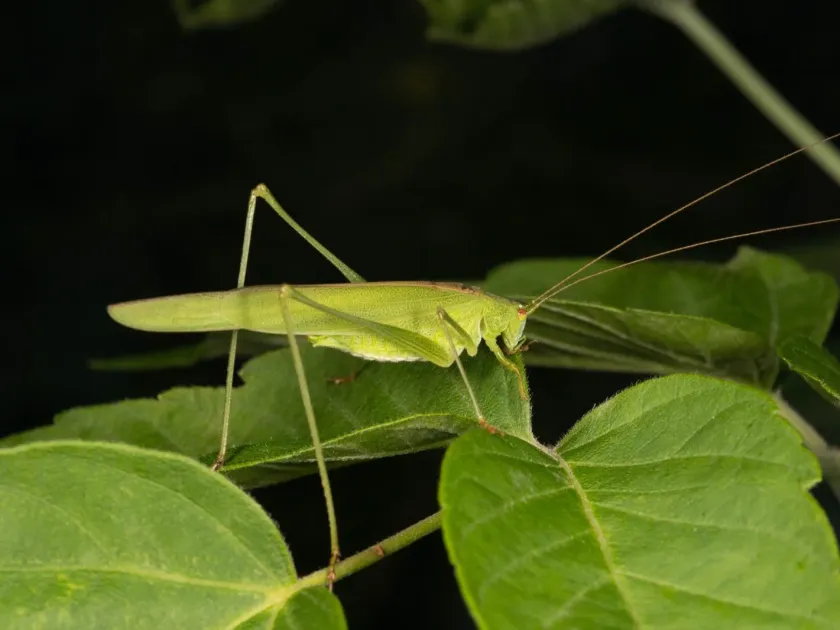
Description
How to identify
The sickle-bearing bush-cricket (Phaneroptera falcata) is a member of the Orthoptera order and Tettigoniidae family. Adult specimens typically reach 15–20 mm in length and possess a slender, green-colored body.
This species is well-adapted for life in dense vegetation. Its green color acts as camouflage, while its long hind legs allow for quick jumping. The wings are longer than the body, giving it a distinctive aerodynamic look.
The primary diagnostic feature of the female is the ovipositor, which is strongly curved upwards in a sickle shape. This physical trait provides the species with its common name and distinguishes it from other bush-crickets.
Antennae are notably long and thread-like, significantly longer than the body length. Unlike many of its nocturnal relatives, this insect is diurnal and frequently active during the warm hours of the day.
It is widely distributed across Europe and temperate Asia, favoring warm, sun-exposed habitats with an abundance of shrubs, trees, and tall herbaceous plants.
What it damages
As a polyphagous insect, it consumes a wide range of plant materials. In orchards, it causes damage by feeding on leaves, tender new shoots, and developing fruit buds.
Vineyards are particularly susceptible to this pest. It eats parts of the grape leaves, creating irregular holes between the veins, which can hinder the plant's photosynthetic capacity.
Vegetable crops such as tomatoes, eggplants, and various legumes are also targeted. High population densities can lead to significant aesthetic and physiological damage, including scars on ripening fruits.
Feeding damage is often sporadic, but it can become economically significant during exceptionally hot and dry summers when the insects migrate from wild vegetation into cultivated fields.
In addition to cultivated plants, they frequently use weeds as a secondary food source, allowing their population to persist near agricultural land throughout the entire growing season.
When it appears
The sickle-bearing bush-cricket completes one generation per year. The species overwinters in the egg stage, which the female embeds directly into the plant tissue of host plants.
Nymphs hatch during the spring, typically from May to June. They undergo five developmental instars, gradually developing wings and reaching sexual maturity during the late summer.
Adults become active from July onwards. The peak of their biological activity, including mating and oviposition, occurs during August and September, matching the harvest season of many crops.
Oviposition takes place in late summer. The female uses her sickle-shaped ovipositor to insert eggs into leaves or stems, ensuring they remain protected throughout the harsh winter months.
By late autumn, the adult population dies off due to falling temperatures, leaving behind the next generation safely embedded within the plant tissues of perennial shrubs or trees.
Signs of infestation
The most common indicator of their presence is the appearance of irregular holes in leaf blades. Unlike caterpillar damage, which may have clean edges, bush-cricket feeding often appears ragged.
Gardeners may also notice gnawed stems or damaged petioles on tender green growth. Affected tissue often dries out quickly after being fed upon by the insects.
Direct sightings are common during the day; when disturbed, adults will jump or fly short distances, moving swiftly through the canopy to escape detection.
During the evening, males may produce a faint stridulation. While this sound is generally subtle, in large populations, it serves as a clear auditory sign of their presence.
Regular visual inspections in August are essential for identifying early outbreaks, allowing for management actions before the pest populations reach a level that threatens crop yields.
Control measures
Good agricultural practices are the primary line of defense. Keeping field margins and orchards free of weeds reduces the initial population reservoir near the cultivated crop.
In cases of high infestation, insecticides targeting nymphs in their early development stages are effective. Careful timing is critical to minimize the impact on beneficial insect populations.
Biological control strategies, such as encouraging natural predators like birds and predatory insects, can help maintain population levels below the economic threshold without resorting to intensive chemical use.
Monitoring using light traps can help predict the timing of mass emergence, allowing growers to target their management efforts precisely when the nymphs are most vulnerable.
- Removal of host weeds around agricultural plots.
- Use of protective netting for high-value garden vegetables.
- Monitoring population cycles to optimize pesticide application.
- Encouraging a diverse ecosystem to support natural insect enemies.
Taxonomy
- Latin name
- Phaneroptera falcata
- Order
- Orthoptera (locusts)
- Family
- Phaneropteridae
- EPPO code
- PHNEFA
Discussion
No discussions yet — be the first.