
Phaneroptera
Phaneroptera
Description
How to identify
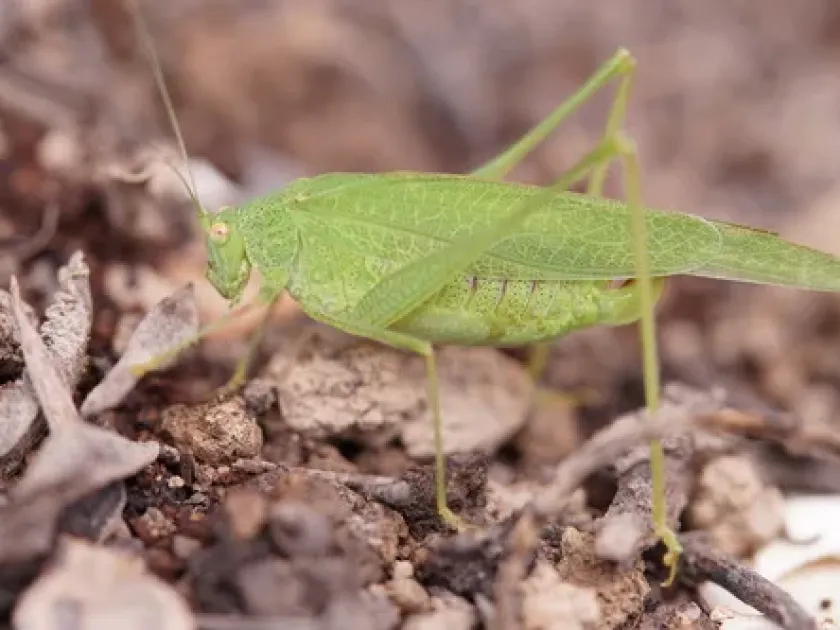
Phaneroptera belongs to the order Orthoptera and the family Tettigoniidae (bush-crickets). These insects are medium-sized and typically light green in color, providing excellent camouflage among foliage.
A distinctive feature of this genus is their long wings, which extend well beyond the body. They possess thin, elongated hind legs designed for jumping and long, thread-like antennae.
The female's ovipositor is sickle-shaped and laterally compressed, allowing them to lay eggs inside plant tissues or bark crevices. Nymphs resemble adults but lack developed wings.
Adults are primarily nocturnal, hiding in dense tree or shrub canopies during the day. They are capable of strong flight, which facilitates rapid dispersal across fields and gardens.
Their color ranges from vibrant green to yellowish-green, sometimes featuring small dark spots, making them nearly invisible to avian predators and other beneficial insects within the garden environment.
What it damages
Phaneroptera is a polyphagous pest that damages a wide spectrum of agricultural crops. Vineyards, fruit trees, ornamental shrubs, and many vegetable crops are particularly susceptible.
Damage is caused by both adults and nymphs, which feed on soft leaf tissues, young shoots, and delicate fruit ovaries. Large infestations can significantly reduce the vegetative mass of plants.
Damaging the buds and young inflorescences of grapes is particularly dangerous, leading to substantial yield losses during the early stages of fruit development. Injured areas are also prone to secondary infections.
Beyond direct tissue consumption, these insects physically injure fruit surfaces, reducing market value and rendering produce unsuitable for long-term storage or transport.
In warmer regions, Phaneroptera may damage field crops, including legumes, establishing infestation pockets along field margins near hedgerows or neglected areas.
When it appears
Phaneroptera typically overwinters in the egg stage. Eggs are inserted into plant tissues—leaves or tender stems—providing protection for the offspring against low winter temperatures.
Nymphs hatch in the spring once stable, warm weather conditions are established. They go through several growth stages, gradually increasing in size and developing characteristics of the adult form.
Peak adult activity occurs during the second half of the summer, from July until the arrival of autumn chill. This is the period when crop damage is most significant.
Reproduction takes place at the end of the season, after which adult insects die. Usually, one generation develops per year, although in southern regions, the cycle may be more extended.
Favorable factors for mass reproduction include dry and warm weather, absence of sharp temperature fluctuations, and an abundant food supply provided by surrounding weed vegetation.
Signs of infestation
The primary sign of infestation is the characteristic "perforated" or "mesh-like" damage to leaf blades. Leaf edges appear gnawed, often in irregular shapes.
The presence of insect frass (excrement) on leaves and below the plant canopy also indicates pest presence. Careful inspection of bushes can reveal the insects themselves hiding in leaf axils.
Fruit damage appears as surface lesions or deep gnaw marks that may dry out or rot over time due to the development of opportunistic fungal pathogens.
The evening "chirping" of males during their active period is another indirect indicator of their presence, which can help pinpoint breeding clusters by sound.
A thorough inspection of young shoots reveals signs of oviposition, appearing as small scars or ruptures in the leaf tissue where the eggs were inserted.
Control measures
Agrotechnical control measures include the timely removal of weeds from garden plots and field margins, as these serve as reservoirs for the pest early in the season.
Biological control involves encouraging natural enemies such as birds, predatory insects, and spiders. Providing habitat and preserving biodiversity helps maintain lower population levels.
When the economic injury threshold is reached, broad-spectrum insecticides may be used. Applications are most effective when carried out in the evening when the insects are active.
It is essential to rotate products from different chemical groups to prevent the development of resistance within the bush-cricket population, a common issue with frequent pesticide use.
- Regular pruning of infested or damaged shoots.
- Usage of light traps during the night.
- Strict adherence to quarantine measures when introducing new plant material.
- Application of biological pesticides based on entomopathogenic fungi (e.g., Beauveria bassiana).
Taxonomy
- Latin name
- Phaneroptera
- Order
- Orthoptera (locusts)
- Family
- Phaneropteridae
- EPPO code
- PHNESP
Discussion
No discussions yet — be the first.